As more and more people depend on technology to get things done, the curiosity around the latest tech trends, particularly 5G, is growing. However, 5G is still not as widespread as predicted, leaving people with more expectations than experiences.
Combine this with the abundance of online information, and you get lots of harmful advice and misinformation about 5G posted by unverified sources. We asked 5G experts to break down four myths and uncover the truth behind how 5G works. Here’s what we learned.

Myth No. 1: The rollout of 5G is taking forever
The first 5G devices and networks entered the market over two years ago, yet many populations don’t have access to 5G today. Is the 5G rollout that slow?
Truth: “Marketing around 5G and 5G phones created hype early and raised expectations that communications providers are still catching up to, but when you look at the technology deployment timelines, 5G is actually rolling out faster than 4G,” says Shawn Carpenter, program director, 5G & Space, for Ansys. “The U.S. has lagged many of the progressive Asian and European markets in delivering new C-band services that will enable the long-expected increased bandwidths, but 2022 will see marked progress in tower service deployments.”
You also need to consider the pandemic when analyzing the 5G timeline. The worldwide lockdowns and travel restrictions significantly affected supply chains and slowed the adoption of 5G.
Yet, despite these hindrances, more than 41 million people were subscribed to 5G mobile phone service last year, and the number is growing rapidly. “If you have a phone capable of C-band 5G service, you should see elevated service in most U.S. cities during 2022,” Carpenter said, adding that “a few 5G handset users in select downtown city locations may be able to access the new mmWave ultrawide bandwidth service at 28 GHz.”

Myth No. 2: You can’t use 5G at the airport
When the Federal Aviation Administration (FAA) warned airlines that “C-Band 5G signals could interfere with some altimeters that pilots use to land in conditions with low visibility,” people started believing you can’t use 5G phones at the airport.
Truth: This myth is partly true. Networks like AT&T and Verizon have agreed to postpone their 5G expansion plans based on FAA’s guidelines. But this doesn’t mean you must keep all your 5G devices at home when hopping on an airplane.
“There are still some 5G bands that are not considered a problem and will work at the airport if the local service provider has installed the service in their base stations,” Carpenter says. He adds that the new C-band 5G service will become available on a limited basis around airport facility locations, especially within the terminals, after July so that you can use 5G or any other service like usual.
Myth No. 3: 5G is going to replace Wi-Fi
Since 5G is considered “fast,” we’ve seen rumors that it will replace Wi-Fi. Do users really have to choose between the two?
Truth: There has been talk of wireless technologies replacing Wi-Fi for years, but the answer has always been the same: Not yet, says Dan Hays, Technology, Media, and Telecommunications principal at PricewaterhouseCoopers. Both have their pros and cons, but “when you combine the capabilities of each, they become complementary, and the resulting infrastructure is optimized for all types of communication and use cases.”
Echoing this view, Tiago Rodrigues, CEO of Wireless Broadband Alliance, says: “By working together, Wi-Fi, especially the recent standards Wi-Fi 6/6E, and 5G, can support consumer and business applications ranging from augmented/virtual reality (AR/VR) to industry 4.0 smart factories.”
One example is providing reliable coverage indoors for bandwidth-intensive applications, such as 4K video cameras used for security and factory automation – something that’s challenging for 5G as the signals don’t get inside buildings very well from outside.
To sum up, neither users nor businesses must choose between 5G and Wi-Fi. It’s far better to combine the two for a more efficient network. That way, everyone wins.
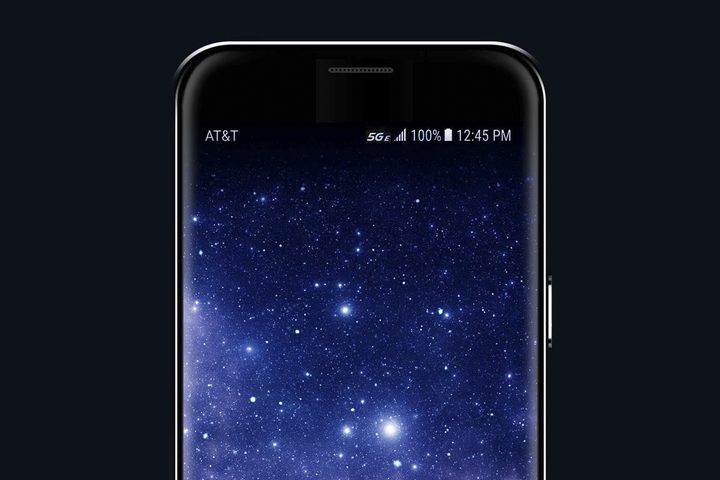
Myth No. 4: The “5G E” signal on my phone means I can access 5G networks. Yay!
Sometimes your AT&T phone may display the “5G E” signal at the top. Does this mean your old device is 5G-enabled now?
Truth: The “5G E” signal has nothing to do with an actual 5G network, as 5G E stands for 5G Evolution. “While 5G Evolution may sound like a form of 5G, it’s really a bit of marketing and is actually a name used by carriers to describe 4G LTE-A, an advanced version of the 4G LTE network standard that may offer enhanced performance,” Hays explains.
Seeing the “5G E” icon may mean you will enjoy a better network than the typical 4G LTE service. However, Carpenter says that you still need a new 5G-enabled device to access real 5G service (whenever it becomes available in your area).
More 5G myths
Myths about 5G come in all shapes and sizes. While we addressed some basic ones here, check out our guide debunking the biggest controversies around 5G if you’re hungry for more wild theories and how experts are trying to disprove them.