Apple’s AirTags may be pitched as tools of convenience, but they are turning into a tool for criminals as well. The company’s tracking tool, intended to be used to keep track of lost and stolen property, is paradoxically also a tool that enables theft of property and a potential threat against people. New reports pop up by the day of people using AirTags against women and expensive cars with malicious intent. And furor is growing online.
The company has issued updates to improve AirTags, but it may be the entire concept of AirTags themselves that is flawed.
The stalking dangers of AirTags

To recap, Apple’s AirTags are small but handy little trackers. They cost around $30 a pop, and you can stick them on your wallet, your bag, or anything you don’t want to get lost. If it eventually goes missing, using the power of Apple’s Find My app, you’re now able to find and locate said device with the ease of James Bond using one of his spy tracers.
Apple’s AirTags aren’t unique in conception; the concept of unobtrusive trackers has existed for years. Tile, for one, has made a business out of it. Even Nokia had a Treasure Tag for very much the same price back in the day. What sets Apple’s product apart from others is the power of the extensive Find My network. Far from only being useful for locating lost iPhones, with Find My, AirTags gain a larger effective range, letting anyone who drops an AirTag find your approximate location as long as you’re near an Apple device.
“It would be a mistake to assume that these reports signal a new wave of stalking. AirTags, while inexpensive and effective, are not solely responsible for ushering in a new era of surreptitious surveillance,” an Apple Insider editorial said. “Take, for example, GPS-based stalkers. GPS-based tracking devices are readily available — even on Amazon — and can be used to stalk victims without the anti-stalking mechanisms that Apple’s devices provide.”
While Apple Insider is correct that the company did not invent digital stalking, it is far from blameless in failing to foresee and properly account for the consequences. “As with smartphones, tablets, and wearables before it, AirTag is the first of its category that non-tech people care about. It’s the one that your average creep knows exists and is now feeling clever enough to slip into a woman’s bag or stick to a fancy-looking car. They probably never knew trackers existed until Apple made one. The professionals did, sure. But not the run-of-the-mill bad guy. Now they do, and Apple is going to need to help find a fix,” Oliver Haslam wrote on Apple-focused tech site iMore.
An Apple problem
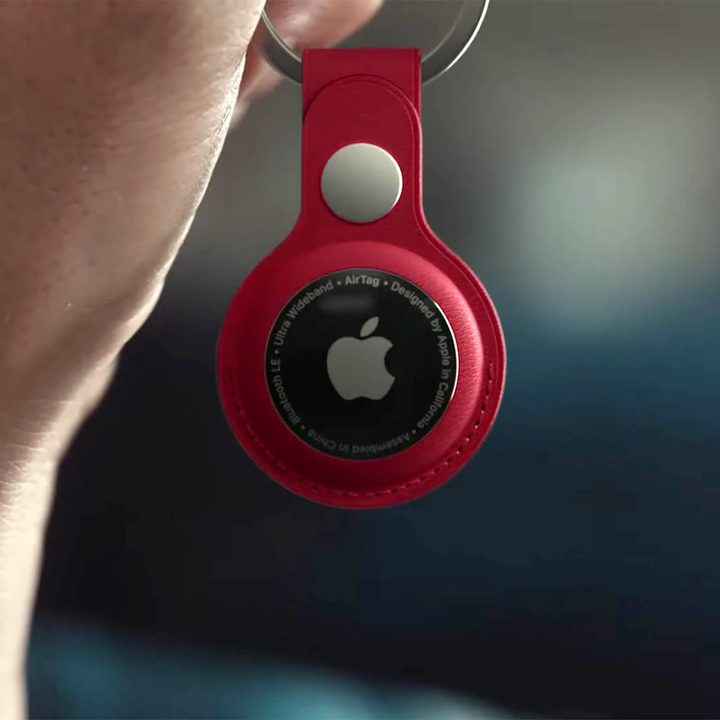
On the one hand, it’s easy to argue that people are ragging on AirTag because it’s an Apple product, and Apple is an easy punching bag. It’s not far from the truth. AirTags are a problem because they’re an Apple product. Consider smartphones or tablets, smartwatches, NFC payments, Ultrabooks — Apple is known for barging into a product sector, mainstreaming it, and vastly increasing its popularity. AirTags may not be particularly unique, but they do exactly what they are designed to do — and they do it well. Apple just appeared to underestimate the potential of what exactly it was shipping.
“The ubiquity of iPhones and the Find My network is what makes the AirTag especially powerful for stalking in a way that goes beyond what we have seen in previously existing physical trackers,” Eva Galperin, director of cybersecurity for the Electronic Frontier Foundation (EFF), told Digital Trends over email. “The EFF has taken the position that when Apple debuted the AirTag, there were unacceptable gaps in its antistalking mitigations that made it easy to use as a tool for stalking. Since then, they have fixed some of those problems, though not all of them.”
Apple’s new device #AirTag seems like a stalker’s delight, doesn’t it?
I mean, any creep can pop one of those into a car, a bag, etc. Cheap too, for the determined… pic.twitter.com/PTNjOQKD0I— Louisa Jones (@FilmLecturer) January 7, 2022
In an interview with the Washington Post last year, Galperin shared that Apple had not considered the impact AirTags may have on domestic abuse situations at the start. In the interim, Apple has made several changes to make AirTags less creepy. An Android app, Tracker Detect, has been launched, allowing Android users to proactively scan for AirTags if they feel at risk. The company also reduced the time it took AirTags to beep if they were left inactive and inert.
It is possible for Apple to make further changes that would neuter the ability of AirTags to be used as stalkerware-adjacent technology, such as limiting access to the Find My network, but that comes with a cost.
“If by ‘core functionality’” you mean assistance in helping to find lost objects, the answer is yes. If by ‘core functionality’ you mean assistance in helping to track stolen items, which is not the purpose for which Apple advertises the AirTag, then the answer is no,” Galperin said. “You cannot make a tool that is good for tracking stolen items without also making a tool that is ideal for stalking because both of those scenarios are predicated on fooling a person who is unknowingly carrying your object into thinking that they are not being tracked.”
Hard choices
Apple is not the first tech company to wrestle with this dilemma. Tile trackers picked up integration with Amazon’s Sidewalk network last year, and while not as extensive or well-known as Find My, the potential for deliberate stalking was introduced. At the same time, just because technology has the potential to be misused doesn’t mean it shouldn’t be released; it just means that those concerns should be thoroughly considered and balanced against whatever problem the technology purports to solve.
Whatever side it comes down on, Apple needs to do the math and resolutely answer the question: “Is the convenience worth it?”