1. Home
  2. Phones
  3. Apple
  4. Business
  5. Mobile
  6. News

Apple is working on touchless controls and curved screens for the iPhone

Add as a preferred source on Google
iPhone X plant global sales
Julian Chokkattu/Digital Trends

How does controlling an iPhone without directly touching it sound to you? Apparently it sounds pretty good to Apple, because the iPhone giant appears to be looking into touchless gesture technology for future iPhones, as well as new ways of implementing curved screens that would help Apple stand out in an increasingly crowded marketplace.

While gesture-based touchless technology is likely to be at least 2 years away, it would allow users to make gestures above the surface of their phone’s screen, which would then be translated into actions by the phone. It can be seen as something of an evolution of the 3D Touch tech employed in iPhones since the iPhone 6S, and likely linked to the gesture-based controls seen in last year’s iPhone X, which lacked a physical home button.

Recommended Videos

Samsung showcased a similar feature named “Air Gestures” way back in 2014 on the Galaxy S4, but has not yet expanded on the idea. It could be that Apple would be the first company to take this sort of idea through to a larger execution.

The same source also states that Apple is working on curved screens as well — but not the same sort of curved screen that you might see on a Galaxy S9 or Note 8. Instead, Apple is apparently working on displays that would curve inwards from top to bottom, rather than curving off at the sides of the screen. Quite how this sort of design would work we’re not entirely sure — but it would certainly be a bold new direction for the iPhone, and one that Android manufacturers would find harder to copy than the iPhone X’s notch.

Part of the issue in creating curved screens has been the relative lack of supply for OLED displays. Apple ran into supply issues with the iPhone X — which had Apple’s first iPhone OLED display — and likely wishes to avoid similar concerns with future iPhones. With rumors of an iPhone X Plus and an iPhone SE 2, Apple is probably looking to secure as large a supply of OLED screens as possible. A move by Apple toward making its own MicroLED displays — the next step up in screen tech — is also likely 3 to 5 years away, so don’t expect to see that any time soon.

Mark Jansen
Former Mobile Evergreen Editor
Mark Jansen is an avid follower of everything that beeps, bloops, or makes pretty lights. He has a degree in Ancient &…
Geekbench now lets you check how a phone will actually handle your boring daily chores
New tests, smarter scores, and finally some love for NVIDIA GPUs.
Geekbench 7 open on iPhone

Geekbench, the popular cross-platform benchmark from Primate Labs, just got a major update. Geekbench 7 is out today, and you can download it on Android, iOS, Windows, macOS, and Linux. If you like to know exactly how your CPU and GPU stack up, this update brings a bunch of changes worth knowing about.

What's new in the CPU tests?

Read more
Latest Pixel 11 series leak offers the clearest look yet at Google’s next flagship
Google's next Pixel has leaked again, but this time almost nothing is left to imagine
Pixel 11

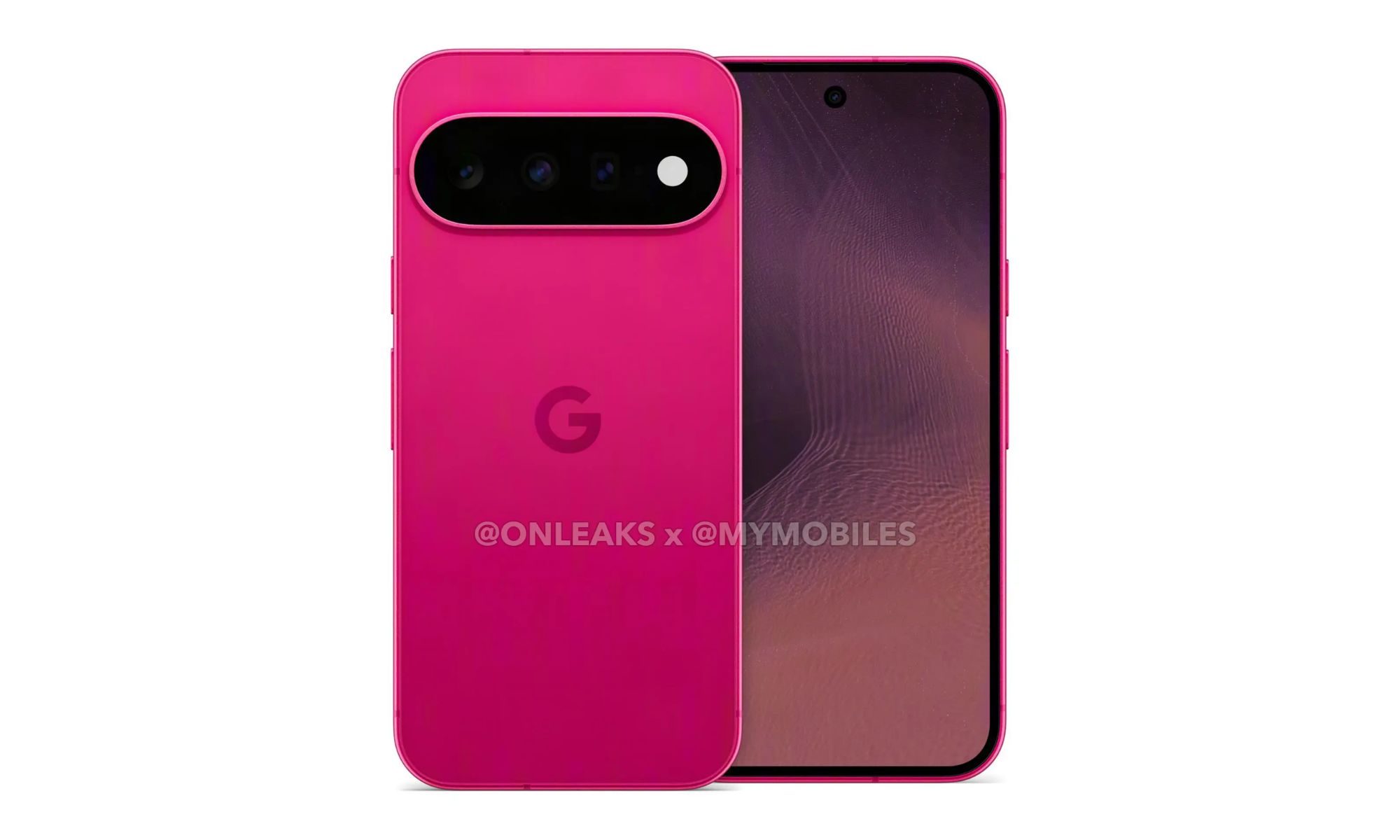
Google's Pixel launches have become increasingly difficult to keep under wraps, and the Pixel 11 series appears to be no exception. Weeks before Google's scheduled August 12 launch event, a fresh leak has revealed what is claimed to be the complete set of official press renders for the Pixel 11, Pixel 11 Pro and Pixel 11 Pro XL, showcasing every colour option across the lineup.

The renders, published by MyMobiles in collaboration with tipster OnLeaks, offer what is arguably the most comprehensive look yet at Google's next flagship family. If authentic, they not only confirm earlier design leaks but also reveal Google's colour strategy for 2026, including a vibrant Fuchsia finish for the standard model and a new copper-inspired "Dune" variant for the Pro series.

Read more
Galaxy Z Flip 8 vs. Motorola Razr Ultra (2026): Samsung’s flip phone is cheaper, but is it better?
One flip phone wins on value. The other wins on hardware.
Electronics, Phone, Mobile Phone

Flip phones have quietly become one of the most competitive corners of the smartphone market. It provides buyers with a satisfying folding snap, reducing the footprint to half the original size, and that’s the entire point. Motorola never really left the format after reviving the Razr name, while Samsung has spent generations treating the Flip line as its scrappy, budget-friendlier sibling to the Fold. 

This year, though, the gap between the two camps has narrowed to the point where picking a winner requires genuinely reading the spec sheet and learning about the phones before putting your money into one. One phone leans hard into raw display firepower, while the other leans into a deeper software ecosystem and a friendlier price tag. 

Read more