
Streaming video. Streaming music. Streaming video games. So much of our digital lives are now wrapped up in monthly subscriptions; why not do the same with our devices, too?
That’s the premise behind NuraNow, a headphone subscription service from Nura, the company that makes the highly customizable Nuraphone. NuraNow offers to send you a fresh set of wireless headphones or true wireless earbuds every 24 months as long as your subscription is in good standing. And while a new set of headphones every two years might seem unnecessary to some folks, a hardware subscription model like NuraNow could help address the biggest obstacle to long-term ownership of true wireless earbuds in particular: Battery life.
Living on borrowed charge
The unfortunate reality about rechargeable batteries is that their capacity drops over time. Anyone who has owned a laptop for more than a couple of years knows this first-hand. If you were able to get 10 hours’ worth of life from your laptop when it was new, it probably won’t be able to give you much more than six or seven hours after two years. That’s because every time you recharge a lithium-ion battery, it loses a little bit of its total capacity.
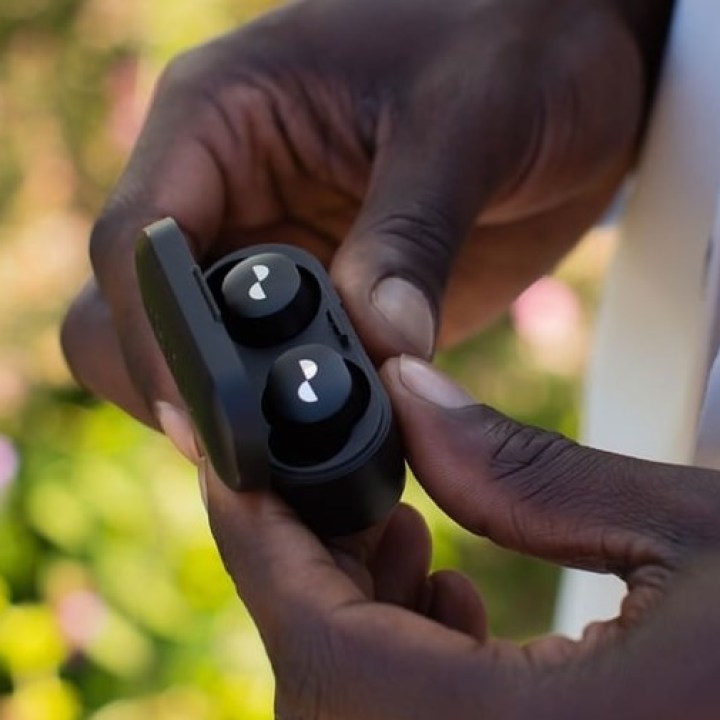
In products where the owner or a service shop can swap out a dying battery for a fresh cell, the drop in battery capacity is an annoying expense, but it doesn’t require that you discard the entire device. True wireless earbuds, on the other hand, are notorious for being nearly impossible to service. They’re fully sealed, but even if you were to safely open them, you’d likely find that the tiny battery inside is difficult or impossible to remove and replace.
iFixit’s Kevin Purdy summed up the problem in a discussion about repairing Apple’s AirPods: “It is all but impossible to do anything to them without damaging them and making them useless.” That’s a huge problem because we’ve seen instances where the capacity of a set of AirPods has dropped by as much as 50% within the first two years. When you start with only five hours of capacity when new, that leaves you with around 2.5 hours of usable playtime.
This is what makes NuraNow s intriguing. In theory, its 24-month replacement cycle would provide you with a fresh set of earbuds just as you’re beginning to experience the steepest drop in battery capacity. More importantly, all NuraNow subscription products remain the property of Nura and they must all be returned to the company if and when you decide to cancel your subscription. If we assume that Nura either refurbishes these returned products or at the very least disposes of them in a highly responsible manner, it’s a much better option from an environmental point of view too.
To highlight this subscription offer, Nura has made its newest true wireless earbuds — the Nurabuds — a NuraNow rental exclusive.
The cost of owning nothing
But what about the math? Battery concerns aside, does it actually make good financial sense to pay for your headphones or earbuds monthly instead of buying them outright? Let’s look at an example.
The Nuraloop headphones — a set of wireless earbuds connected by a short cable — cost $149 if you buy them directly from Nura. If you decide to rent them via NuraNow, you’ll pay $8 per month, plus a one-time fee of $29. After a 24-month rental period (the minimum time to qualify for a new product) you’ll have spent $221. After month 48, you’ll be in possession of three sets of equivalently valued headphones and you’ll have spent $413.
But here’s the catch: Not only is that a bigger total outlay of cash than you’d need to spend if you were buying a new set of headphones every two years, but you still won’t own anything. You’re not allowed to sell off the older headphones privately to recoup some of that money. You must keep all of the devices, which must eventually be returned to Nura when you cancel the subscription. Just in case you’re thinking you might “accidentally” forget to return them, Nura says it can remotely deactivate unreturned products. On the bright side, Nura doesn’t levy any cancellation fees and you can terminate the subscription at any time.
Nura sweetens the offer somewhat by giving subscribers three months of free access to Endel, a relaxation app, as well as “offers, discounts, and monthly giveaways.”
Personally, I would prefer to see Nura, Apple, Sony, and all other true wireless earbud makers offer a hassle-free trade-in option. Each company should have the option of sending your earbuds back, with a guaranteed future trade-in value, much like the way some car leasing arrangements work. That way, you can choose how often to refresh your earbuds, you know in advance how much it will cost to upgrade, nothing ends up in a drawer or worse yet, a landfill, and you always have the ability to sell the product privately because you own it.
NuraNow may not be the perfect solution to hardware depreciation and obsolescence, but it’s an interesting step that might just spur an industry-wide change.


