The copper wires that have linked U.S. telephones since the 1880’s have begun their long journey to the historical dustbin.
In fact, according to the Federal Communications Commission on Friday, they just entered “phase zero.”
In January, the commission launched an initiative to begin the transition from the old wire network that currently connects almost every house in the U.S. to the modern, IP-based digital phone system currently used by Vonage, Skype and the big telecom companies that offer VoIP. VoIP would obviate all of those legacy land lines.
Ma Bell? It’s been real. Bye bye.
The major telecoms like Verizon and AT&T are itching to get rid of those copper lines, or in industry-speak, POTS (plain old telephone service). IP transmission is cheaper to maintain, and it allows for faster service with the ability to pass more information over the networks at the same time.
AT&T stepped forward to conduct the first in a series of trials to see how such a transition will effect customers, the commission said during a Friday hearing in Washington D.C. Explaining how the trial would work was the FCC’s Wireline Competition Bureau, which said AT&T had submitted a proposal for retiring its landlines after an experimental trial that, if approved by the commission, would begin in the second half of 2015.
That proposal would target two areas within the company’s customer base that still relies heavily on the copper wire service: Carbon Hill, Alabama, a rural, sparsely populated city spread out over a wide swatch of the state; and Kings Point, Florida (Delray Beach), a densely-populated suburban town inhabited mostly by senior citizens whose entire telephone experience has been and still is POTS.
The trial would move these communities slowly to wireless home phone service and broadband Internet. According to a PowerPoint presentation issued at Friday’s meeting, at the end of the trials, 55 percent of Carbon Hill is expected to be using wireless phone, with 41 percent still relying on wired, and 4 percent still to be determined. Customers there have been notified of pending activity. The experiment would preclude any new landline service in the area.
AT&T currently has some 28.4 million POTS customers across its 22-state service area. But that number is shrinking rapidly, say industry analysts, as customers themselves see the benefits of digital over analog. Already, some 39 percent of all households use only a cell phone, according to The Wall Street Journal.

“We chose these locations in an effort to gain insights into some of the more difficult issues that likely will be presented as we transition from legacy networks,” said Hank Hultquist, vice president for federal regulatory for AT&T, in a blog post in February, “The lessons we learn from these trials will play a critical role as we begin this transition in our approximately 4,700 wire centers across the country to meet our goal of completing the IP transition by the end of 2020.”
Commissioners on Friday seemed pleased with the presentation, particularly that an independent, third-party data collector and analyst would be brought on board by the Wireline Bureau to ensure the effects of the AT&T transition on the consumer. This, as explained by Bureau attorney Michele Berlove, would provide information that “can support a fact-based and data-driven discussion without questions of bias,” and give “a real-world picture of how the transition would be rolled out nationwide.”
The commissioners and bureau representatives insisted the trials were to examine the effects on customers, particularly on whether the switch to digital would offer universal access to all of the services legacy phone networks offer now. The question still seems to be out on the key stuff – like pricing, and whether digital can provide all the current 911 emergency services, medical alerts and the Government Emergency Telecommunications Service (GETS), which ensures that public safety calls can get though when landlines become congested during mass disasters.
“I am pleased the bureau is taking steps to ensure that we have the internal capabilities to collect and analyze data regarding any experiments or trials,” said Commissioner Mignon Clyburn, in a statement made at Friday’s meeting.
“At the same time, I have heard concerns that AT&T’s proposed trial, has yet to satisfy the parameters set forth by the Commission and is currently not ready for approval. Before we can move forward and approve any trial, we need reasonable solutions that properly address the needs of all consumers.”
There is also the question of how much the FCC will be able to regulate the transition to IP, if at all, and whether Internet providers that now depend in part on these telecoms’ wire lines will be unceremoniously pushed out during the trials.
“By changing some widget in the network, these guys are saying they can throw the rule book in the trash,” said Chris Murray, who oversees government affairs at EarthLink, based in Atlanta, in the aforementioned WSJ report. “It’s creating a whole level of uncertainty not only for EarthLink but also for the businesses that rely on us.”
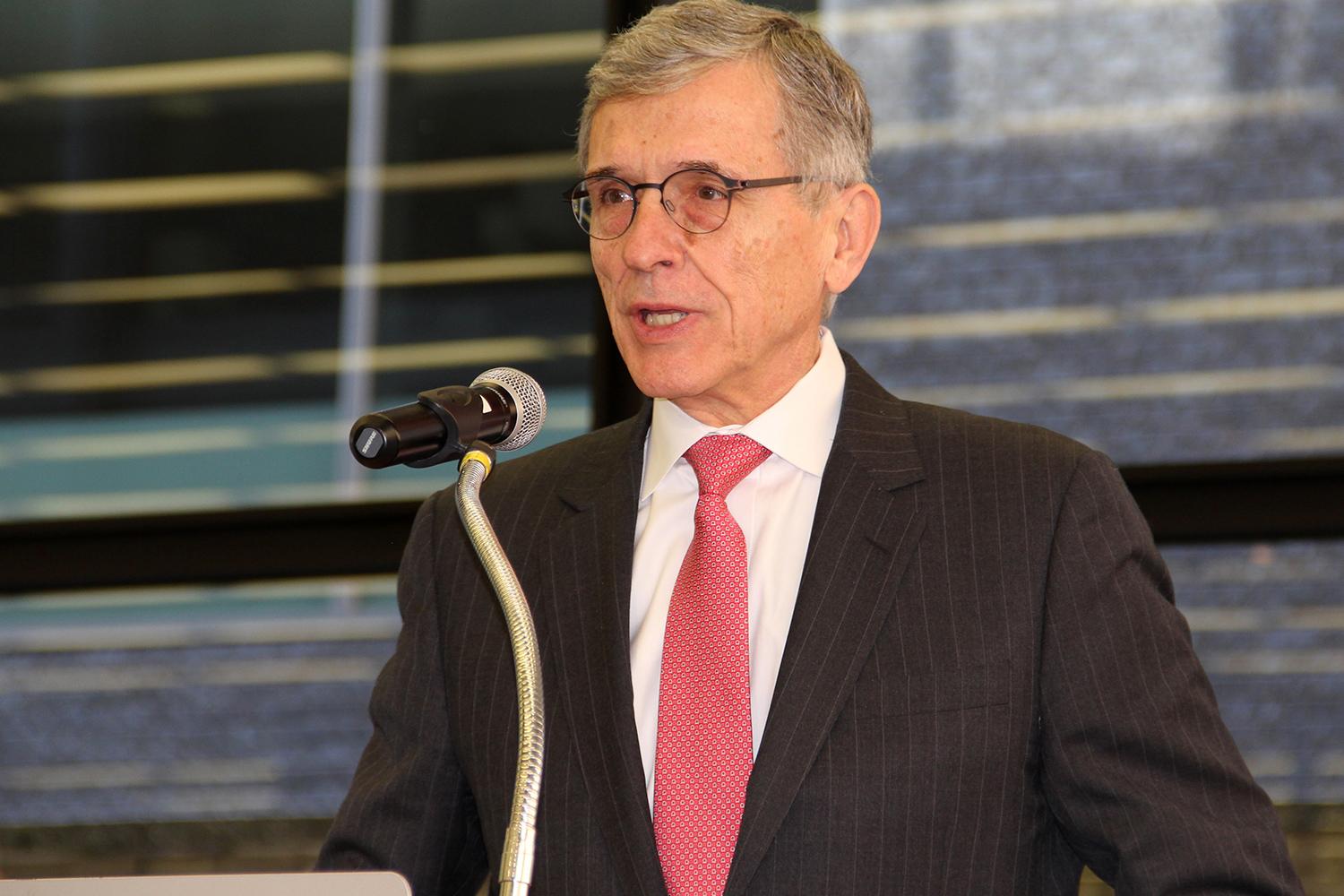
Earthlink filed an official comment on the issue in March, and said it was looking forward to “working with” AT&T in the trials. This induced FCC Commission Chairman Tom Wheeler to recuse himself from the AT&T trial portion of the IP transition, including the approval of its proposal, because he had just stepped down from Earthlink’s Board of Directors in November, and did not want to spur any charges of conflict of interest.
Wheeler, who has been an outspoken proponent of the transition to IP, made this announcement at the meeting Friday and it came as a surprise to many in the room. Wheeler ensured he would be part of the broader discussion of transformation nonetheless. “There are other initiatives underway and I will expect to be participating in them,” he said.
Public interest groups are watching all of this closely. The specter of an unregulated telecom sphere, higher prices, lowered expectations for universal access — are all of concern. However, the realities of the modern age have precipitated these changes, and the FCC is moving in the right direction, said Harold Feld, senior vice president of Public Knowledge.
“They’re doing the right things here,” he told DigitalTrends.com after the meeting. “This is complicated … a major transformation of the underlying technology upon which these communications – including 911 — depend. I’m glad the commission is bringing in independent evaluators. And we’re pleased they are asking the right questions.”