1. Home
  2. Phones
  3. Mobile
  4. News

Lip reading could be the future of unlocking your smartphone

Add as a preferred source on Google

Between fingerprints, face recognition, audio commands, and good old PIN numbers, passwords, and patterns, there is no shortage of ways to unlock your smartphone. Now, a team of researchers at Hong Kong Baptist University have added yet another way: Lip reading.

At first blush, using lip movement to authenticate a device might just seem like another frivolous method to accomplish something we already do on our devices every day easily enough, but there is actually a very strong case to be made for the idea, as the project’s leader Cheung Yiu-ming explained to the South China Morning Post.

Recommended Videos

“You can use English, Cantonese, or Putonghua,” the computer science engineer explained. “You can even mimic a bird chirping.”

Many forms of authentication rely on language, or numbers, or a complex software interface. What makes lip reading different is that anyone, anywhere can say a word or make a motion with their mouth. What makes it even more ingenious is that no two people will speak or move in exactly the same way.

“An imposter reading the same phrase would still be rejected by the system,” Cheung said, adding that, like other biometrics technologies, the user will have to demonstrate the triggering action multiple times so that the system can build a number of accepted responses on which to base a tolerance.

Right now, Cheung says his team of three has achieved a level of 90 percent accuracy and one of the major roadblocks to wide-scale implementation would be guaranteeing functionality in a variety of different lighting conditions. While the system should be harder to fool with a video recording than the way in which facial recognition prompts can be breached with a photograph, Cheung did not address that potential exploit.

The university has reportedly patented the technology and is exploring options for commercialization. Cheung says he hopes it could be ready for public use with another year of development.

Adam Ismail
Former Contributor
Adam’s obsession with tech began at a young age, with a Sega Dreamcast – and he’s been hooked ever since. Previously…
Google Photos adds a quick toggle between AI and classic search
Classic search is finally easier to reach for people who enabled Ask Photos
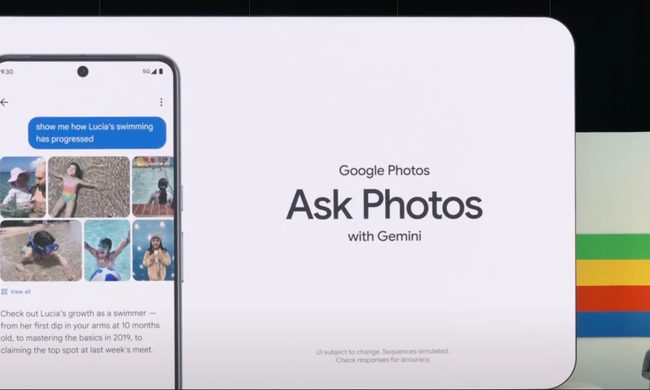
Google's Ask Photos debut.

Google Photos is giving users an easier way to leave its Gemini-powered search when a simple keyword would do. A new toggle now sits at the top of the results page, letting users switch between Ask Photos and classic search without digging through settings.

The change appears to address feedback from people who opted into Ask Photos but wanted a quicker way to return to classic search when Gemini was slower or less useful for a straightforward query.

Read more
Snapseed Camera now lets Android users save original photos and add geotags
Google updates Snapseed Camera with geotag support and non-destructive photo editing
Snapseed App

Google appears to be quietly turning Snapseed into something more than just a photo editing app. Over the past few weeks, the company has been steadily adding new capabilities to Snapseed Camera, its standalone camera app for Android. The latest update introduces two practical features that many smartphone users have come to expect from modern camera apps: the ability to save an untouched copy of every image for future editing and support for embedding location data directly into photos.

Neither feature is flashy, but together they make Snapseed Camera a more capable photography tool, particularly for users who like experimenting with filters without permanently altering their original shots. According to a report by 9to5Google, the features are rolling out with Snapseed Camera version 4.1.1.x on Android.

Read more
Samsung unveils Galaxy credit card ahead of Galaxy Unpacked
Samsung launches Galaxy Card with cashback on Galaxy purchases
Galaxy credit card

For years, Samsung has worked to turn Galaxy into more than a smartphone brand. Today, the company's ecosystem stretches across foldables, smartwatches, televisions, home appliances, smart home products and digital services. Now, it's adding another piece to that puzzle, one that has little to do with hardware.

Samsung has officially introduced the Samsung Galaxy Card, its first branded credit card in the U.S. Designed in partnership with Barclays US Consumer Bank and operating on the Visa network, the card rewards users for everyday spending while offering significantly higher cashback on purchases made directly through Samsung.

Read more