  1. Home
  2. Phones
  3. Computing
  4. Mobile
  5. News

Lumus demonstrates futuristic 3,000-nit AR glasses at CES 2023

Add as a preferred source on Google

Lumus recently announced its next-gen waveguide technology for AR glasses that will have a wider field of view and a brighter display, while being much more efficient than other solutions. We spoke with the Vice President of Marketing David Andrew Goldman about Lumus’ new Z-Lens design and technology to get the full scoop.

Building upon the already impressive, reflective waveguides used in the 2D Maximus design, the second generation Z-Lens can deliver a 3,000-nit display at 2K-by-2K resolution in an optical engine that’s 50% smaller, resulting in a pair of AR glasses that could weigh as little as 50 grams (in a monocular design). This makes it possible to manufacture stylish, lightweight AR glasses without any tradeoffs, such as tinting the lens or frequent charging.
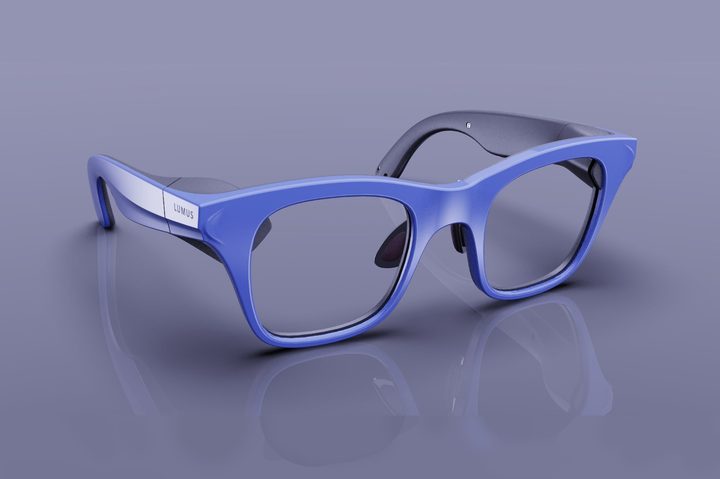
Lumus Z-Lens waveguide allows slim, stylish AR glasses
Image used with permission by copyright holder

The challenge with AR glasses is getting enough light to the display efficiently to allow a useful runtime while maintaining an attractive and unobtrusive appearance. Lumus waveguide technology has been estimated by AR display expert Karl Guttag to be five to ten times more efficient than competing solutions.

Recommended Videos

Goldman feels that the problem has been solved with the Lumus Z-Lens and shared that the company is working with multiple tier-one tech companies on future AR glasses. It will be two to three years before these products are likely to launch, but it’s exciting to learn more about what to expect in the future as this technology matures.

The final design of AR glasses is determined by the product manufacturer, but Goldman shared some details of what might reasonably be expected in terms of product specifications and pricing. With a cost roughly equivalent to a high-end smartphone, future AR glasses won’t be inexpensive, but should be priced within reach of most consumers.
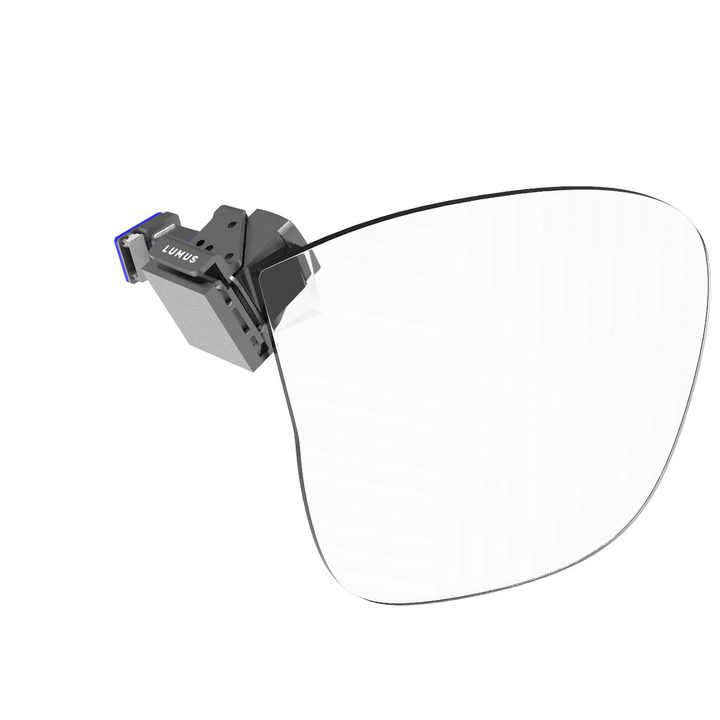
This is the tiny Lumus Z-Lens optical engine.
Image used with permission by copyright holder

At that $1,000 plus price, you can expect a comfortable, lightweight pair of glasses built with Lumus Z-Lens waveguide technology to look quite similar to normal eyewear. The display will have a 50- to 80-degree field of view and battery life will be sufficient for several hours of use. The bright, sharp display will be easily readable even when used outdoors.

A smartphone will probably still be needed for some features, like calling and GPS location tracking, but much of the processing will occur within the AR glasses. As Lumus likes to say “the future is looking up,” and the need to glance down at your smartphone will be greatly reduced in the near future as AR advances and becomes more commonplace.

Alan Truly
Alan Truly is a Writer at Digital Trends, covering computers, laptops, hardware, software, and accessories that stand out as…
Finding photos is so much easier with Siri AI in iOS 27 that I no longer scroll
Natural language photo search in iOS 27 is the kind of feature that quietly becomes essential.
Electronics, Phone, Mobile Phone

My camera roll has crossed 8,000 photos, and it got there by capturing random moments (only to forget them later). The problem, however, starts when someone asks me to share something specific. It could be their portrait from last weekend or the food pictures they snapped using my phone.

Finding those pictures usually means scrolling through my seemingly endless camera roll. If the photo is a month or two old, I end up scrolling past hundreds of other images to find it, and that gets old fast.

Read more
WhatsApp clears that usernames won’t leave you open to scammers
New safeguards include username keys, rate limits, and anti-impersonation protections.
Whatsapp Usernames Whatsapp Username

WhatsApp's long-awaited username feature is now officially rolling out to users. But almost as soon as it was announced, many began asking an obvious question: won't this make it easier for scammers to message strangers? Now, WhatsApp has stepped in to explain why it believes that won't happen.

WhatsApp says usernames aren't as open as Telegram's

Read more
Forget Apple’s AirTag, Motorola’s new Android tracker lasts over 500 days and costs less too
Moto Tag 2 could be the AirTag Android users actually buy
Moto Tag 2 with car keys

Motorola is finally bringing out its second-generation Android smart tracker. While Apple's AirTag has been hogging the limelight, the Moto Tag 2 is the new rival in town, arriving in North America starting June 30. It brings UWB (Ultra Wideband) tracking support, Bluetooth Channel Sounding, and Google Find Hub support in a compact tracker built for keys, bags, luggage, camera gear, and anything else people keep misplacing.

The real headline, though, is the battery life. Motorola claims that this is its longest-lasting smart tracker yet, with more than 500 days of battery life from a replaceable CR2032 battery.

Read more