  1. Home
  2. Phones
  3. Computing
  4. Mobile
  5. News

The Monk Skin Tone Scale makes the internet more inclusive

Add as a preferred source on Google

Google has adopted the Monk Skin Tone (MST) Scale for use across its software and products to ensure all kinds of skin tones are accurately portrayed and represented on the internet. The MST Scale is the work of Harvard professor and sociologist Dr. Ellis Monk, and is a 10-point scale that help machines better understand and therefore better represent more varied skin tones. It’s a considerable step up from the six-point scale commonly used online today.

Monk Skin Tone Scale | Google's Research Center for Responsible AI and Human-Centered Technology

The 10-point scale has been validated through a U.S. study launched by Google Research, which asked people from a range of different communities if they felt their skin tone was represented on it. Why only 10 points and not 100, or 1,000? Dr. Ellis explains:

Recommended Videos

“You only pick so many tones to use in the scale because of cognitive latency issues. If you have a scale with too many points, that’s impractical for humans and from an A.I. point of view, furthermore, it becomes a problem when a scale is too large.”

The MST Scale with its 10 points has enough variation that it reflects more people than the current model, yet doesn’t increase complexity, enabling computers and software to adapt to it quickly. However, this is not its absolutely final state. Google says the scale and the A.I. that supports it are a work in progress, and it’s seen as an initial step in the right direction. The MST Scale is open source and through partnerships in the industry, it will be used to improve images and content online as part of an effort to make the internet more inclusive.
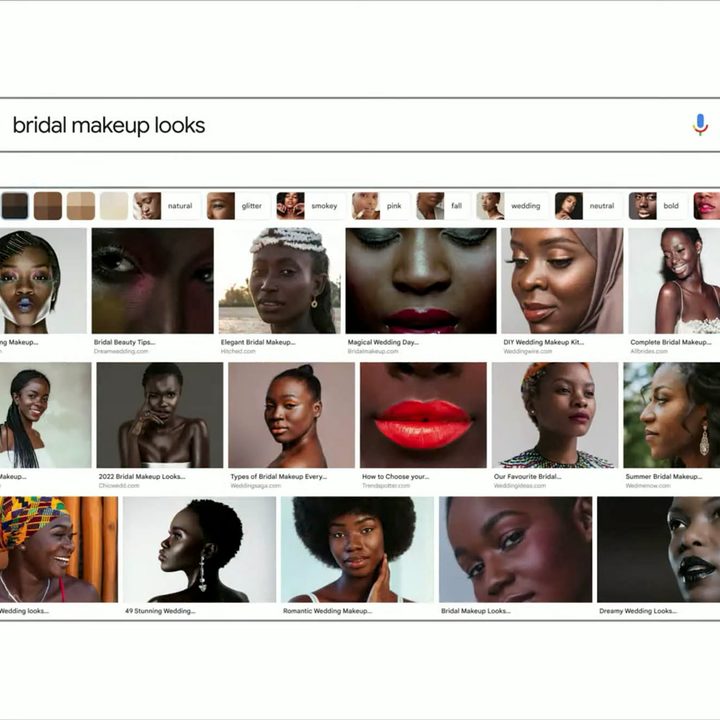
Search results using the Monk Skin Tone Scale
Image used with permission by copyright holder

Where will we see the MST Scale in action? Google specifically mentions Google Images, where an option to refine results by including skin tone will be added. The MST Scale will then help provide results that better suit you. The MST Scale will also come to Google Photos through a series of new Real Tone filters added to it, which are designed using the scale to better accommodate more skin tones. These will be coming to the iOS and Android Google Photos app in the coming weeks.

The MST Scale continues the work Google started in 2021 under the name Real Tone, where the Pixel 6 and Pixel 6 Pro’s cameras used A.I. and other tools to better render different skin tones. The Real Tone tool was also built into the Auto Enhance feature in Google Photos.

Take a look at the 10-point MST Scale here, where Google has even made the scale available with HEX codes, and the shades are easily copied and pasted for your own use. The use of the MST Scale is part of the company’s Google I/O 2022 announcements.


Andy Boxall
Andy has written about mobile technology for almost a decade. From 2G to 5G and smartphone to smartwatch, Andy knows tech.
Google Photos adds a quick toggle between AI and classic search
Classic search is finally easier to reach for people who enabled Ask Photos
Google's Ask Photos debut.

Google Photos is giving users an easier way to leave its Gemini-powered search when a simple keyword would do. A new toggle now sits at the top of the results page, letting users switch between Ask Photos and classic search without digging through settings.

The change appears to address feedback from people who opted into Ask Photos but wanted a quicker way to return to classic search when Gemini was slower or less useful for a straightforward query.

Read more
Snapseed Camera now lets Android users save original photos and add geotags
Google updates Snapseed Camera with geotag support and non-destructive photo editing
Snapseed App

Google appears to be quietly turning Snapseed into something more than just a photo editing app. Over the past few weeks, the company has been steadily adding new capabilities to Snapseed Camera, its standalone camera app for Android. The latest update introduces two practical features that many smartphone users have come to expect from modern camera apps: the ability to save an untouched copy of every image for future editing and support for embedding location data directly into photos.

Neither feature is flashy, but together they make Snapseed Camera a more capable photography tool, particularly for users who like experimenting with filters without permanently altering their original shots. According to a report by 9to5Google, the features are rolling out with Snapseed Camera version 4.1.1.x on Android.

Read more
Samsung unveils Galaxy credit card ahead of Galaxy Unpacked
Samsung launches Galaxy Card with cashback on Galaxy purchases
Galaxy credit card

For years, Samsung has worked to turn Galaxy into more than a smartphone brand. Today, the company's ecosystem stretches across foldables, smartwatches, televisions, home appliances, smart home products and digital services. Now, it's adding another piece to that puzzle, one that has little to do with hardware.

Samsung has officially introduced the Samsung Galaxy Card, its first branded credit card in the U.S. Designed in partnership with Barclays US Consumer Bank and operating on the Visa network, the card rewards users for everyday spending while offering significantly higher cashback on purchases made directly through Samsung.

Read more