1. Home
  2. Phones
  3. Mobile
  4. News

Oppo’s weird health tracker is a smartwatch without the watch part

Add as a preferred source on Google

At its Inno Day 2022 event held in China, technology manufacturer Oppo announced the OHealth H1, an odd device that appears to be a holdable, not a wearable, despite sharing many of the health-related sensors we expect to find in a smartwatch. Described as a health device for the family, it’s a new style of device we’ve not seen before.

Inside the 95-gram, computer mouse-shaped device are sensors to measure your heart rate, body temperature, and blood oxygen levels, along with heart and lung auscultation, plus it has an electrocardiogram (ECG) function. The case is smooth and rounded, and can also be used to track sleep. Oppo says the OHealth H1 has been designed to make it easy to carry around and look suitably different from traditional medical equipment.
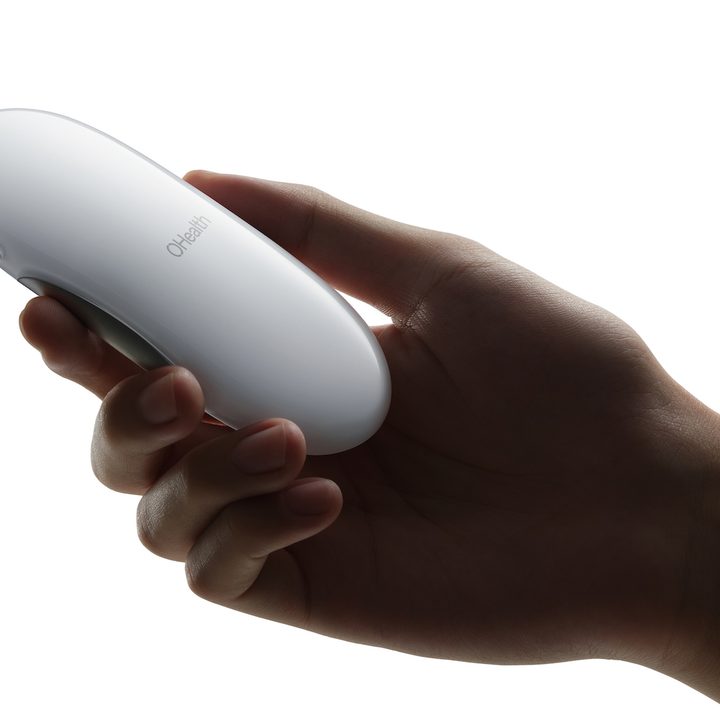
The Oppo OHealth H1 health device.
Oppo

Details on how the product works, and when it will go on sale, are unknown at the time of writing. Oppo sells its smartphones and other mobile products in China, the U.K., and many other regions, but not in the U.S. Health-related technology devices often require particular certification to be sold in certain countries, but efforts to get the OHealth H1 cleared for sale haven’t been announced yet.
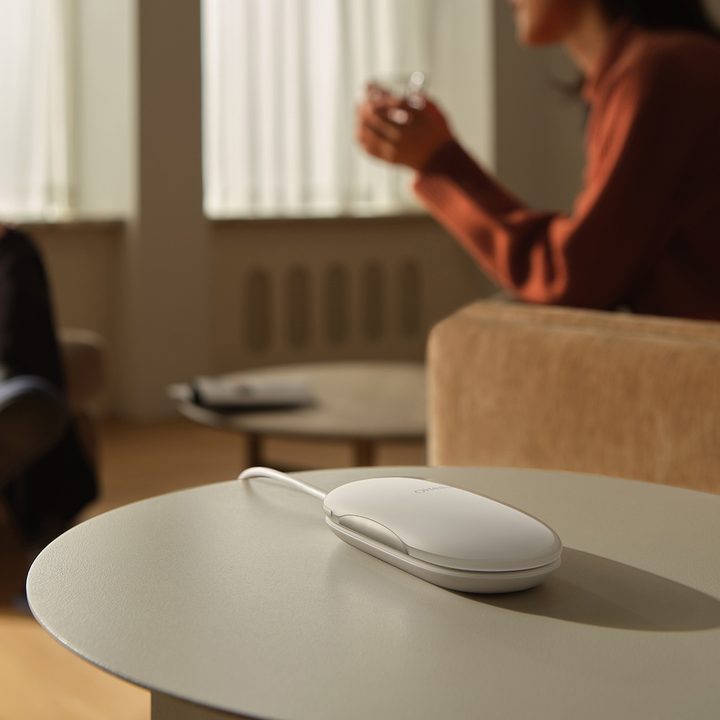
Oppo OHealth H1 health device on a table.
Oppo

Also shown during Oppo’s Inno Day 2022, but equally unlikely to receive a wide release, is the Air Glass 2 assisted reality spectacles. Oppo showed the first version of Air Glass during its 2021 Inno Day event, and so far, they have not been released outside China. Air Glass 2 uses a new set of Oppo-designed waveguide lenses and can make phone calls, provide real-time translation, show navigation instructions, and more. They weigh just 38 grams.
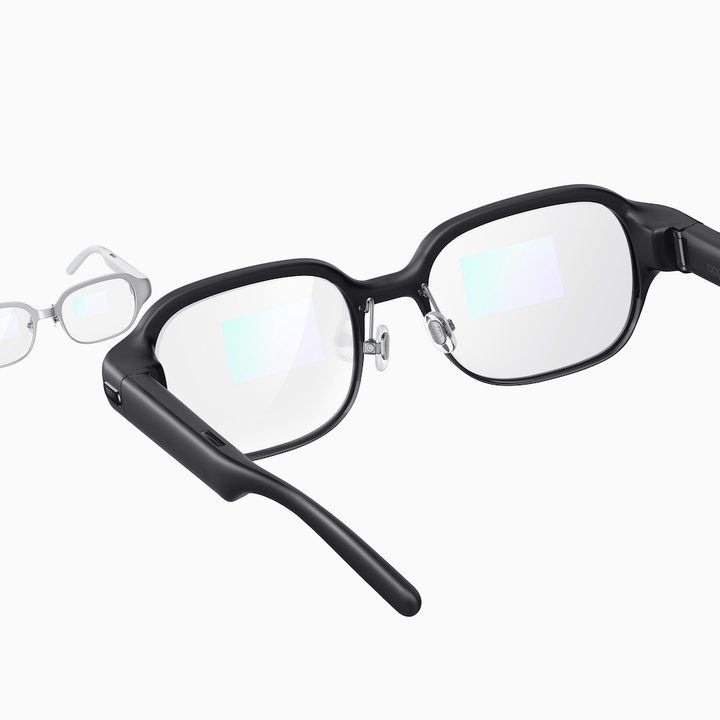
Oppo Air Glass 2 spectacles.
Oppo

Finally, Oppo has a new custom-made chip, the MariSilicon Y. Unlike the photography-centric MariSilicon X chip, the MariSilicon Y is a Bluetooth system on a chip (SoC), and according to Oppo, it’s the first to be able to stream 24-bit/192kHz audio over Bluetooth. Expect the MariSilicon Y to arrive in Oppo phones in the future, and potentially only be compatible with Oppo’s own range of audio products.

Recommended Videos

Oppo’s Inno Day 2022 runs December 14 and 15, so these three announcements may only be the start of what’s to come from the event.

Andy Boxall
Andy has written about mobile technology for almost a decade. From 2G to 5G and smartphone to smartwatch, Andy knows tech.
I was in love with my iPhone Air, until summer arrived
Turns out slim phones and scorching summers don't mix well.
iPhone Air in hand

When Apple unveiled the iPhone Air, I knew immediately it would be my next phone. I have always loved small phones, and I stretched my iPhone 13 mini for as long as possible. But it struggled to keep up with my usage, so I had to upgrade. 

Since Apple no longer makes a small iPhone, the slim iPhone seemed like the right choice at the time. And honestly, it worked out well. While the iPhone Air is not as easy to handle as an iPhone mini, it is one-handable thanks to its slim profile and lower weight. 

Read more
The regular iPhone 18 may miss out on two major Siri AI features
Standard iPhone 18 might not have enough RAM to run some AI features locally
Electronics, Mobile Phone, Phone

Apple is expected to debut the iPhone 18 Pro and iPhone 18 Pro Max this fall, possibly alongside its first foldable iPhone. The standard iPhone 18, however, is said to arrive later in spring 2027 with the iPhone 18e. While the lineup is expected to get more RAM, the upgrade may still fall short of what the standard and 18e models need for two advanced Siri AI features.

The issue is Apple’s AFM Core Advanced model. It powers Advanced Dictation Preview in iOS 27, along with Apple’s new expressive Siri voices. The model runs locally on supported devices, but it needs at least 12GB of RAM.

Read more
Android desktop mode made me miss my laptop in record time
I tried writing and publishing from Google’s phone-to-monitor setup, and the future of mobile computing immediately started sweating.
Computer, Electronics, Laptop

Android 17 desktop mode has a very simple pitch. Plug your phone into a monitor, add a keyboard and mouse, and watch the slab in your pocket pretend to be a computer. I wanted to give that pitch a fair shot, so I tried using it for an actual workday instead of a cute demo.

The goal was boring on purpose: write an article, edit it, build the page in WordPress, upload whatever needed uploading, and publish the thing without running back to my laptop like a coward.

Read more