  1. Home
  2. Phones
  3. Mobile
  4. News

Samsung’s latest RAM chips can move data superfast on your next-gen smartphone

Add as a preferred source on Google
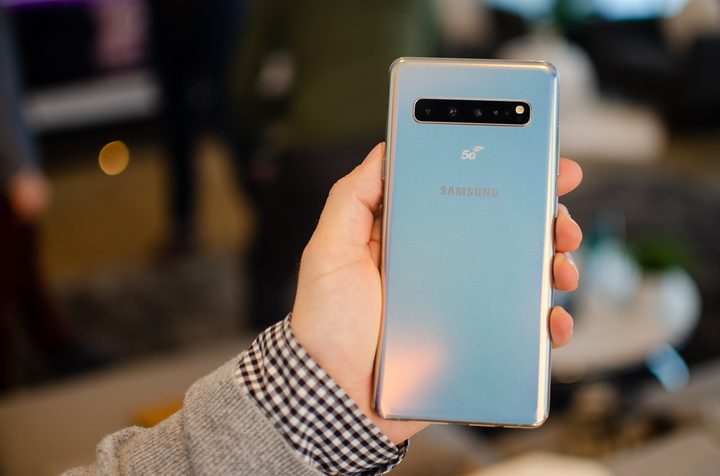
Samsung Galaxy S10 5G
Julian Chokkattu/Digital Trends

Despite the slow rollout of 5G network infrastructure, Samsung is trying to do its part to get superb 5G and A.I. technologies in consumer hands as quickly as possible.

The electronics giant has announced the mass production of 12-gigabit LPDDR5 mobile DRAM in 6 and 12 GB capacities. While many high-end phones currently on the market, including the Galaxy S10, utilize the previous generation of LPDDR4X DRAM, Samsung says this latest chip evolution will bring optimized support for 5G and A.I. applications. The 12 GB configuration will facilitate transfer speeds of up to 44 GB of data in only 1 second.

Recommended Videos

Those are some pretty wicked-fast speeds, and Samsung says it’s ready to ramp up production on these chips if interest is high enough in the global market. Consumer interest in such killer transfer speeds could be quite high if these numbers can hold up and achieve the 5,500 megabit-per-second transfers claimed in Samsung’s report.

The company said this latest chip is up to 30% more efficient than its LPRDDR4X predecessor, while also being 1.3 times faster on the same second-generation 10-nanometer process. This is thanks to a new circuit design with “enhanced clocking, training and [a] low-power feature” that allows its new mobile DRAM to enable next-gen flagship smartphones to “fully leverage 5G and A.I. capabilities like ultra-high-definition video recording and machine learning, while greatly extending the battery life.”

While Samsung has little to do with the successful roll out of 5G infrastructure, devices harnessing the proper components to take full advantage of this mobile evolution will be paramount to its success in powering new technologies and doing so efficiently. 

Nearly every major phone manufacturer is expected to release 5G phones through 2019 — with the exception of Apple— but it may not be until the 2020 launch of the rumored Galaxy S11 that we see this technology make its way into our hands.

Until then, we’ll have only the dream of such lightning-fast data speeds on our phones – much like most of the U.S. now, which is awaiting proper 5G coverage. This won’t stop Samsung from pushing forward, though, as it has stated its plans to also develop a 16Gb LPDDR5 next year.

Corey Gaskin
Former Associate Editor, Mobile
Corey’s technological obsession started as a teenager, lusting after the brand-new LG VX8300 flip phone. This led him to…
The Pixel 11 is almost here, and these are the 3 upgrades I’m begging Google to make
Electronics, Mobile Phone, Phone

We're only a month away from Google's next big hardware event, with the Pixel 11 series officially arriving on August 12. 

After living with the Pixel 10 Pro and the Pixel 10a over the past year, I've come to appreciate what Google's phones do well — and, more importantly, where they still fall short. With the smartphone landscape evolving faster than ever, there are three upgrades I'm hoping Google finally delivers this year. If you're a fellow Pixel user, chances are these are on your wishlist too.

Read more
5 reasons I keep coming back to Apple Reminders despite paying for premium task managers
I rely on OmniFocus for complex projects, but Apple Reminders still handles my everyday tasks better than any paid app.
Apple Reminders open on iPhone

The App Store is filled with premium task managers, and like Things 3, Todoist, and OmniFocus, despite buying and switching between several of them, I keep coming back to Apple Reminders. 

Don’t get me wrong, I still use OmniFocus to manage my projects. But when it comes to daily tasks and quick capture, Apple Reminders still remains my go-to app. In this guide, I'll walk you through the five biggest reasons why.

Read more
Google may finally ditch Samsung’s modem in the Pixel 11, and Tensor G6 could be better for it
FCC paperwork for Google’s next foldable points to MediaTek, raising hopes for lower power use and a cleaner break from Tensor’s Exynos roots
AI recreation of Pixel 11's Pixel Glow feature.

Google may be preparing its biggest Tensor hardware split yet. As spotted by Android Authority, FCC testing for an unreleased foldable Google phone includes a reference to MediaTek radio-frequency software, adding weight to reports that the Pixel 11’s Tensor G6 could leave Samsung’s Exynos modem behind.

Every previous Tensor chip has used Samsung modem hardware. Changing suppliers won’t guarantee better battery life or reception, but it gives Google a fresh path after years of leaning on the same underlying technology.

Read more