1. Home
  2. Phones
  3. Mobile
  4. News

Tri-fold phone concept is the device we didn’t know we wanted

Add as a preferred source on Google
Infinix S Zero tri-fold phone concept.
Infinix

Over the last five years since Samsung and Motorola launched their first commercially available foldable device, dozens of brands have jumped and released their folding phones. With saturation in the segment, brands are now looking to stand out with tri- and multi-fold devices, especially after Huawei launched the unimaginably thin triple-folding phone. While the usual intent with a tri-fold is to expand the phone to a foldable-like footprint, one brand is taking the opposite route and using it to make the phone more compact.

Infinix, a phone brand that’s huge in Asia, Africa, and parts of Eastern Europe, just teased a concept of a tri-fold phone that folds down to a tiny palm-sized layout. Instead of a book-style foldable, Infinix is choosing dimensions similar to a flip phone. But instead of folding twice, this one folds thrice, for a minimal layout.
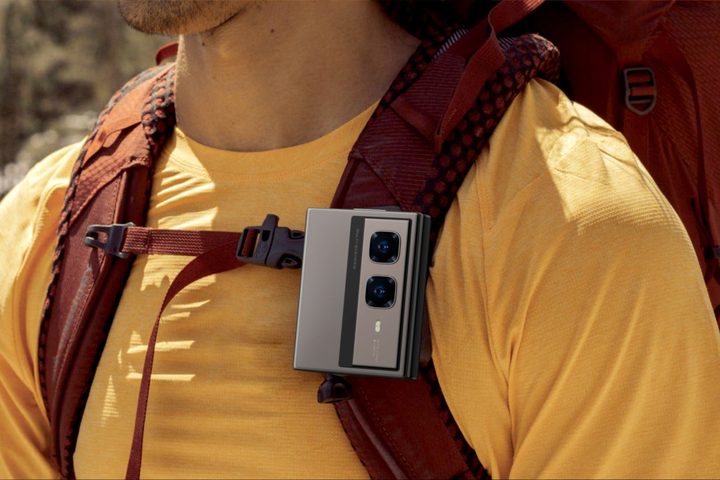
Infinix S Zero tri-fold phone concept used for hiking.
Infinix

In its press announcement, Infinix shares examples of use cases, where it says the phone can be mounted on bikes or gym equipment or even clipped to your pocket or a backpack’s strap, like a tiny action camera. Infinix also says it can be partially unfolded for hands-free calling and watching content, and further adds the device is built for “single-handed use” and blurs the “lines between a smartphone and an all-in-one tech companion.”

Recommended Videos

Like any flip phone, there are screens both inside and out. The concept phone uses two hinges, one of which is likely to move freely with 360-degree rotation along the bottom third. This also makes the bottom hinge thicker, and Infinix appears to have used that as an opportunity to make that section of the screen usable with distinct elements — something like the edge panels on the Samsung Galaxy Note Edge.
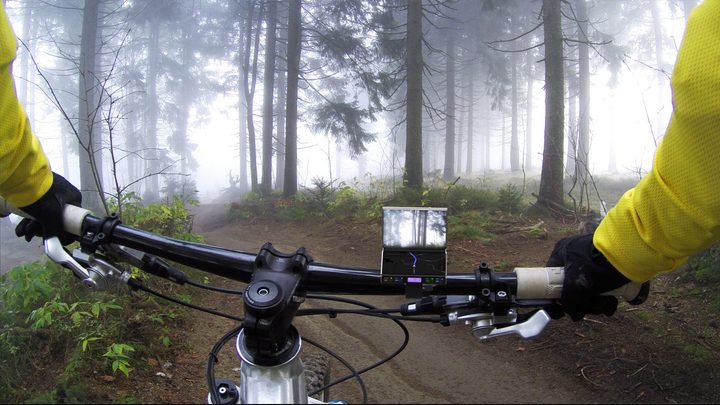
Infinix S Zero tri-fold phone concept mounted on a bike.
Infinix

Of course, these are digital renders, and Infinix calls it “a visionary glimpse into the future,” suggesting this phone will likely not have a commercial release. However, it does plan to showcase the concept at Mobile World Congress (MWC) 2025 next week. Whether that would be another digital render or a physical prototype is something we will learn shortly.

Tushar Mehta
Tushar is a freelance writer at Digital Trends and has been contributing to the Mobile Section for the past three years…
Android desktop mode made me miss my laptop in record time
I tried writing and publishing from Google’s phone-to-monitor setup, and the future of mobile computing immediately started sweating.
Computer, Electronics, Laptop

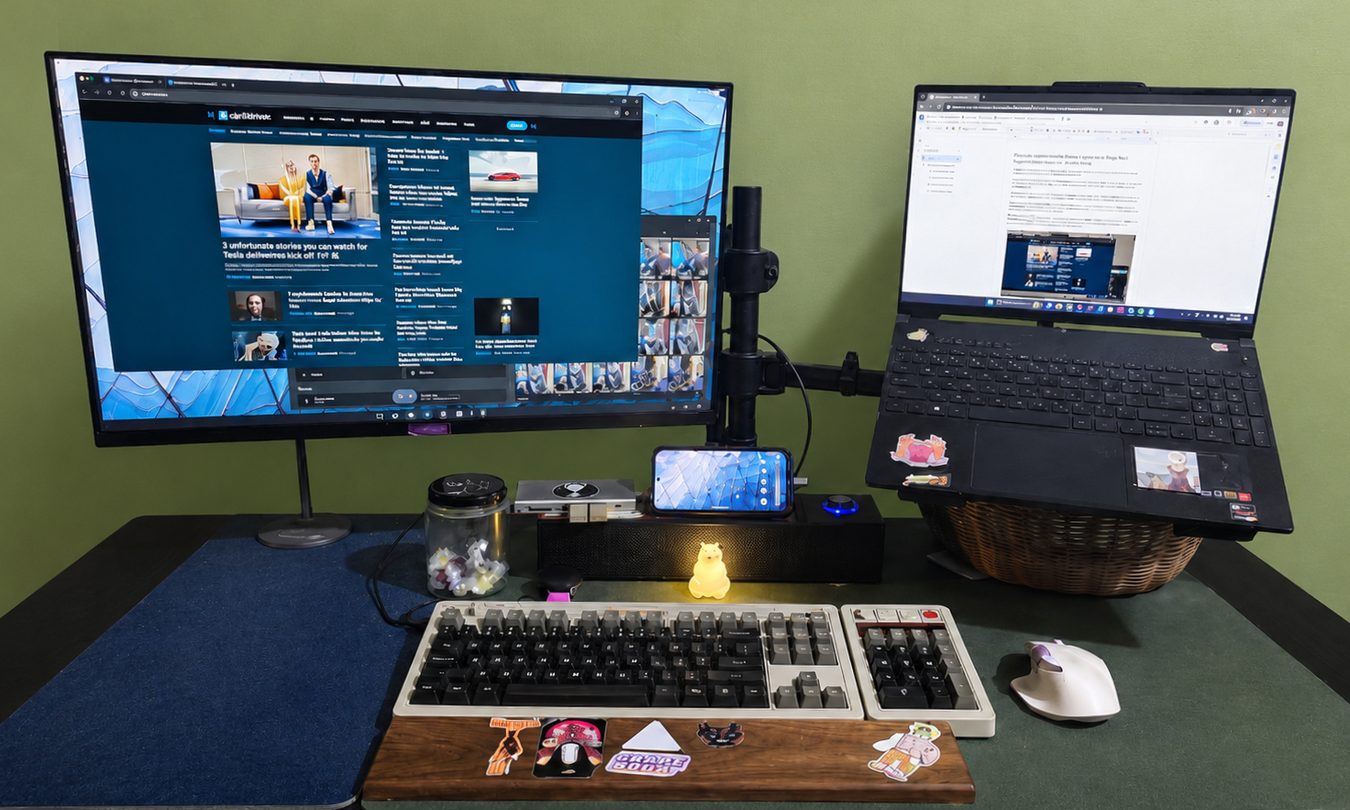
Android 17 desktop mode has a very simple pitch. Plug your phone into a monitor, add a keyboard and mouse, and watch the slab in your pocket pretend to be a computer. I wanted to give that pitch a fair shot, so I tried using it for an actual workday instead of a cute demo.

The goal was boring on purpose: write an article, edit it, build the page in WordPress, upload whatever needed uploading, and publish the thing without running back to my laptop like a coward.

Read more
After test-driving iOS 27, my iPhone still doesn’t feel like it has made a substantial leap
Siri learned new tricks. Safari got smarter tabs. My morning routine didn't change at all.
iOS 27 new star rating feature in Photos

Every June, after Apple wraps up its annual WWDC keynote, I install the latest iOS beta on my iPhone, watch the progress bar crawl to completion, and wait for the inevitable restart. For years, picking up my phone afterward felt almost identical to how it did before the update. 

I saw the same grid of icons, the same Control Center, and the same version of Siri until iOS 26 finally broke that pattern in 2025.

Read more
Android 17 makes a strong case for ignoring Android version numbers entirely
When the most noticeable change is a better Quick Settings button, the annual update cycle starts looking more like branding than progress.
Android 17 logo.

Android 17 finally separated the Wi-Fi and mobile data buttons, and I hate how much that improved my mood. For years, Android treated internet access like one mysterious blob, as if Wi-Fi and cellular data were emotionally codependent. In Android 17 Beta 3, Google split the old combined Internet button into separate Wi-Fi and mobile data tiles, making each connection easier to switch off with a single tap.

That’s a good change, which is also why it’s a little damning. When one of the cleanest wins in a major OS update is “the buttons make sense again,” the celebration gets awkward fast.

Read more