1. Home
  2. Social Media
  3. News

Facebook’s wants to turn basic link sharing into a paid feature

A new hurdle for creators driving traffic from Facebook

Add as a preferred source on Google
Facebook App
Unsplash

Facebook has begun experimenting with charging for one of its most basic features, link sharing. In a new test spotted by users, Meta is limiting how many links certain Facebook accounts can post unless they pay for a subscription.

Users who are part of Facebook’s professional mode or who run Pages can only post two links in regular posts unless they subscribe to Meta Verified. The paid plan starts at $14.99 per month in the US.

Recommended Videos

This change lands as new research highlights how deeply Facebook is still woven into everyday online habits. It could have a direct impact on creators and businesses that use Facebook to share articles, products, or drive traffic elsewhere on the internet.

Why is Facebook putting limits on link sharing?

Meta confirmed the experiment and told TechCrunch that it is a “limited test” meant to understand whether the ability to post more links adds extra value for Meta Verified subscribers. While Meta states that publishers are not currently included in the test, many creators rely on professional mode profiles and Pages to reach their audiences.

According to social media strategist Matt Navarra, links in comments are still allowed, as well as affiliate links and links to other Meta-owned platforms such as Instagram and WhatsApp.

Facebook’s own data may help explain the thinking. In a recent transparency report, Meta said more than 98% of feed views in the US come from posts without links. Posts with links account for a small share of views and are mostly seen from Pages that users already follow.

Navarra told the BBC that the move signals Meta’s broader push to monetize content distribution itself, calling it “the basic ability to send people to other parts of the internet” being placed behind a paywall. “Tests like this underline why building a business that’s overly dependent on any one platform’s goodwill is incredibly risky,” he said.

Such tactics are not new. Platforms like X have previously downplayed linked posts to keep users on their own services longer, and turned the verification checkmark into a monthly subscription. For now, this is still a test. But it adds to growing concerns of a future where even simple actions on social platforms may come with a price.

Manisha Priyadarshini
Manisha Priyadarshini is a tech and entertainment writer with over nine years of editorial experience.
X Money is finally here, and it’s much more than a digital wallet
The new financial service aims to turn X into an app where users can pay, save, spend, and send money.
X Money featured

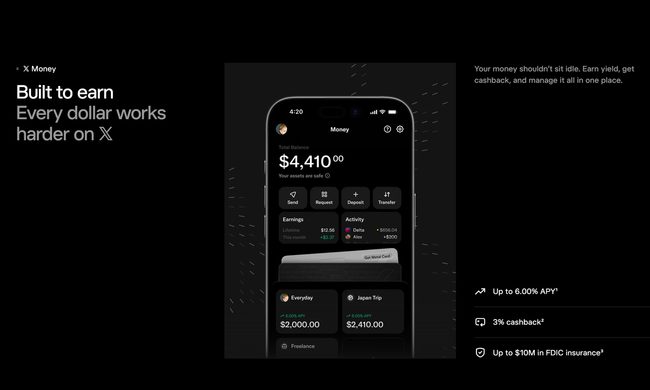
Elon Musk's vision of turning X into an "everything app" has taken another major step forward. The company has officially begun rolling out X Money to Premium and Premium+ subscribers in the United States. Rather than being just another digital wallet, X Money is designed as a full-fledged financial hub built directly into the social platform, allowing users to send money, receive payments, hold cash, earn interest, and spend through a Visa debit card—all without leaving the X app.

What is X Money, and who is it for?

Read more
The EU says TikTok still isn’t doing enough to protect kids
Regulators say the platform's privacy settings don't go far enough under the Digital Services Act.
TikTok Creative Featured

The European Commission has accused TikTok of falling short on protecting minors, saying the platform's current account settings don't meet the child safety standards required under the Digital Services Act (DSA). The findings are preliminary, but if upheld, TikTok could face a fine of up to 6% of its global annual revenue.

Why the EU thinks TikTok isn't doing enough

Read more
Facebook debuts Seller app for Marketplace and tests a TikTok-style video feed
As Marketplace turns ten, Facebook is celebrating with a seller app and a video-first redesign test.
facebook-seller-app

Facebook Marketplace just turned ten, and Meta is marking the milestone by reshaping how you buy, sell, and scroll. The company launched a dedicated app called Seller for its most active Marketplace users.

At the same time, it confirmed plans to test a video-first home screen that looks a lot like TikTok. Together, these updates hint at where Facebook wants to take its massive user base next, and they lean heavily on AI to get there.

Read more