1. Home
  2. Space
  3. News

How to watch Blue Origin’s third space tourism flight on Saturday

Add as a preferred source on Google
Replay: New Shepard Mission NS-19 Webcast

Blue Origin is making final preparations for the third crewed launch of its New Shepard rocket.

Recommended Videos

The mission was originally set for Thursday, December 9, but strong winds at the launch site in West Texas forced it to be pushed to Saturday, December 11.

The 10-minute trip to the edge of space will carry six passengers, marking the first time for Blue Origin to fill the capsule to capacity.

The crew includes invited guest Laura Shepard Churchley, the eldest daughter of Alan Shepard, who was the first American in space and the person whom Blue Origin named its rocket after. Good Morning America co-anchor Michael Strahan will also be on board as a guest of Blue Origin.

The other seats will be taken up by paying passengers Dylan Taylor, a space industry executive and philanthropist; investor Evan Dick; and Bess Ventures founder Lane Bess and his son, Cameron. The Besses are set to become the first parent-child pair to fly to space together.

Earlier this week the crew made an appearance on Good Morning America:

READY FOR LIFTOFF: @michaelstrahan talks final preparations ahead of space launch 🚀https://t.co/4b7nEhLBFU pic.twitter.com/JhCPNVEcXf

— Good Morning America (@GMA) December 8, 2021

Blue Origin’s New Shepard rocket will transport the six crewmembers to the Kármán line, a spot about 62 miles above Earth that’s widely regarded as the start of space. The crew will be able to view the blackness of space and the curvature of Earth, and at the highest point can leave their seats to experience several minutes of weightlessness. The capsule will then return to Earth in a parachute-assisted landing.

The suborbital space trip comes ahead of the launch of Blue Origin’s commercial space tourism service that could begin next year.

Blue Origin was set up by Amazon founder Jeff Bezos in 2000. Bezos himself was part of Blue Origin’s first crewed flight in July.

Besides its space tourism service, the company is also hoping to provide hardware for NASA to use in future missions.

How to watch

Blue Origin will launch the New Shepard rocket and its crew to the edge of space on Saturday, December 11, weather conditions permitting.

The flight will begin at Launch Site One in West Texas at 9:45 a.m. ET (6:45 a.m. PT), though Blue Origin’s livestream will probably start around 90 minutes earlier.

You can watch the coverage in the video player embedded at the top of this page or via Blue Origin’s website.

Trevor Mogg
Contributing Editor
Not so many moons ago, Trevor moved from one tea-loving island nation that drives on the left (Britain) to another (Japan)…
Getting to Mars may require a pit stop in orbit, and NASA just tested the nozzle to make that happen
A gas pump nozzle for spacecraft sounds simple. It is not, and that's what makes this test worth paying attention to.
Architecture, Building, Factory

Getting a spacecraft to Mars or beyond requires an enormous amount of fuel, most of which has to be hauled from Earth, adding to the overall cost and weight of the spacecraft. NASA has been working on a different approach, one that could be more efficient and effective.

It wants to refuel a spacecraft in orbit before heading out for the mission. What’s even more interesting is that the space agency just finished testing a component that could make that possible: a cryocoupler.

Read more
Elon Musk’ Starlink could soon offer mobile services as a US carrier
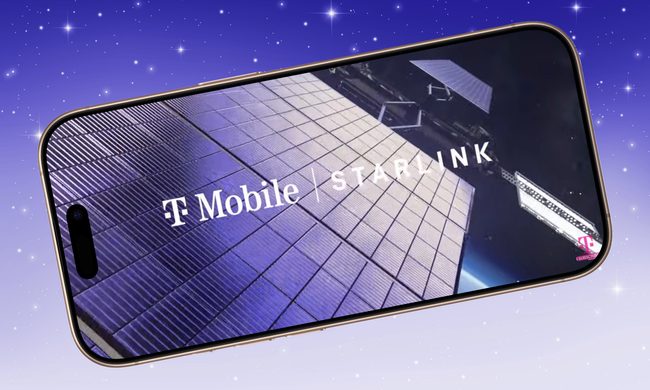
Showcase of T-Mobile Starlink service on an iPhone.

Elon Musk’s Starlink has already changed how millions of people access the internet, especially in places where traditional broadband struggles to reach. Now, the satellite internet service could be preparing for an even bigger leap — becoming your mobile carrier.

According to a Financial Times report, SpaceX has told investors it’s considering launching a retail Starlink mobile service in the US. Instead of simply partnering with wireless carriers, the company could begin selling mobile plans directly to consumers, putting it in direct competition with Verizon, AT&T, and T-Mobile.

Read more
Lightsails have hit another speed bump on the road to interstellar travel
The coolest interstellar travel idea may get betrayed by the light pushing it
LightSail in Earth orbit

Laser-powered lightsails are one of the coolest answers to spaceflight. It might not be as sci-fi-sounding as a warp drive, but now, its practicality has also come under question. Using lightsails, a spacecraft could unfurl an ultra-thin reflective sail and let a powerful laser push it toward another star, without relying on fuel.

The tech was simple and elegant--except it's also more complicated than it sounds. A new preprint from researchers Chao Shen and Jiaze Li of the Harbin Institute of Technology suggests that relativistic lightsails may run into a hidden propulsion problem once they start moving extremely fast.

Read more