1. Home
  2. Space
  3. News

NASA’s moon rocket meets its side boosters for crewed Artemis II voyage

Add as a preferred source on Google
NASA's SLS rocket for the Artemis II mission.
The SLS rocket core with its two side boosters. NASA

NASA’s much-anticipated Artemis II mission has experienced multiple delays in recent years, with the agency currently targeting no earlier than February 2026 for a flight that will send four astronauts on a voyage around the moon.

The Artemis II astronauts, as well as folks following the mission preparations, will be pleased to learn that NASA recently lifted the SLS rocket’s core stage into position, joining it to the two solid rocket boosters in essential work carried out inside the Vehicle Assembly Building at the Kennedy Space Center.

Recommended Videos

After moving the @NASA_SLS core stage north in the Vehicle Assembly Building transfer aisle, teams began lifting it with two of the facility’s overhead cranes, reorienting it into a vertical position. This is called a “breakover.” pic.twitter.com/phNH0nWcIU

— NASA's Exploration Ground Systems (@NASAGroundSys) March 25, 2025

“The core stage is the largest component of the rocket, standing 212 feet tall,” NASA said in an update posted on its website this week. “The stage is the backbone of the rocket, supporting the launch vehicle stage adapter, interim cryogenic propulsion stage, Orion stage adapter, and the Orion spacecraft for the agency’s crewed Artemis II mission.”

Need a boost? 🚀

Teams lowered the @NASAArtemis II @NASA_SLS core stage onto mobile launcher 1 between the twin solid rocket boosters. The weight of the core stage is supported by the boosters, attaching with struts at several points. These struts that connect the hardware are… pic.twitter.com/ubs6cmo6uA

— NASA's Exploration Ground Systems (@NASAGroundSys) March 25, 2025

Artemis II

NASA’s successful Artemis I mission flew an uncrewed Orion spacecraft around the moon in 2022. The Artemis II test flight will send astronauts Christina Koch, Victor Glover, Reid Wiseman, and Jeremy Hansen on the same route, orbiting the moon before returning to Earth in a mission expected to last about 10 days.

The voyage will help to confirm the foundational systems and hardware needed for human deep space exploration, which could eventually involve crewed missions to Mars.

The immediate goal, however, is to return humans to the lunar surface in the Artemis III mission that NASA is currently targeting for 2027.

The Artemis II astronauts have been in training ever since they were announced for the mission in April 2023. NASA has been sharing occasional updates about their preparations, which have included work on safely exiting from the Orion spacecraft should an emergency situation occur immediately after splashdown at the end of the mission.

Gl0ver and Wiseman also recently appeared in a NASA video explaining how they’ll be putting the Orion spacecraft through its paces during what should be an incredible lunar adventure.

Trevor Mogg
Contributing Editor
Not so many moons ago, Trevor moved from one tea-loving island nation that drives on the left (Britain) to another (Japan)…
Space is becoming Bezos and Musk’s next data center site, and we have every reason to worry
The AI boom is coming for the night sky
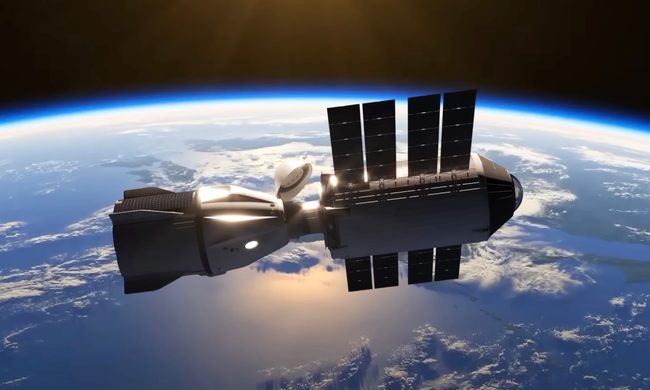
How Vast's space station will look in orbit.

AI data centers already consume vast amounts of electricity and water on Earth, so Silicon Valley has begun looking somewhere considerably more spacious... literally.

Elon Musk's SpaceX and Jeff Bezos' Blue Origin, along with several other companies, have proposed enormous constellations of satellites designed to operate as orbital data centers. However, environmental groups and former space officials are now warning that putting them into orbit at the proposed scale could have severe consequences for Earth's atmosphere and the night sky.

Read more
The first possible exomoon is here, and it makes our Moon look hilariously tiny
Scientists may have found the first exomoon, except this one is the size of Jupiter
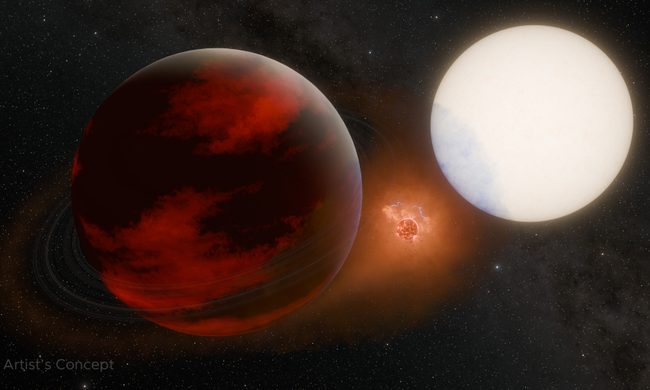
This artist’s concept depicts a potential volcanic moon between the exoplanet WASP-49 b, left, and its parent star. New evidence indicating that a massive sodium cloud observed near WASP-49 b is produced by neither the planet nor the star has prompted researchers to ask if its origin could be an exomoon.

We have already discovered more than 6,000 planets outside of our immediate neighborhood. Yet, finding a moon orbiting one of those distant worlds has proved considerably harder. Astronomers may finally have something close to the real deal, but this particular object stretches the word “moon” almost beyond recognition.

Using the European Southern Observatory’s Very Large Telescope in Chile, researchers detected strong evidence for a moon-like object in the CD-35 2722 system. Further observations are still necessary to confirm the discovery, but it could become the first confidently detected natural satellite outside our solar system. There is still one tiny complication though. This moon is apparently massive.

Read more
China’s answer to SpaceX’s reusable rockets literally catches boosters in a net
SpaceX catches boosters on legs. China just used a net.
Ammunition, Missile, Weapon

SpaceX's playbook for recovering a rocket booster generally involves legs, a precisely controlled vertical landing, and either a concrete pad or a drone ship. 

China just managed to pull off something similar, but in a slightly different way, and on July 10, it tested the method as well.

Read more