1. Home
  2. Space
  3. News

Spacewalk time-lapse reveals the fiddly work of an astronaut

Add as a preferred source on Google

The European Space Agency (ESA) has shared a time-lapse from the International Space Station showing astronauts Thomas Pesquet and Akihiko Hoshide on a spacewalk earlier this month.

Spacewalk season timelapse, episode 4

The footage highlights just how fiddly the work of an astronaut can be during such extravehicular activities (EVA) — to give spacewalks their official name — with both men spending an inordinate amount of time in a single location while performing intricate work in bulky suits.

Recommended Videos

You’ll quickly spot the astronauts’ special bag containing all the tools that they needed during their EVA, which lasted 6 hours and 54 minutes. To prevent the tools from floating off into the abyss of space, each tool is tethered to the interior of the bag, which itself is tethered to the exterior of the station.

Also, watch out at the 45-second mark as Pesquet — in the suit without red stripes — takes a quick break to turn and wave at the camera.

During the walk, Pesquet and Hoshide prepared a section of the space station for its solar panel upgrade that will boost the orbiting outpost’s power system.

The ESA said that after the lengthy spacewalk, the astronauts celebrated with some ice cream. “Spacewalks last seven hours and are like top sport, so we need the calories afterwards,” Pesquet said later.

This was Pesquet’s sixth spacewalk across two ISS missions, and Hoshide’s fourth, also across two missions.

The ESA has been posting a series of spacewalk time-lapses in recent months. The one below shows an astronaut secured to the end of the station’s robotic Canadarm as it moves around the exterior of the station.

Spacewalk season timelapse, episode 3

More than 240 spacewalks have been conducted at the ISS since the orbiting laboratory went into operation two decades ago. The EVAs are usually for maintenance or upgrade work.

Built by international partners, the station is one yard short of the full length of an American football field, with living quarters described by NASA as being “larger than a six-bedroom house.”

There are usually around six astronauts living and working on the ISS at any given time. Check out this collection of videos showing how the crew work, rest, and play during their time aboard the habitable satellite.

Trevor Mogg
Contributing Editor
Not so many moons ago, Trevor moved from one tea-loving island nation that drives on the left (Britain) to another (Japan)…
SpaceX Starship reaches orbit for the first time but its historic flight ends early
Starship reaches orbit for the first time and deploys 26 Starlink satellites before an early splashdown.
spacex-starship

After 13 suborbital test flights and more than $15 billion in development costs, SpaceX's Starship has finally reached orbit. The 407-foot megarocket, the most powerful ever built, lifted off from Starbase, Texas, on Monday and delivered its first real payload on it's 14th attempt. The celebration came with an asterisk, though, since SpaceX had to cut the planned 10-hour mission to roughly three hours.

https://twitter.com/SpaceX/status/2104601695711904180

Read more
Starship is finally going orbital, and SpaceX has picked September 22
Flight 14 is aiming for orbit, Starlink V3 deployment and a very long day in space.
Starship rocket.

SpaceX is finally ready to give Starship its biggest test yet. The company says the massive rocket's 14th test flight is scheduled for September 22, when it will attempt to put the upper stage into Earth orbit for the first time. The launch is currently pending regulatory approval, with a 75-minute window opening at 7:15 a.m. CT.

Starship has 26 Starlink satellites to deliver

Read more
Want a city on the Moon? Scientists say there’s not enough water
A billion tons still comes up short
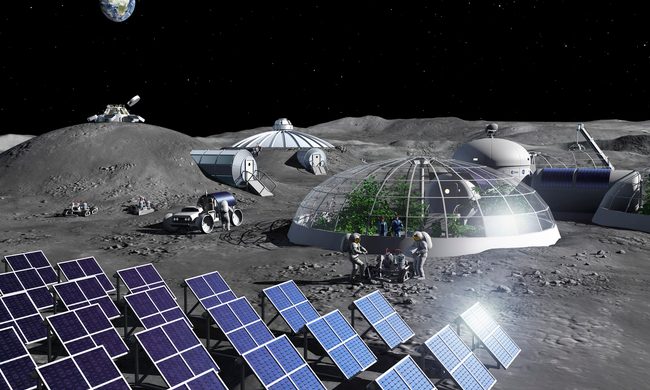
Artist impression of activities in a Moon Base.

For decades, humanity has looked up at the Moon and wondered what it would be like to live on it. Think sprawling cities, factories, research centers, and permanent human settlements. Unfortunately, there is one fairly fundamental problem with that vision.

A new study published in Frontiers in Space Technologies argues that even the Moon's potentially enormous reserves of frozen water may be nowhere near enough to support city-sized populations sustainably. Researchers Martin Elvis and Jonathan McDowell estimate that the permanently shadowed regions near the lunar poles could contain roughly one billion tons of water. It sounds like an extraordinary amount until you put a million thirsty humans next to it.

Read more