Vocal cord damage is a fairly common occurrence among music stars. From the likes of yesteryear icons such as Freddy Mercury and Julie Andrews to modern-day legends like Adele and Justin Timberlake, they all have had to battle vocal cord ailments — requiring surgeries to fix and weeks of not speaking to get their voice back to normal.
The folks over at Northwestern University have developed a sensor that warns you every time you speak loud enough that it stresses your vocal organs and the surrounding tissue. This could help avoid injuries that can permanently change your voice and give some much-needed relief to the voice box and other connected tissues that play a role in your speaking, reading, and singing abilities. It’s the latest in a string of recent wearable health advances, following news of a smart necklace that can help you stop smoking.
There’s a science to being quiet
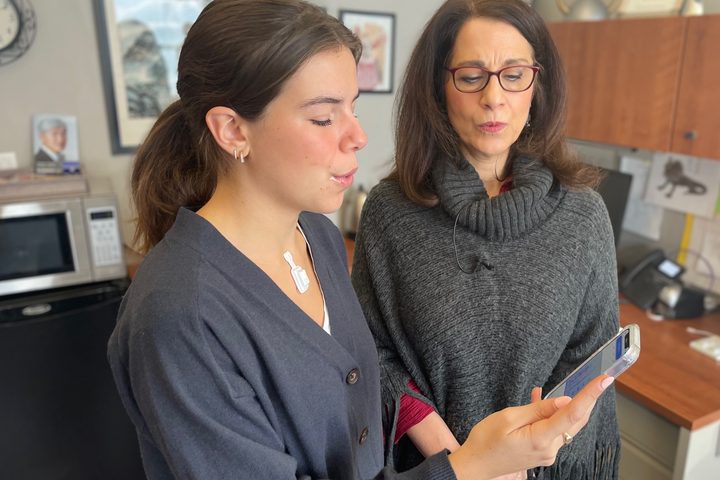
The team, led by bioelectronics expert Dr. John A. Rogers, created a unique type of sensor that will measure the amplitude and frequency of your voice while speaking or singing. “Being aware of those parameters, both at a given instant and cumulatively over time, is essential for managing healthy patterns of vocalization,” Rogers explained.
The sensor assembly uses these readings to measure the load on your vocal cords. However, it is also capable of logging other core metrics like sound volume, speaking duration, and time of the day.
At the heart of the innovation is the quest to keep track of vocal stress in the real world using daily life scenarios, and not just in a clinical lab when the damage has already been done. The wearable device, which looks like a small bandage patch and communicates via a smartphone app, senses the vibrations generated by the vocal tissue instead of recording sound using a mic to analyze it.
The wearable device is pasted like a bandage right below the neck and between the collarbones. Every time users feel any kind of discomfort or stress while speaking, they can simply tap a button in the accompanying app to measure the vocal stress. These readings will go toward establishing a personal limit for vocal fatigue.
Your smartwatch is ready for it
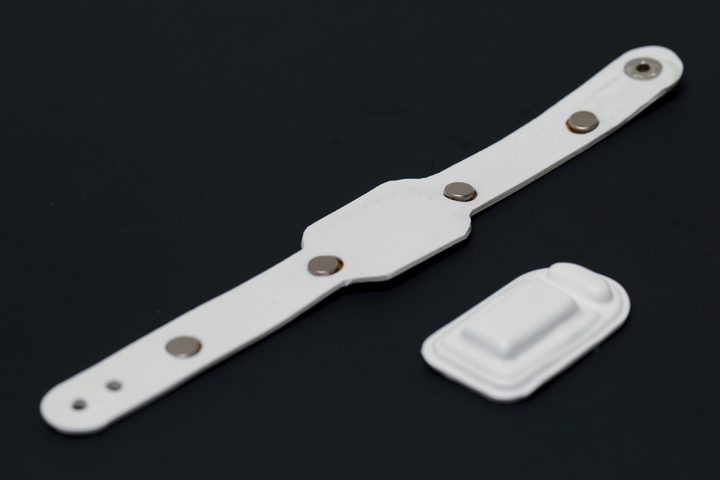
Once the threshold has been set, the wearable device will vibrate every time the wearer has exceed that limit. The flexible patch has its own battery and comes embedded with a bunch of motors to monitor voice activity at varied ranges. All the data is transmitted via Bluetooth to the mobile app, where users can also see a graphical breakdown of their vocal load.
The team also developed an accompanying device, which looks like a wristband and has vibration motors inside (see the photo above). Every time users exceed their vocal stress threshold, the wristband vibrates to alert them, just like your regular smartwatch. But here’s the best part. You don’t need the wristband if you already own a smartwatch.
The tech plays well with any smartwatch that comes equipped with a haptic motor to generate those crucial vibration alerts. And since there is no need for recording audio data, privacy concerns have been addressed as well. The team is also experimenting with adding more sensors that can measure heart rate, temperature, and respiratory activity to generate a more holistic view of how other kinds of movements affect the vocal systems and their performance.
Quick, easy, and incredibly accurate
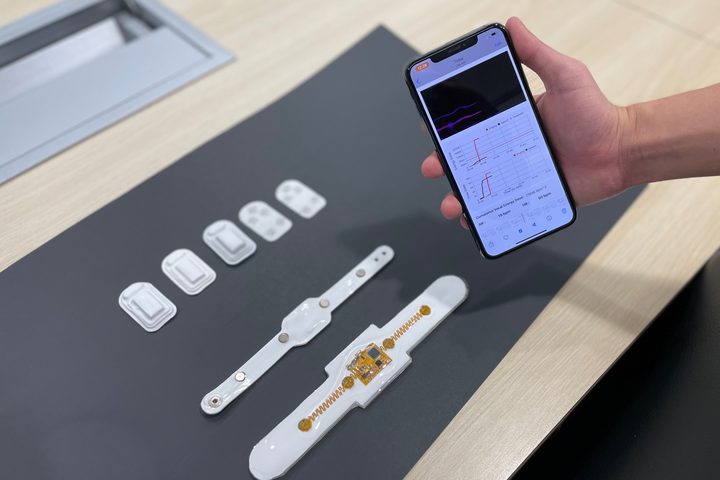
In order to train the underlying machine learning algorithms so that they don’t confuse singing with speaking, the team turned to opera students and classical singers. The team recorded their vocal activity patterns for a wide range of scenarios — such as singing, humming, reading, and more — to fine-tune the algorithms using 5,000 one-second clips from each participant.
The algorithm is capable of distinguishing between singing and casual speaking with 95% accuracy.
Thanks to rigorous training, the algorithm is capable of distinguishing between singing and casual speaking with 95% accuracy. This gadget will assist with the data-driven analysis of voice usage patterns, allowing doctors to suggest changes for an individual’s vocal demand, which not only helps with reducing vocal cord fatigue, but also accelerates the recovery process.
To recall, multiple singers have undergone surgery and gone on a strict no-speaking routine for weeks to assist with their recovery. It will enable patients and their clinicians to understand voice use patterns and make adjustments in vocal demand to reduce vocal fatigue and speed recovery from voice disorders.
We don’t know when the wearable device will hit the shelves as a medical-grade or commercially available tool, but until that happens, the team suggests that one should practice 15 minutes to 20 minutes of periodic silence spells each day because it can really help the vocal fold tissues recover from the stress.