“What the hell is this guy doing?”
I turned to the lead coder and he just shrugged.
“He’s racked up a mammoth negative score. What an idiot. He’s ruining it for everyone.”
Most of the dev team was gathered round my monitor watching in horror. The fateful words that would haunt us all for the next few weeks rang out.
“He’s a griefer.”
Everyone who plays multiplayer games will have encountered a griefer at some point. Their aim is to deliberately irritate and harass all the other players or sometimes one specific player. The anonymity of the Internet has a definite dark side; for websites it’s trolls, for video games it’s griefers. Multiplayer games, especially in the first-person shooter genre, attract more than their fair share of griefers. Combine their gaming behavior with their immature chatter and provocatively racist usernames and you’ll find that they can usually lay claim to the troll title as well.
Griefers were not a new concept for me, it’s just that when you develop a new game it’s easy to have the naïve idea that people will play it the way you intended.
 Influencing game design
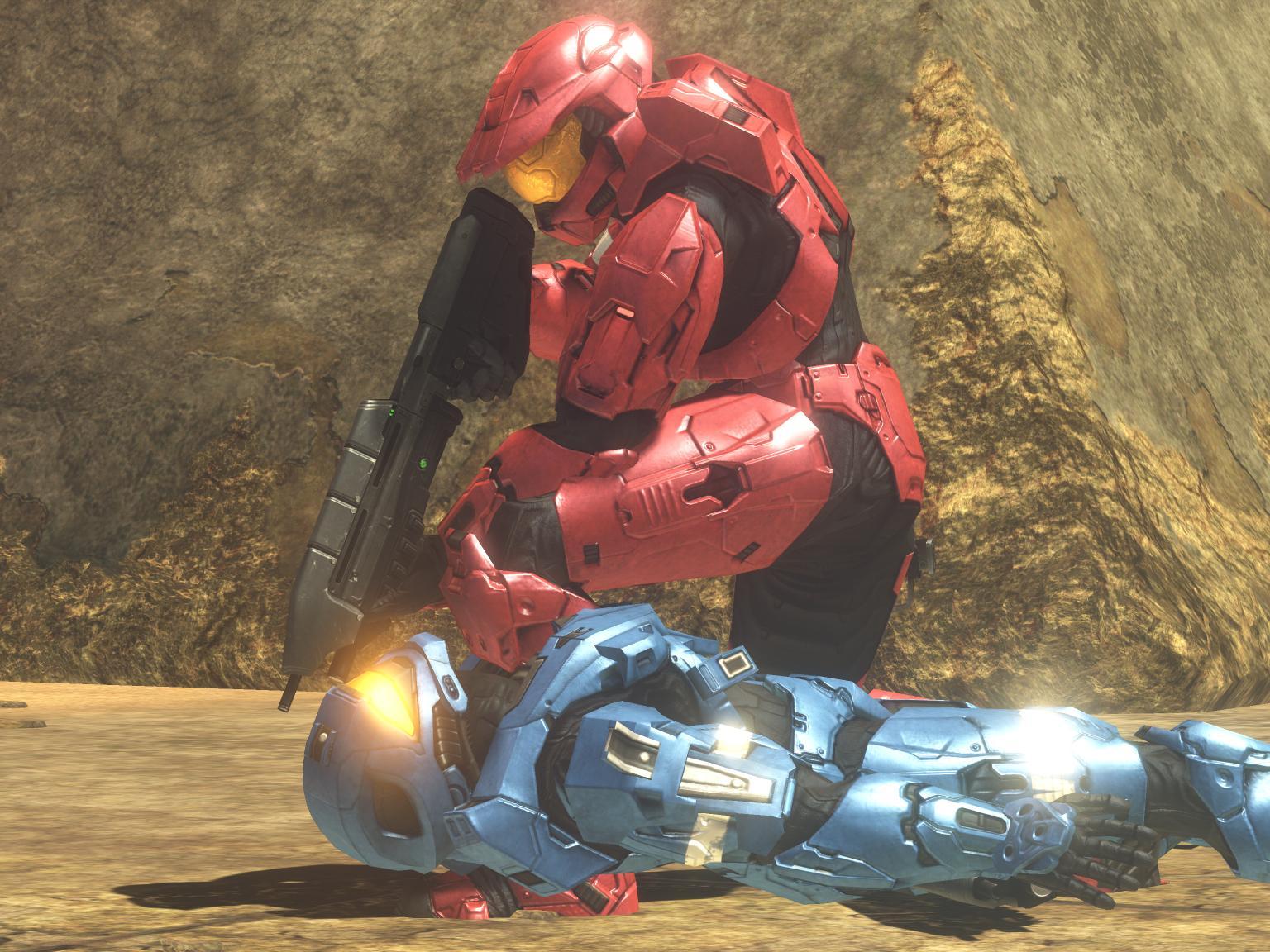
It would not be an overstatement to say that griefers have influenced the direction of game design heavily. Any game designer working today has to consider the best way to deal with griefers. In the FPS genre and beyond they’ve forced developers to come up with new spawning systems and new tools to allow players to police the game.
Early FPS releases were positively packed with griefing tactics from spawn camping to friendly fire massacres. When developers reacted by offering server options such as turning friendly fire off, griefers found new ways to exploit that. I can remember a game of Call of Duty 2 where a griefer stood in the doorway of the bunker where his team was spawning in and just prevented anyone from getting out. He demanded his angry teammates should crouch down and simulate a sex act in return for their freedom. Bizarrely enough an orderly queue formed straight away.
Ultimate griefer’s delight
When we designed The Ship it was out of a typical and oft-heard indie developer desire to bring something new to the FPS genre. We all played FPS games from Unreal Tournament and Half-Life to Vietcong and Battlefield. We deliberately tried to design something that felt different and that solved some of the main complaints about the existing multiplayer FPSs on the market. Naturally it sank without a trace, so here’s the central idea to bring you up to speed.
Every player was given the name of one other player and told to kill them. Instead of running around shooting everyone in sight you were supposed to hunt down one person. You also had one person hunting you — all players were effectively in a kill loop. So you could only legitimately kill either your quarry or your hunter.
As hardcore FPS fans, we threw in a lot of other mechanics to combat perceived problems. Players had needs to cater for so they’d have to visit the toilet and eat – intended to prevent camping and create murder opportunities. There was security around so you couldn’t just run round blasting everything in sight — you had to identify your quarry and then stalk them to find an opportunity for the kill. The varied weapon set would reward you with different, constantly updated, scores for a kill and whatever weapons were used the least would earn the biggest rewards – intended to avoid everyone competing for the BFG equivalent.
Played with a group of friends and a clear understanding of the rules it was a paranoid and addictive experience that really felt fresh (even if I do say so myself). Out in the open market it was griefer’s delight. We had inadvertently created the ultimate game for griefers.
Fine line between exploits and griefing
Gamers are like water. They find the path of least resistance quickly and they exploit it. Multiplayer gaming is all about finding winning strategies and for most gamers it doesn’t matter if others might perceive those strategies as negative or exploitative. Remember bunny-hopping? How about firing rockets at the ground to blast yourself to otherwise inaccessible areas of a map?
There’s a fine line between taking advantage of exploits in the game design and griefing. The intention may be different but the principle of not playing the game as it was intended to be played is the same. Sadly in extreme cases exploits lead to great features being dumped completely because they unbalance the game.
Combating griefing
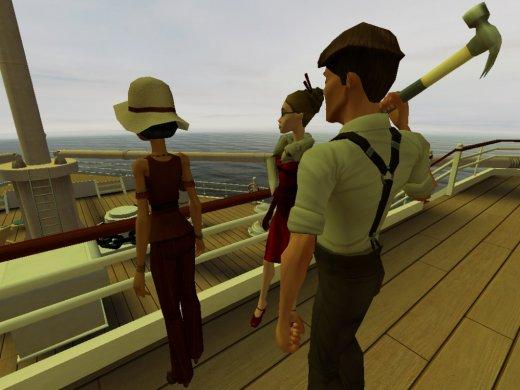 In The Ship we very quickly had to cater for griefers who refused to play by the rules, but since we had an in-game security system our solution was literally to throw them in jail and then tell their hunter where they were. The tactics quickly grew smarter so we implemented a bunch of backup systems for booting players who refused to play by the rules. Tracking their behavior and score and setting up penalties had a minimal impact. The trouble is, a lot of griefers are really determined and they’ll pretty much always find a way to ruin things for others.
Since part of the trick was identifying your hunter and countering any attack one majorly successful method of griefing emerged. You could follow someone until you had them alone in an unsecure area and then run at them with a weapon drawn, provoking them to wrongly kill you, assuming you were their hunter, and land them a stay in jail. You’ve got to admire that one – griefers could use the anti-griefing system to grief.
In the end we spent too much time and energy on worrying about griefing and not enough on the bucket load of other problems that the game had. Realistically you’re never going to eradicate griefing.
The obvious answer
There’s only one water tight solution I’ve ever come across for avoiding griefers, and that’s to play in organized groups, clans, LAN parties or whatever, where everyone agrees to play by the rules. I don’t think it’s possible to design a game that completely prevents griefing without seriously limiting it in the process.
Most of us have been stabbed by a knife-wielding maniac in a frenzy at some point, or blocked in a doorway, or had our rightful loot stolen away. Griefing in its various forms is horribly common and it’s still a major problem for gamers. Some people avoid multiplayer gaming altogether because of griefers. I think that’s sad. They should just join a clan or organize gaming sessions with friends. Multiplayer is always more fun when you actually know your victim anyway.
Alternatively, why not engage in some counter-griefing? There are situations where you can actually grief for the greater good. Griefing a noisy troll or another griefer is perversely satisfying. Maybe two wrongs can make a right once in a while.