
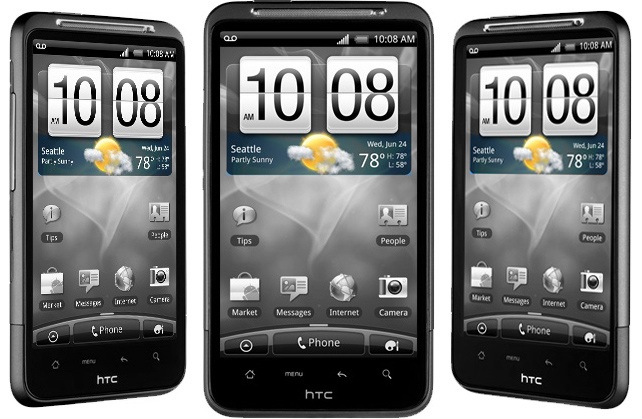
America. The land of hot coffee and frivolous lawsuits. Yesterday, two Oakland County, Michigan residents filed a lawsuit against Google for allegedly tracking their whereabouts “just as if by a tracking device for which a court-ordered warrant would ordinarily be required.” The two plaintiffs own HTC Inspire 4G phones, which run on Google’s Android operating system. They want $50 million in damages and a court order requiring Google to stop tracking users of its products.
“We provide users with notice and control over the collection, sharing and use of location” said Chris Gaither, a spokesperson for Google, to Bloomberg. “Any location data that is sent back to Google location servers is anonymized and is not tied or traceable to a specific user.”
This lawsuit is ridiculous and here’s why.
How Android works
On an Android phone, when you turn on “wireless networks” location-based services by Google, it specifically asks you to agree or disagree to “Allow Google’s location service to collect anonymous location data. Collection will occur even when no applications are running.”
You can turn GPS location services on or off without an “agree” warning, but none of your location-based apps will work well (or at all) with GPS alone and Google doesn’t anonymously track straight GPS data.
On their own, GPS systems actually take a few minutes to pinpoint your location. This is why modern phones use Assisted GPS, which “assists” GPS technology by triangulating your position using nearby cell phone towers and known Wi-Fi hotspots. By caching (storing) a small amount of this wireless data every so often, a smartphone can roughly figure out where you are. Without this, the GPS experience wouldn’t work well at all, partially due to GPS technology and partially because the GPS chips in phones are very weak and inexpensive.
I do have an actual HTC Inspire 4G and can confirm that the options are the same as a standard Android phone. HTC did not modify the settings as it does many parts of Android with HTC Sense, the custom user experience layer it tacks onto Google’s OS. The Inspire does have one feature that some other phones do not, however: a “Phone finder” service that “Allows you to find your phone when it is lost or stolen.” The box was checked when my phone arrived. If they were suing over that service though, it seems that HTC would be a part of the lawsuit.
Wrong target, guys
What these savvy men should have done is buy iPhones and sue Apple instead, like a similar duo in New York. Unlike Google, Apple doesn’t currently warn users before they turn on GPS services; they’re only warned when they agree to the iTunes Terms and Conditions whenever there’s a new update. South Park ran a funny episode about this two days ago.
Apple claims that it does not track iPhone users, but a recently exposed bug in the iPhone shows that it does keep an unencrypted log of a user’s general whereabouts for as long as a year. The file is stored locally on a user’s computer. Some police departments have known about the bug for some time and have used the locally stored data to aid investigations. Apple says it will fix this bug, but has continually reiterated that, though it stores a file of recent locations on a users machine, it does not track user data itself. The data is stored, but Apple claims that it doesn’t have a copy for itself. The iPhone also doesn’t store exact coordinates; it only shows nearby cell phone towers “as far as 100 miles away.” Using this raw cell tower data, location-based iPhone apps figure out your general whereabouts and deliver relevant ads and services.
Microsoft has not yet been sued, but like Google, it too collects anonymous location data.
Sue the wireless carriers
If Google, Apple, and Microsoft can’t store location data needed to run their services without a lawsuit, then somebody needs to start suing wireless carriers, because Sprint, Verizon, and AT&T know a helluva lot more than anybody else about where you’re going and what you’re up to. For example, AT&T recently began sending users location-aware marketing messages when they get close to stores. Carriers also routinely sell information about users to law enforcement and can do whatever they wish with your location. Like Apple, all they really have to do is bury some text deep inside a Terms and Conditions agreement. At least Google warns you upfront.
Location services don’t run on magic
You can’t have location-based services if the phone can’t communicate and send its location (anonymously) to GPS satellites or ping local cell phone towers and hotspots. These two Michigan plaintiffs bought smartphones that are marketed with core features like “Navigation” and “Places,” which are built in. When you buy a Google phone, you know you’re getting Google Maps and other Google services. Furthermore, HTC phones actually make you turn on location services to see the weather on your homescreen. These two gentlemen probably agreed to the location warning message when they activated their devices.
Did they not wonder how their phone knew they lived in Oakland County, Michigan? Did they believe it was magic? Google adequately warns users about its location service in Android and makes it relatively simple to turn it on or off. I turn my GPS off and on all the time. If you’re going to buy a smartphone, you need to learn what services you’re opting into. If only common sense factored into our court system.


