1. Home
  2. Computing
  3. News

Star Wars ‘Trials on Tatooine’ is the closest you’ll get to being a real Jedi

Add as a preferred source on Google

Lucasfilm’s immersive entertainment subdivision ILMxLAB has released Trials on Tatooine, a free-to-play virtual reality Star Wars experience and Jedi training simulator available via Steam for the HTC Vive headset.

Billing itself as “the most immersive Star Wars virtual reality experience ever,” Trials on Tatooine digitally recreates many famous elements from the Star Wars film franchise, and players will recognize some familiar faces throughout its original VR-exclusive scenario.

Recommended Videos

Taking place after the events of Return of the Jedi, Trials on Tatooine begins with a first-person introductory text crawl that links the experience to its film predecessors. Players soon find themselves on Luke Skywalker’s home planet of Tatooine accompanied by the droid R2-D2 before the scene is invaded by stormtroopers wielding laser rifles.

With the Empire’s TIE Fighters screaming overhead, players must repair a damaged Millennium Falcon while blocking enemy fire with a realistically modeled lightsaber. Despite the extreme level of graphical detail throughout, the entire vignette can be completed in less than five minutes. To temper expectations, Lucasfilm warns that players should think of Trials on Tatooine as “a cinematic virtual reality experiment” that offers “your first step into a larger world of Star Wars,” rather than a fully fledged VR game

To launch Trials on Tatooine, players need an HTC Vive headset and a room-sized play area. All featured gameplay mechanics require players to stand throughout, with movement mapped to tracked motion controllers.

Admitting the game’s power-hungry system requirements, Lucasfilm explains that “Trials on Tatooine approaches photo-realistic quality and requires a powerful computer.” At minimum, Trials of Tatooine requires a Intel i5-4590 CPU or equivalent, 8 GB of RAM, and an Nvidia GTX 970 graphics card to function. Specs for maximum settings demand an Intel i7-4790K or greater CPU, 16 GB of RAM, and Nvidia GTX Titan X graphics hardware.

Danny Cowan
Former Contributor
Danny’s passion for video games was ignited upon his first encounter with Nintendo’s Duck Hunt, and years later, he still…
The maker of ChatGPT wants to make open-source projects less of a security bargain
OpenAI launches Patch the Planet for open-source security, with over 30 open-source projects on board.
openai-chatgpt-os

OpenAI has launched Patch the Planet, a new initiative aimed at fixing one of the internet's quietest problems – the chronically underfunded security of open-source software.

Patch the Planet pairs OpenAI's most security-capable AI models with Trail of Bits, a security firm that has committed its entire research organization to the effort, alongside support from HackerOne and Calif.

Read more
I sifted through the Prime Day chaos to find the best Apple deals actually worth buying
Apple's about to hike prices. Prime Day 2026 is your last chance to save up to $150 on MacBooks, AirPods, and iPads.
Prime Day Deals on Apple Products

Apple is set to increase the prices for its upcoming iPhones and MacBooks, as the company can no longer offset the rising RAM and storage costs. That means, if you are looking to upgrade your aging device, you should buy the current-generation Apple products rather than wait for the new ones.

And since Amazon Prime Day is offering good discounts on the latest iPhones, iPads, MacBooks, and other Apple accessories, this is the perfect time to buy them. Here are my favorite Amazon Prime Day deals for Apple products. 

Read more
This sneaky photo trick gets AI chatbots to ignore their safety rules
Florida International University researchers built a method that nearly doubled the rate of harmful responses from a tested AI model using nothing but pixel-level edits in an image.
JaiLIP AI chatbot exploit image

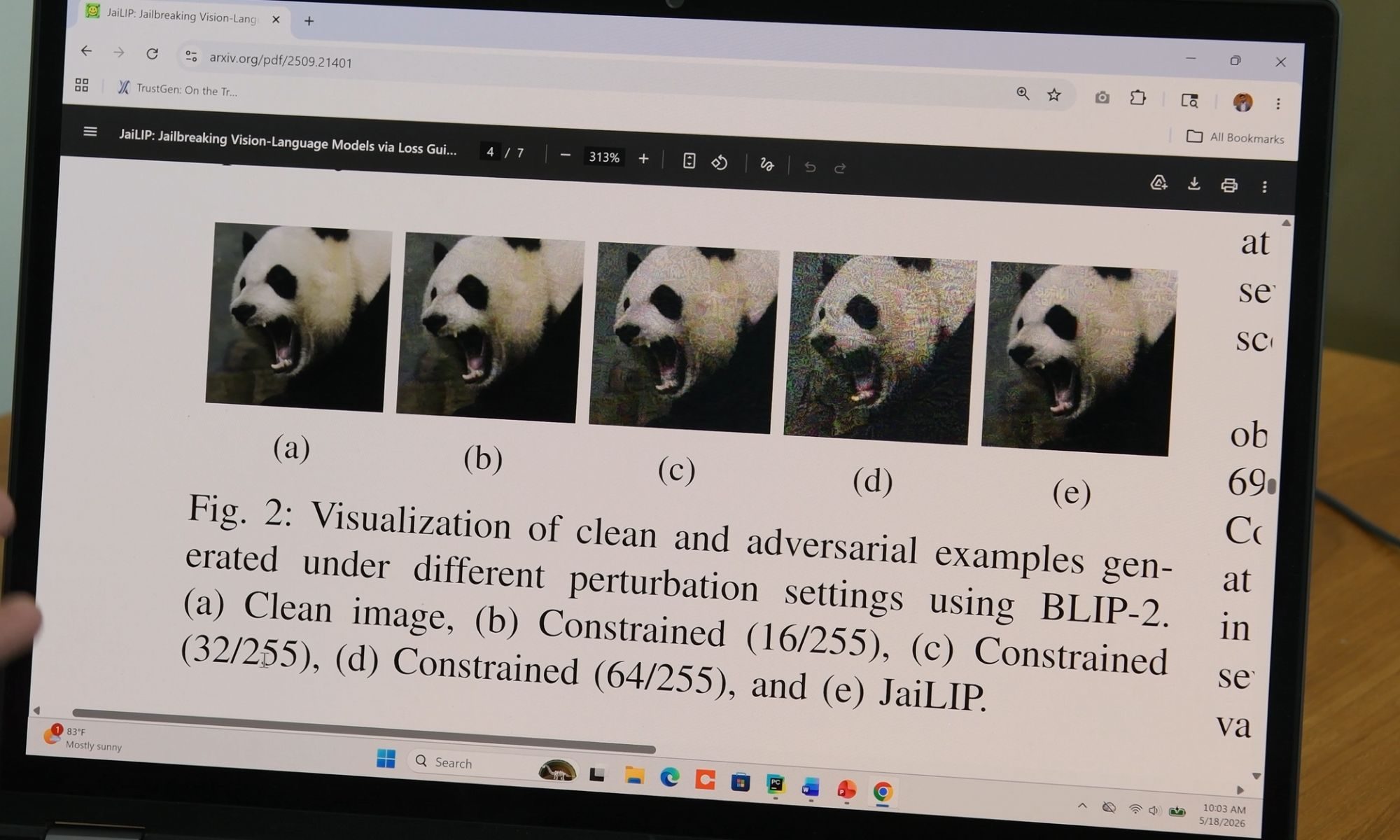
A photo that looks completely ordinary to you could carry a hidden instruction to trick an AI chatbot into ignoring its safety rules, according to new research out of Florida International University. The study found that pixel-level alterations in an image that are invisible to the human eye can be enough to confuse the model reading the image and lead it to generate responses it would normally block.

Hacking what the AI sees

Read more