1. Home
  2. Emerging Tech
  3. News

LED-lighted wingsuit jumpers light up the Spanish skies

Add as a preferred source on Google

The annual Perseid meteor shower reached its peak last week, putting on a fantastic show for stargazers watching the late night skies. To honor the “Lágrimas de San Lorenzo” (Saint Lorenzo’s tears) astronomical event, four wingsuit jumpers from around the world joined together with Red Bull to create a light show of their own.

The team of four skydivers, which included Norwegian Joacim Sommer,  Spaniard Armando del Rey, and Austrians Marco Waltenspiel and Georg Lettner, traveled to the Spanish island of La Palma in the Canary Islands. La Palma is best known for the Roque de Los Muchachos Observatory, which is home to the world’s largest optic telescope and the background setting for the jump. The quartet loaded up their gear and climbed aboard a T-21 provided with support from the Air Force, the Canarian Astrophysics Institute and La Palma’s City Hall.

Recommended Videos

Once they arrived at jump elevation, the four skydivers lit up their LED-equipped wingsuits and prepared for an unbelievable nighttime flight in complete and utter darkness. “I was in this black tunnel and there was nothing else besides all those billions of stars in my face. It was a really unique visual because you could really feel the speed, but you have no other surroundings,” Sommer said in a statement. “You are just in pitch black; it is like you are out there in the outer space. It’s crazy, it was literally crazy.”

After exiting the plane at 1,800 meters, the team streaked across the sky at an eye-watering 170 kilometers per hour, creating a meteor shower of epic human proportion. A GoPro recorded a bird’s eye view of the stun, while photographers on the ground used long-exposure photography to capture the jumpers as they lighted up the sky. To cap off the event, the four paid tribute to firefighters who recently battled a forest fire in La Palma that burned almost 10,000 acres and required the evacuation of more than 3,000 residents.

Kelly Hodgkins
Kelly's been writing online for ten years, working at Gizmodo, TUAW, and BGR among others. Living near the White Mountains of…
A new AI model wants self-driving cars to think before they swerve
Forget guessing games, this self-driving AI actually shows its work.
Self driving car

Self-driving cars have gotten pretty good at driving. The harder problem is teaching them to drive safely in situations nobody planned for. We have heard horror stories of self-driving cars, behaving erratically in emergency situations, often times delaying first responders from reaching the scene.

A team at Seoul National University, led by professor Jun Won Choi from the Department of Electrical and Computer Engineering, thinks they have cracked part of that puzzle with a new AI model called SafeDrive. The research was recently selected as a highlight paper at CVPR 2026, a distinction that goes only to roughly 3% of all submissions.

Read more
An AirPods-sized mini lab could help catch disease markers in minutes
Meet VPodDuo, an AirPods-sized molecular testing gadget
VPodDuo Mini Medical Device

Home testing could eventually become a lot more convenient. Researchs at the at the University of Illinois Urbana-Champaign has developed the VPodDuo, a pocket-sized fluorescence reader designed to measure sensitive molecular tests outside a conventional laboratory.

Its housing is roughly comparable in size and shape to an AirPods charging case, while Bluetooth connectivity sends results directly to a smartphone. Meaning, you might not have to wait in line anymore.

Read more
Your future AR glasses might finally stop making the real world look weird
Researchers have developed a new display technique that keeps virtual objects realistic without dimming the real world.
Samsung AR Glasses

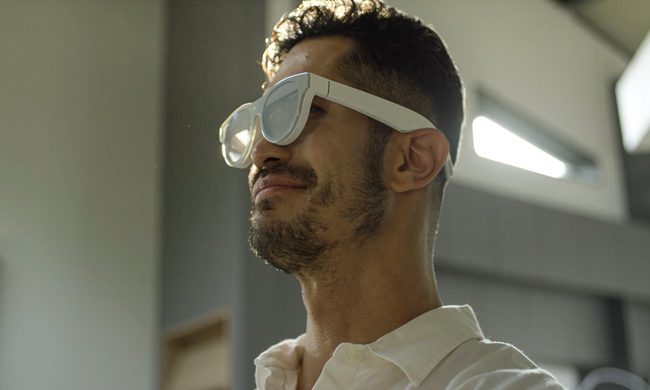
One of the biggest promises of augmented reality is blending digital objects seamlessly into the real world. Ironically, today's AR glasses often make the real world harder to see. Researchers at the Shibaura Institute of Technology (SIT) in Japan, led by Assistant Professor Xiaodan Hu in collaboration with Dr. Yan Zhang and Professor Xubo Yang from Shanghai Jiao Tong University in China, and Professor Kiyoshi Kiyokawa from Japan's Nara Institute of Science and Technology, have developed a new AR display technique that aims to make virtual objects look realistic without reducing visibility of the real world. The study was published in IEEE Transactions on Visualization and Computer Graphics.

The biggest AR problem isn't virtual objects; it's everything around them

Read more