  1. Home
  2. Computing
  3. News

Onix VR’s Pulsar headset could offer 4K virtual reality, but not till next year

Add as a preferred source on Google

Although virtual reality still has a bit of far-off, future-tech feel to it, the specifications behind commercial VR headsets are actually quite typical of contemporary hardware. Not all designs set the bar so low though. Virtual reality startup, Onix VR, has debuted plans to create a brand new headset with a 4K resolution display and a 120Hz refresh rate.

High-end virtual reality headsets are nothing new, of course. For the past two decades, the technology has been ahead of the times and therefore often unworkable, but it was in the congregation of smaller hardware and more affordable hardware, as well as software developments, which made it a consumer reality. But even from the early days of this VR revolution, headsets like Star VR promised something much more impressive in the future.

Recommended Videos

That’s similar to what Onix is talking about when it says it’s building a 4K headset: It’s far off in the future. The current plan is to launch a Kickstarter campaign toward the end of this year, with early versions of the headset not expected to show up until well into 2017 and beyond.

Despite the long lead in though, should the Pulsar VR headset arrive as intended, it will be rather an impressive piece of kit. On top of having a highly dense and fast, curved display, Onix VR will be a very versatile piece of kit. Initially wired, the developers will offer a wireless module in the future. According to Tom’s interview with company founder Alan Peric, Onix is currently developing the on board hardware and battery technology that it would require to make that a reality.

Considering how expensive 4K rendering hardware would be, it’s probably a good thing that wireless function is coming as an extra, as the Pulsar VR is unlikely to be cheap in any guise.

The use of a curved display is said to improve the size of the focal point, or “sweet spot,” as it’s known in virtual reality. That also increases the field of view by a decent margin, potentially giving it comparable specifications to headsets like the StarVR. It will also be able to clip on additional sensors and faceplates for augmented reality function in the future.

Connectivity wise we’re told that the headset will hook up to your PC via a Thunderbolt 3-compatible USB port (Type-C) and is expected to retail between $800 and $1,000 when it launches. This is likely to be without motion controls, though and there was no word on what sort of tracking technology it will use.

Working prototypes of the headset are said to be only a few months away, so while we’ll remain a little skeptical of such a headset being able to compete with the mainstream alternatives, we’ll withhold full judgement until we’ve tried what Onix has to offer.

Jon Martindale
Jon Martindale covers how to guides, best-of lists, and explainers to help everyone understand the hottest new hardware and…
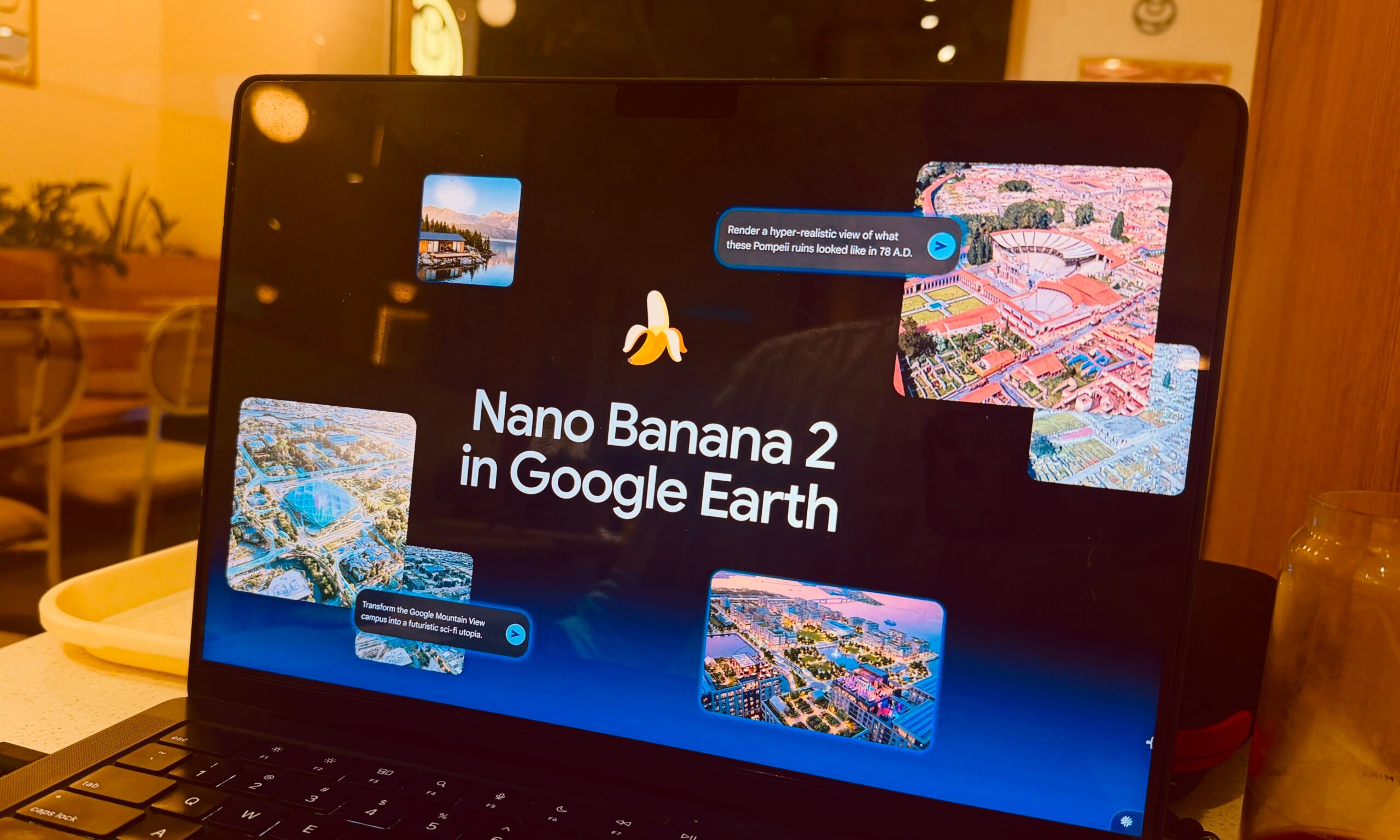
Google Earth’s AI misadventure lasted only a day. It was a tale of dangerous ignorance.
Nuclear reactors, tanks, and historical destruction on a life-like satellite map? Yeah, that's bad.
Nano Banana AI image generator representation.

Technology behemoths are clearly not reading the room, or they are just moving faster than they should when it comes to AI deployment. Google has already stuffed its Gemini AI in every corner of its software stack, from Android to daily productivity tools like Gmail that are used by hundreds of millions of users every day. AI is everywhere. Not all of it is bad, mind you. But in a few places, it just feels forced.

In its latest AI-fication experiment, the company targeted Google Earth. The idea was to let the audience use its Nano Banana 2 AI image generator and make images that can be placed on the map view. On paper, it's a cool idea. What would the Colosseum of Rome look like in your urban neighborhood? Yeah, fun stuff like that.

Read more
AMD is apparently gearing up to raise GPU prices right after Nvidia’s steep hike
AMD has reportedly told AIB partners about a price hike that goes into effect in. August.
AMD RX 7800

AMD is next in line to raise the asking price of its Radeon GPUs, merely days after the news of a similar hike coming for Nvidia graphics cards started making waves. As per ChannelGate on Weibo (h/t VideoCardz), AMD has informed its board partners that the price of GPU and memory bundles will go up by at least 10% in August.

Is a similar price hike coming for standalone graphics cards? I won't be surprised if that happens. The situation is so bad that AMD is planning to bring back graphics cards with 4GB of onboard memory. AMD just introduced the RX 9050 GPU, which costs $279. Notably, it's just $20 less than the RX 9060 XT that offers double the graphics memory.

Read more
Microsoft will make Windows work well with just 8GB RAM. We desperately need it
The dream of a reliable and affordable Windows laptop hinges on the next milestone at Microsoft.
Surface laptop on wooden table

The year 2026 has marked a huge course correction for Microsoft after years of frustrating users with plenty of confusing processes, unoptimized UI elements, and just the generous bloatware that can bring any Windows system to a crawl. Microsoft has finally shifted into a new phase. From fixing the right-click behavior to speeding up the Search system, the company has fixed plenty of papercuts.

The next major milestone is making Windows 11 run smoothly on Windows PCs with just 8GB of RAM. That directly means entry-level and budget laptops will at least get the basics right, even if that means sacrificing the on-device AI bells and whistles. Let's face it. The increasingly AI-first approach to computing on a Windows 11 machine is a little too taxing on the hardware at hand.

Read more