1. Home
  2. Phones
  3. Android
  4. Mobile
  5. News

ZTE's midrange Max XL smartphone goes big on everything except price

Add as a preferred source on Google

Update: The ZTE Max XL is now available from Sprint, on top of the previous availability from Boost and Virgin.

ZTE’s Zmax Pro was one of the most impressive budget smartphones of 2016. We were blown away by its price point, which managed to cost less than competitors like Samsung’s Galaxy J7 and Lenovo’s Moto G4 Plus without making compromisse. And in that regard, its successor appears to be no different.

Recommended Videos

The ZTE Max XL was first launched a few months ago for Boost Mobile and Virgin Mobile, however it now looks like the phone will make its way into the big leagues — Sprint has announced that users will be able to get the device through the Sprint website. Unfortunately, it won’t be as cheap as it was at Boost or Virgin — while it cost $130 at those carriers, at Sprint it comes in at $192.
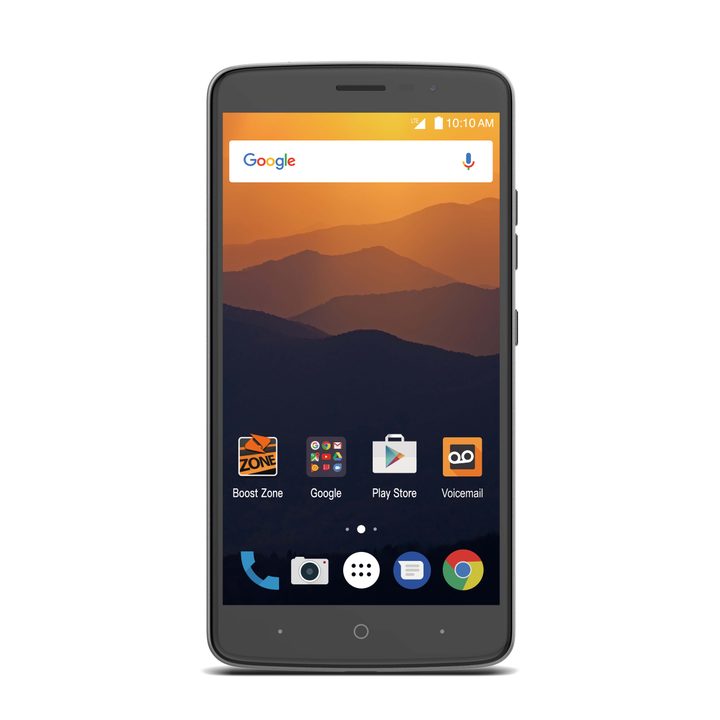
Image used with permission by copyright holder

The Max XL packs a 6-inch IPS (1920 x 1080 pixels) display shielded with shatter-resistant Gorilla Glass, and a 1.4GHz quad-core Qualcomm Snapdragon 435 processor (a slight step down from the ZMax Pro, which had a 1.5GHz octa-core Snapdragon 617). There’s 2GB of RAM inside, plus a whopping 128GB of storage (expandable via MicroSD slot) and a 3,990mAh battery that lasts up to 26.6 hours on a charge.

The Max XL doesn’t skimp in other areas. There’s a 13MP rear and 5MP front camera, and an FM radio. Rounding out the internals are a 3.5mm headphone jack, Bluetooth 4.0, a fingerprint sensor, and GPS. And it ships running Android 7.0 Nougat, the latest version of Google’s mobile operating system.

The Max XL launches on Boost Mobile’s 2GB plan ($30 with auto-renew, $35 without), which includes unlimited talk and text and 1GB of additional data for $5 a month (or 2GB for $10 a month). It’s also available on Boost Mobile’s Unlimited Gigs plan, which comes with unlimited talk, text, and data starting at $50 a month ($30 a month for a second line, up to five total). As mentioned, it’s also now available from Sprint for $192.
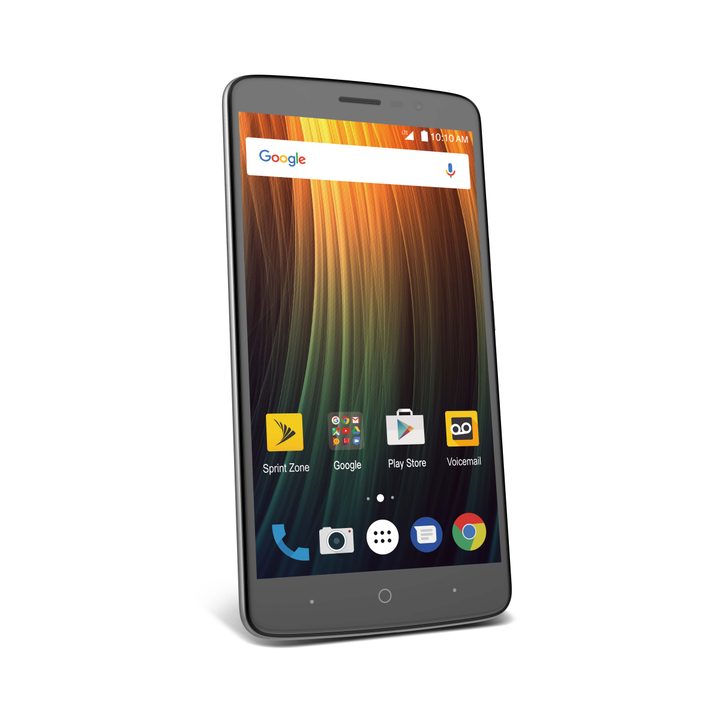
Image used with permission by copyright holder

ZTE said it’s the first Boost Mobile phone to support Sprint’s HPUE (High Performance User Equipment) technology and LTE+, which translates to faster network speeds and increased coverage. And it supports international roaming — with Boost Mobile’s $5 Todo Mexico Plus add-on, you get unlimited calls to Mexico and Canada, plus unlimited international texting.

“We continue to push the boundaries and give consumers more of what they want — bigger battery, bigger screen, and the best connection possible — all at an affordable price,” said Cheng.

From what we’ve seen of the Max XL so far, it’s tough to argue.

Kyle Wiggers
Kyle Wiggers is a writer, Web designer, and podcaster with an acute interest in all things tech. When not reviewing gadgets…
Meta served ads containing AI-generated child sexual abuse content, continuing years of child safety failures
Meta's own ad library hosted child abuse imagery for nine months straight.
meta-logo

Meta's ad platform did something it has promised, repeatedly, never to allow again. According to a new investigation from Wired, Meta ran dozens of paid ads over the past nine months containing explicit AI-generated child sexual abuse imagery, some of which stayed live even after the company was directly confronted about them.

If this feels like a story you've read before, that's because you probably have. Just weeks before this latest report, a separate BBC investigation found Instagram running paid ads promoting child sexual abuse material in India, directing users to Telegram channels selling illegal content.

Read more
Apple’s iCloud Private Relay isn’t as private as you think
Your real IP address might be leaking, and passkeys are the snitch.
iCloud Private Relay

If you pay for iCloud+ and rely on Private Relay to hide your IP address while browsing, you might want to pay attention to this one. New research by security researchers Tommy Mysk and Talal Haj Bakry, first reported by 404 Media, reveals that Private Relay doesn't hide your IP address as well as Apple claims.

How does the leak actually happen?

Read more
This new technology could make spotting fake products easier for everyone
Your smartphone could soon tell you if the product you bought is fake
The new system combines three technologies into a single printable label.

Counterfeit goods are becoming increasingly sophisticated, forcing brands to rely on expensive authentication systems that often require specialized scanners or proprietary hardware. Researchers now believe a smartphone could do much of that work instead. A team has developed a new printing system that creates responsive anti-counterfeit labels that are more durable, easier to mass-produce, and can be verified using nothing more than a phone. The research was published in the International Journal of Materials and Product Technology.

At first glance, the technology looks like another incremental improvement in product security. In reality, it addresses one of the biggest limitations of anti-counterfeit systems today: accessibility. If authentication only works with expensive equipment, it becomes difficult to deploy at scale. By enabling smartphone-based verification, the technology could make counterfeit detection practical for manufacturers, retailers, and even consumers.

Read more