Update: Apple has started shipping the External Graphics Development Kit, and it’s showing up on developers’ doorsteps. We’ve provided information from one of the first lucky people to receive the new kit.
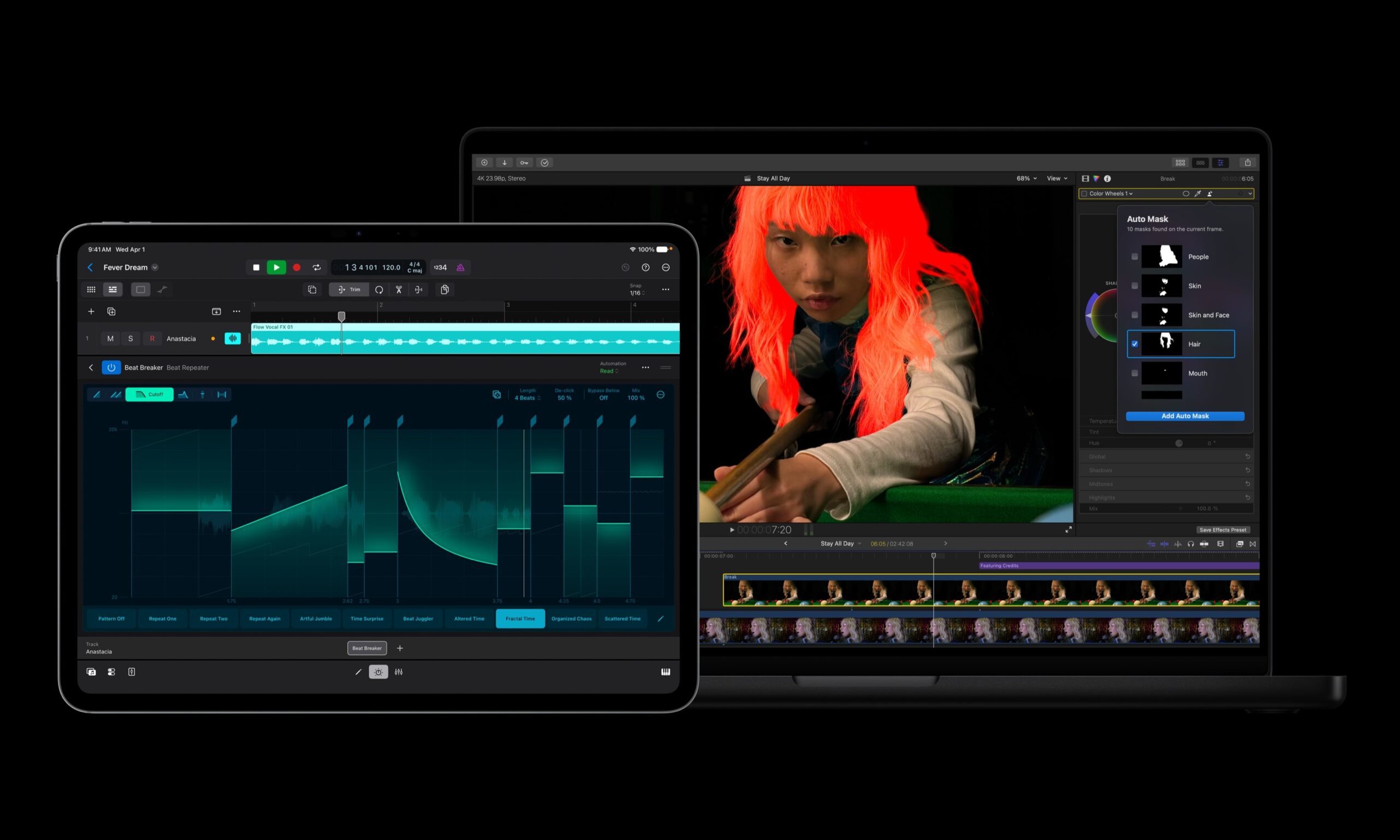
During Apple’s Worldwide Developer Conference keynote, the company’s Mac-themed segment introduced MacOS “High Sierra,” new iMacs, a beastly new iMac Pro, and even another refresh of Apple’s MacBook and MacBook Pro laptops. For the new iMacs, Apple is injecting configurations with discrete Radeon Pro 500 Series graphics chips, which means the all-in-ones will finally support virtual reality headsets such as the Oculus Rift and HTC Vive. But what about current iMac and MacBook owners?
Senior Vice President of Software Engineering Craig Federighi showcased a Thunderbolt 3-based external graphics card enclosure supported by MacOS “High Sierra” and Apple’s latest version of Metal 2, a proprietary application programming interface providing developers with near-direct access to a graphics chip. He specifically mentioned MacBook Pros as compatibles devices for customers who need more graphics performance than what is already provided inside.
Starting on June 5, 2017, Apple started providing developers with a kit consisting of a Thunderbolt 3-based graphics card enclosure, AMD’s Radeon RX 580 graphics card, and a USB Type-C hub. This will enable developers to fine-tune their apps and programs to support an external graphics card prior to going live “in the months to come.”
One Apple developer, Josh Farkas, received his External Graphics Development Kit, and he posted the initial experience on Twitter:
Unboxing Apple's External Graphics Developer's Kit! 😋 pic.twitter.com/4ZEGklKfAJ
— Josh Farkas (@JoshuaFarkas) June 8, 2017
It comes with a breakaway box, hub, and Sapphire graphics card.
— Josh Farkas (@JoshuaFarkas) June 8, 2017
For comparison, here's the size of the #Apple external graphics card vs an MSI Nightblade MI2. pic.twitter.com/ib97VSumPx
— Josh Farkas (@JoshuaFarkas) June 8, 2017
Currently, the Radeon RX 580 is AMD’s top-of-the-line graphics card for the mainstream market. It is based on a tweaked version of AMD’s Polaris chip design that made its debut in the middle of 2016. The card consists of 2,304 stream processors, 144 texture units, and 32 render output units. It has a base speed of 1,257MHz and a boost speed of 1,340MHz, making it an affordable solution supporting high-end VR headsets like the Oculus Rift and HTC Vive.
But once the SIGGRAPH convention arrives at the end of July, the RX 580 will not be the fastest AMD card on the block. AMD is gearing up to launch its new Radeon RX Vega cards based on its next-generation Vega chip architecture. As we recently saw in a purported leaked benchmark, one of these cards outperformed Nvidia’s $1,200 Titan XP card on Doom using Ultra settings and a 3,840 x 2,160 resolution.
Unofficially, MacBook Pros can support external graphics cards via Thunderbolt 3 by installing Windows through Boot Camp. This is undoubtedly a big hassle, one that should be rectified with the release of the MacOS High Sierra public beta in late June. The latest beta (10.12.2 Beta 2) reportedly already has improved support for external graphics cards.
Given the unboxing information provided by Farkas, we know that the Apple kit includes a Sonnet eGFX Breakaway box, a Belkin USB hub, and a Sapphire-branded AMD Radeon RX 580 GPU. The Sonnet eGFX Breakaway comes in two versions, with either a 350-watt or 500-watt power supply. Both provide a single PCIe 3.0 x16 slot and connect via Thunderbolt 3. We do not yet know the exact hardware specifics of the Sapphire GPU that’s included in the kit.

Based on a footnote on Apple’s website, its external enclosure plans may not arrive for consumers until spring 2018. That is when Apple projects to have support in place for the new iMac with its Retina 5K display, the new iMac Pros coming later this year, and other supporting Macs.