Augmented reality is on its way, but until we have AR devices that look like normal glasses, we are unlikely to see real consumer adoption. But that does not mean we will not start seeing AR applied to specific situations — like, for example, inside your next motorcycle helmet.
One company trying to bring the motorcycle into the 21st century is Livemap, which recently showed off its third prototype at the Augmented World Expo show in Santa Clara, California. So what’s new about the helmet? We first checked out the Livemap helmet last year, and it seems like there are some serious improvements this time around.
The helmet basically makes use of a small display, which acts as a surface for a projector that is located at the bottom of the helmet. Inside, you will also find a microphone, built-in camera, and even small speakers that act as headphones when the helmet is on.
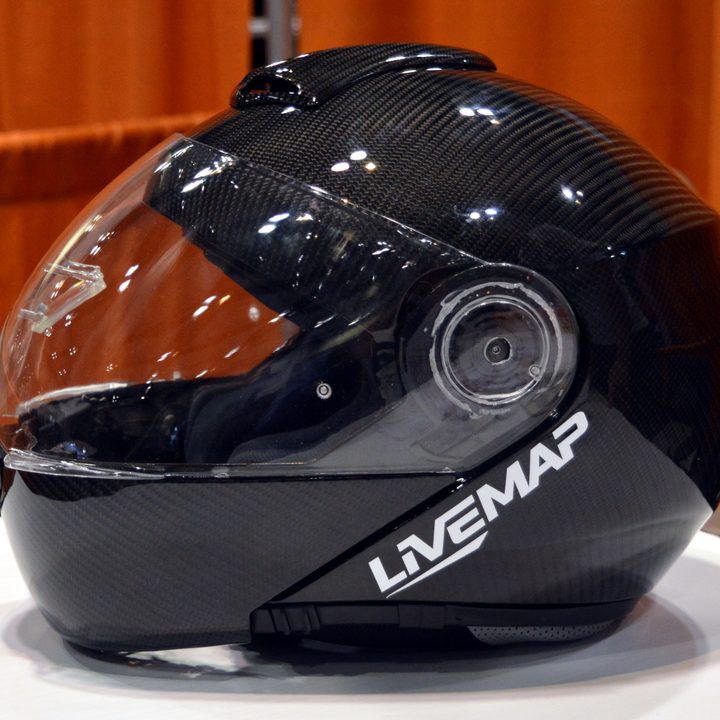
The obvious use for this system is Maps, but Livemap wants to go far beyond simply mapping the road ahead. According to Russian entrepreneur Andrew Artishchev, who is behind the Livemap helmet, the company is shooting to implement your phone and even social media through integration with YouTube and Facebook Live. In other words, thanks to the built-in camera, you could stream your motorcycle trip to your Facebook friends.
This particular prototype is largely aimed at making small refinements over the previous one — and one of the main ways it does this is by being much lighter. That’s thanks to its carbon-fiber build. The new prototype also has a better optical system, with a slightly clearer display, that ensures you can see where you are going.


The software inside the helmet is based on Android, and Livemap hopes that third-party developers will build apps for it in the long run.
Livemap is set to demo another prototype at CES next year, but it is banking on a wider consumer release for next summer. In the meantime, it is looking for funding to get the helmet out to the public and hopefully take over where the likes of Skully, a tech-based motorcycle helmet that failed, left off. You can keep up with Livemap’s offerings through its website.