  1. Home
  2. Audio / Video
  3. Legacy Archives

Toshiba’s Cell TV: The 30-Second Review

Add as a preferred source on Google
toshiba_zx900_series_cell_tv-540x369
Image used with permission by copyright holder

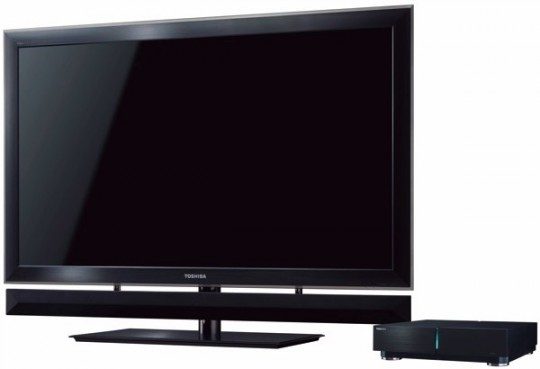
Sweet, it’s just what the world needed: An HDTV that uses the powerful Cell chip, currently used to power the PlayStation 3. OK, so may not seem like a match made in heaven (and you still can’t play Uncharted 2 without owning a separate console – bummer), there nonetheless remains plenty of promise in Toshiba’s new Cell TV series of premium sets.

All but guaranteed to ship with a price to match, these models, available in two lines – the Genensis Design (55″ and 65″ units) and Illusion Design (46″, 55″ and 65″ models offered) families – threaten to make both primetime and movie time more enjoyable. Thank 1080p upscaling of movie and television content; the ability to display images in 3D (including 2D content that’s converted over); and a built-in 1TB hard drive and wireless 802.11n networking for retrieval of networked or online content. The sets even promise to polish up those videos you shot for your blog, adding pixels and contrast to get them to semi-watchable quality, finally giving viewers the ability to tell skaters apart from the trees they’re so often recorded crashing into. Mind you, 480hz refresh rates don’t hurt either, promising smooth motion in nearly any mode, making it all the more enjoyable to watch balls fly in your favorite sporting event (provided it’s not professional quilting).

Recommended Videos

But while the specs are certainly impressive, what really piques our interest is the convenience these HDTVs will ostensibly place at your fingertips. While connected home theater components have offered many of these same features (content upscaling, streaming media, USB media support, Internet video playback, etc.), few have provided such an all-in-one solution. From a built-in Blu-ray player to automatic set calibration that actually senses the room’s color temperature and adjusts your TV accordingly, there seems to be a vast and compelling suite of features here to satisfy all comers.

What we really want to know though is how well it’ll all work in practice, whether we’re looking at feature overkill and just how much it’ll cost to enjoy this kind of luxury and convenience? Because realistically, you’re staring at way more power than the average TV viewer is apt to use in the course of a single set’s lifetime, let alone on a day to day basis. Will it be worth the asking price? Are these features implemented in such a way as to be practically accessible by less tech-savvy consumers? Do you even need to consider shelling out for a set that crams so much crap into a single screen? These questions remain to be answered, preferably while kicking back, opening a cold one and watching a 3D home conversion of Avatar, and not just at your friend who owns the palatial estate’s place.

Scott Steinberg
Former Digital Trends Contributor
Stop joining group projects with a blurry laptop webcam and buy one of these instead
Your laptop webcam is sabotaging your first impression. These five can fix it
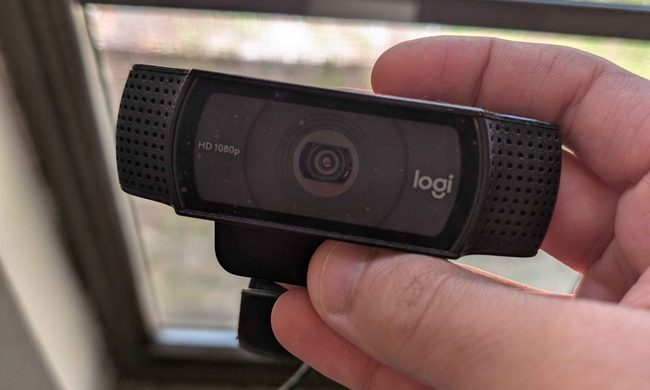
I'm holding my Logitech C920 1080p webcam in my hands.

The webcam built into your laptop might be good enough for a quick call with friends and family. But its shortcomings become much harder to ignore when you are presenting a semester project, interviewing for an internship, or maybe if you're planning to stream for fun.

Laptop cameras also tend to sit far too low, especially when the computer is placed directly on a desk. Meanwhile, a dedicated webcam lets you position the camera closer to eye level. This improves the framing and brings larger sensors, better microphones, and more effective low-light processing.

Read more
I desperately want a new classic Walkman, but Sony probably can’t give me one
Tech minimalism is begging for a new Walkman. Though rebuilding it may be close to impossible
Sony Walkman WM2011

Every few months, another piece of tech that seems obsolete crawls out of a drawer and becomes cool again. The age of minimalism has revived the popularity of iPods among younger buyers. Dumbphones have become an escape hatch from endless notifications. Similarly, digital cameras are dangling from bags again. Physical media keeps attracting people who want something they can actually hold instead of another frustrating subscription.

All of this makes it the perfect time for Sony to bring back the classic Walkman, which was a phenomenon during the 80s and 90s. I would love one. Give me a compact cassette player, physical buttons, and wired headphones. Keep the apps, notifications, and algorithms that shape your taste of music. No more AI assistants or personalzied feeds, just you and your Walkman. There is only one problem though. Recreating the Walkman that people love and remember, would be far harder than putting an old design back into production.

Read more
Proton reveals how smart TVs track you and the escape situation is pretty grim 
Modern smart TVs fingerprint your screen content at the chipset level.
Google TV applications on the Sony A95K TV.

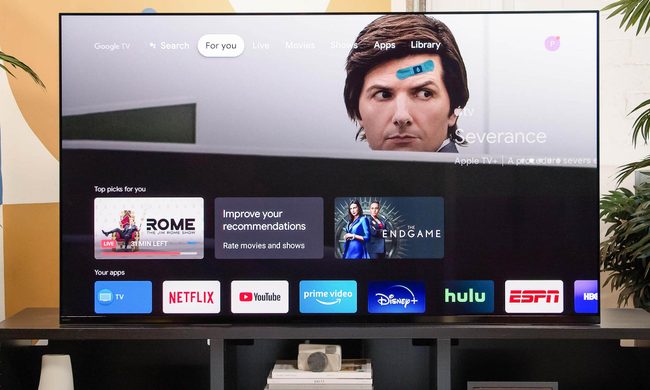
Your smart TV may know far more about your viewing habits than you realize, even if you rarely use its smart features. In a new privacy explainer, Proton warns that many modern TVs quietly collect data about everything displayed on the screen and share it with manufacturers, advertisers, and analytics companies.

The worrying part is that escaping this tracking is becoming increasingly difficult because many privacy controls are buried deep in settings or enabled by default. Proton argues that buying a smart TV today often means accepting a level of surveillance that most people never knowingly signed up for.

Read more