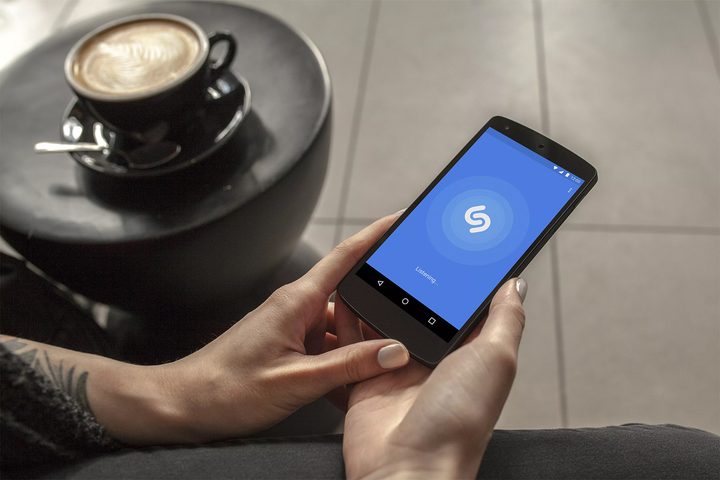
After months of deliberation, Apple announced that its purchase of Shazam has finally been completed, bringing the music-finding app under Apple’s broad umbrella.
As a part of Apple’s acquisition, the company announced it will be removing ads from the Shazam app “for all users”, giving interruption-free use to all. At this time it is unclear whether the ad-free experience is for iOS users only, or whether this also extends to Android users. We have reached out to Apple and will update if we hear back.
It hasn’t been a smooth journey for Shazam into Apple’s arms. In February, a few months after Apple officially confirmed the deal, the European Commission officially accepted a request from member nations Austria, France, Iceland, Italy, Norway, Spain, and Sweden to assess the proposed acquisition. The examination was aimed at determining whether or not the acquisition would “threaten to adversely affect competition,” — something American tech companies are often accused of in Europe. Thankfully for Apple, the acquisition was allowed.
“The way people listen to music has changed significantly in recent years, with more and more Europeans using music streaming services,” Commissioner Margrethe Vestager said. “Our investigation aims to ensure that music fans will continue to enjoy attractive music streaming offers and won’t face less choice as a result of this proposed merger.”
Apple’s purchase of Shazam is the latest acquisition for the world’s largest tech company.
First launched in 2002, Shazam has grown significantly over the last several years. Once specifically devoted to music recognition, Shazam now accepts audio and visual clips to identify songs, movies, and television shows. The service is the oldest of its kind and competes with Soundhound and Musixmatch.
“We are thrilled that Shazam and its talented team will be joining Apple,” Apple spokesperson Tom Neumayr told BuzzFeed News at the time the acquisition was announced. “Since the launch of the App Store, Shazam has consistently ranked as one of the most popular apps for iOS. Today, it’s used by hundreds of millions of people around the world, across multiple platforms.”
A big part of the reason the European Commission cleared the acquisition is that Apple and Shazam largely offer complementary services, rather than services that compete with each other.
While the acquisition price has not been publicly announced, Apple reportedly paid around $400 million for the company. This estimate falls far below Shazam’s $1 billion valuation from its last funding round in 2015. The discrepancy is likely due to Shazam’s struggle to become profitable.
In 2015, Shazam posted an annual loss of $22 million. The company saw a major turnaround in 2016, with revenues of $54 million, and became profitable for the first time with a pretax loss of $5.3 million. Earlier in 2017, Shazam CEO Rich Riley hinted that the company’s ability to become profitable could make it an attractive acquisition target.
A big part of Shazam’s turnaround is due to its feature diversification. In earlier incarnations, Shazam made money primarily from advertising revenues and linking customers to services like Apple Music. In 2016, the company added a new augmented reality feature, allowing users to scan branded Shazam codes to unlock deals and games on the app.
The new features allow Shazam to build more strategic partnerships and drive engagement with the app. Earlier in 2017, the company partnered with spirits company Beam Suntory, maker of Jim Beam, Sauza, and Hornitos tequila, to create a wildly successful AR marketing campaign. Since its partnership with Beam, Shazam has partnered with a number of other companies and artists to create similar AR campaigns within the app.
Exactly what Apple plans to do with Shazam is unclear. Apple frequently purchases smaller tech companies to scrape the technology for its own products, but Shazam has technically been baked into Siri for quite some time. You can ask Siri to “Shazam this song,” or even simply ask the voice assistant, “What’s this song,” and the feature is powered by Shazam. Apple could remove Shazam’s branding and bake the feature fully into iOS, or create tighter integration with Apple Music. It’s unclear if this spells doom for Shazam’s Android app.
The European Commission, however, was concerned that Apple may use Shazam to access “commercially sensitive data about customers of its competitors.” This, the Commission says, could help Apple target competitors’ listeners and encourage them to switch platforms, placing these other music providers at a competitive disadvantage. In the end, the Commission determined that Shazam’s data was not unique, and that Apple’s competitors have an opportunity to access similar data through other databases.
Updated on September 24, 2018: Apple confirmed its purchase of Shazam.