1. Home
  2. Cars
  3. Business
  4. News

Faraday Future avoids failure with a $1 billion investment

Add as a preferred source on Google

The end of the year isn’t the end of the line for one electric vehicle startup. Problem-plagued Faraday Future has managed to avoid its demise for the time being thanks to a $1 billion cash influx. According to new reports, the controversial Chinese investor, Jia Yueting, told company employees at a December 13 meeting about the new funding round. It remains unclear where this money is coming from, however, and what the terms of such an investment really are.

Faraday Future, the would-be Tesla competitor, has had a number of problems, particularly related to its financials and production. Many of these issues appear to be related to Jia himself, who also announced on December 13 that he will step in as chief executive (a role no one has filled in four years). As CEO, Jia is slated to reorganize the structure of the firm to “ensure the implementation of corporate strategies,” per a report from Securities Daily.

Recommended Videos

Leadership aside, Faraday Future also appears to be having trouble meeting its timeline for producing cars (to be fair, Tesla suffers from a similar problem). During a December visit to the company’s factory, a Chinese journalist claimed to see only a security engineer on site, and no production equipment at all. As such, creating a mass-produced car by the end of 2018 appears to be something of a stretch. If you’re just catching up on the company, here’s everything you need to know about Faraday Future.

Then there’s the issue of Jia himself. The investor founded LeEco, the Chinese conglomerate with similar ambitions that has fallen upon similar difficult times. As a result, Jia appears to be very heavily in debt — so much so that China’s Securities Regulatory Commission has ordered him to return home. A letter explaining the Commission’s order notes that Leshi (a subsidiary of LeEco) has failed to repay debts and “has severely hurt the interest of the listed company and investors and has had an extremely adverse social impact.”

All that aside, Faraday Future seems to be in the clear for the time being. The $1 billion is already being used to pay debts, which currently stand at over $100 million. We’ll have to see if the company is able to deliver upon its promises come 2018.

Lulu Chang
Fascinated by the effects of technology on human interaction, Lulu believes that if her parents can use your new app…
Volvo is rolling out Apple Music to over 2 million cars with a simple OTA update
Your Volvo may soon get Apple Music without needing CarPlay
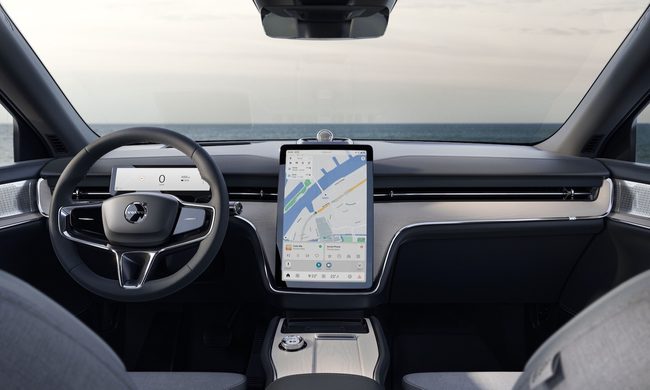
Interior view of the 2024 Volvo EX90.

The line between your smartphone and your car continues to blur. Volvo has announced that it is rolling out an over-the-air software update that brings Apple Music directly to the infotainment systems of more than 2 million vehicles worldwide. Instead of relying on Apple CarPlay or plugging in an iPhone, eligible drivers will be able to stream music natively from their car's built-in system, making Apple Music another integrated feature of Volvo's software experience.

The update is arriving for a wide range of Volvo models, including the EX90, ES90, XC90, S90, V90, XC60, S60, V60, XC40, EX40 and EC40, covering model year 2020 onwards. Availability, however, may vary depending on the vehicle.

Read more
Chery’s latest EV packs flagship tech for the price of a base Tesla, but you can’t buy it
Here's everything packed into Exeed's 2027 Exlantix ES, from its 27-sensor autonomous driving suite to its 860 km range, all starting under $31,000.
Car, Transportation, Vehicle

Chery's premium arm just dropped a sedan that makes you wonder why American EVs cost twice as much for half the tech.

Exeed's 2027 Exlantix ES ships with a driver-assist system called Falcon 700. It is built around an Nvidia Orin-Y chip and a genuinely stacked sensor suite.

Read more
A new AI model wants self-driving cars to think before they swerve
Forget guessing games, this self-driving AI actually shows its work.
Self driving car

Self-driving cars have gotten pretty good at driving. The harder problem is teaching them to drive safely in situations nobody planned for. We have heard horror stories of self-driving cars, behaving erratically in emergency situations, often times delaying first responders from reaching the scene.

A team at Seoul National University, led by professor Jun Won Choi from the Department of Electrical and Computer Engineering, thinks they have cracked part of that puzzle with a new AI model called SafeDrive. The research was recently selected as a highlight paper at CVPR 2026, a distinction that goes only to roughly 3% of all submissions.

Read more