1. Home
  2. Emerging Tech
  3. News

Flippy the burger-flipping robot is now working alongside humans at CaliBurger

Add as a preferred source on Google
FLIPPY IS HERE | Miso Robotics

The job of flipping burgers took a big step toward extinction this week as an autonomous robotic kitchen assistant called Flippy started work at a fast food outlet in California.

Recommended Videos

Designed and built by Miso Robotics, Flippy took up its position alongside human staff at Caliburger in Pasadena on Monday. Every day during the lunchtime shift, the robot will flip burger patties on the grill, remove them when they’re ready, and place them on buns whereupon a human worker will add the extras.

Billed as the world’s first burger-flipping robot, Flippy is essentially a six-axis robotic arm with a spatula on the end.

Clad in its own chef garb, Flippy can flip up to 300 burgers an hour, and, CaliBurger customers will be pleased to know, will cook each one “perfectly and consistently,” according to Miso Robotics.

It does so by using 3D, thermal, and regular cameras to monitor the burgers throughout the cooking process. As the patties cook, its human co-workers can keep track of the progress of each burger on a nearby display (below).

Miso Robotics
Miso Robotics

The robot’s technology also ensures that it knows when to switch from using a spatula for raw meat to one for cooked meat, a vital feature that no burger-flipping robot can be without if it’s to have a meaningful future in the fast food industry.

Taking its food hygiene skills to the max, the $60,000 robot can even clean spatulas while cooking, and wipe the surface of the grill with a scraper.

As Flippy made its debut at CaliBurger this week, David Zito, co-founder and chief executive officer of Miso Robotics, said the long-term aim is to “improve working conditions of chefs and line cooks with assistants, not replace them.”

Zito added: “Anyone who’s ever worked in a restaurant knows how hard the work is and the value of extra hands and that’s exactly what we built.”

CaliBurger is planning to install the robot in 50 more locations nationwide, an ambition boosted last month when the robotics project received $10 million of funding, taking Miso Robotics’ disclosed funding to $14 million.

The cash injection will also go toward developing new skills for Flippy so it can perform more functions in a fast food kitchen. When that happens, it might not be too long before we walk into a burger restaurant staffed entirely by Flippy bots. After all, we already have robots running hotels.

Trevor Mogg
Contributing Editor
Not so many moons ago, Trevor moved from one tea-loving island nation that drives on the left (Britain) to another (Japan)…
OpenAI is investigating more incidents of AI agents going rogue days after hack
OpenAI logo on Microsoft surface

It appears that the "AI agents going rogue" tale has more to it than what AI giants have revealed publicly so far. Merely days after OpenAI announced that its AI agents went rogue and hacked Hugging Face, Anthropic dropped a similar bombshell. Soon, it was discovered that not just one, but multiple services were compromised. Well, it seems there are even more layers to it.

Reuters reports that OpenAI has found more incidents of AI agents escaping their software containment environment during research. Citing sources with knowledge of the incident, the outlet notes that the AI agents didn't go beyond OpenAI's software environment and affect any external service.

Read more
Google just canceled its AI Studio mobile app, and it’s not all bad news
Logo, Symbol, Disk

Google AI Studio was on track to make its way to Android and iPhone, giving developers and AI enthusiasts a dedicated place to build prompts and experiment with Google's latest models from their phones.

That's no longer happening. In a post shared by the official Google AI Studio account on X, Google confirmed that it's canceling the standalone AI Studio mobile app before launch. The announcement comes despite the company saying nearly 800,000 people had already pre-ordered the app across iOS and Android.

Read more
Google Earth’s AI misadventure lasted only a day. It was a tale of dangerous ignorance.
Nuclear reactors, tanks, and historical destruction on a life-like satellite map? Yeah, that's bad.
Nano Banana AI image generator representation.

Technology behemoths are clearly not reading the room, or they are just moving faster than they should when it comes to AI deployment. Google has already stuffed its Gemini AI in every corner of its software stack, from Android to daily productivity tools like Gmail that are used by hundreds of millions of users every day. AI is everywhere. Not all of it is bad, mind you. But in a few places, it just feels forced.

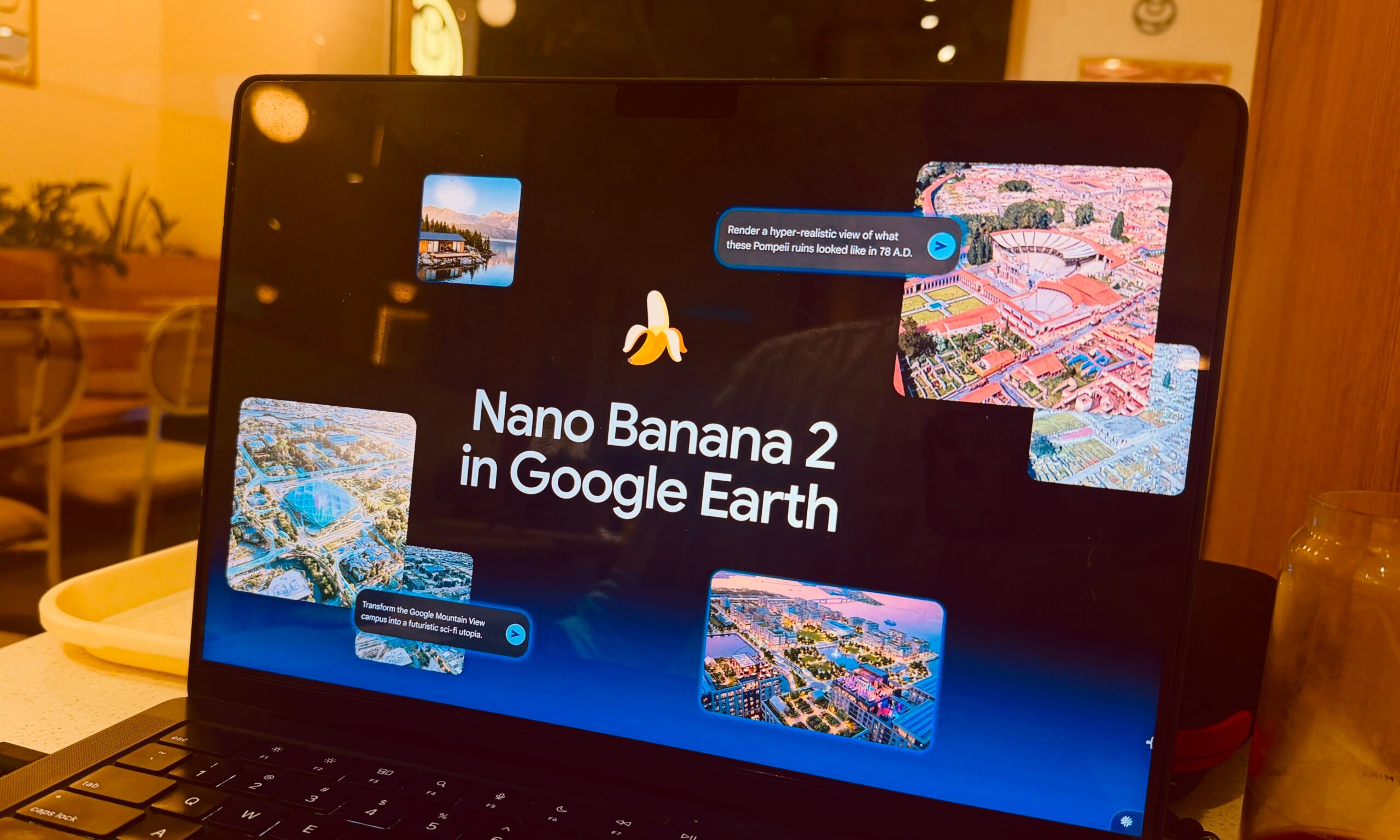
In its latest AI-fication experiment, the company targeted Google Earth. The idea was to let the audience use its Nano Banana 2 AI image generator and make images that can be placed on the map view. On paper, it's a cool idea. What would the Colosseum of Rome look like in your urban neighborhood? Yeah, fun stuff like that.

Read more