Being able to connect to the internet isn’t just a feature of your phone — it’s something that your car can do, too. If your car is a Tesla, that is. Since the Model S first made its debut in 2012, Tesla has touted the cellular connectivity aspect of its cars. It’s not just a gimmick, either — Tesla relies upon this capability in order to release software updates for its cars, as well as enable live traffic map and data, Autopilot data, and streaming services. And while it’s always come standard for Tesla owners, that could soon be changing. The car company is rolling out a paid “premium connectivity” package in order to boost the internet features of its ever-burgeoning fleet.
To be fair, we technically saw this coming for quite some time. In 2014, Elon Musk’s car company noted that its cars’ internet connections would be live for four years, free of charge. At the time, it offered this clarification: “To further enhance the driver experience, new Model S customers will now receive free data connectivity and Internet radio for four years. As an added benefit to our existing Model S customers, the free four-year period starts on January 1, 2014. To be fair to all, in rare cases a customer may be charged for extreme data use.”
And now, four years later, Tesla is sort of making good on its promise. Luckily, most Tesla owners won’t ever have to pay to use the internet in their vehicles — if you already own a Tesla or are planning to order a Model S, Model X, or Model 3 before July 1, you’ll never have to shell out a single dime in order to access internet in the way it’s currently being offered in Tesla cars. However, if you buy a Tesla after July 1, you’ll be given two choices — either the Premium Connectivity package or the Standard Connectivity package.
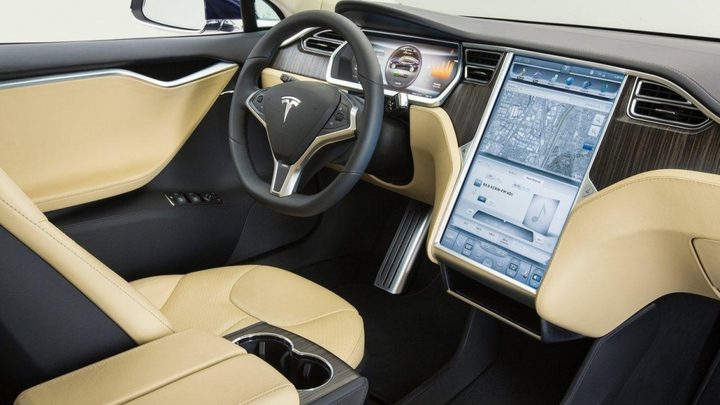
As you might suspect, the latter comes free of charge, but will only be able to be used for apps that don’t require much data. For example, while you’ll still be able to use Tesla’s navigation system, you won’t have access to satellite maps or live traffic data. While the routing system will still utilize the live data to get you from Point A to Point B, you won’t be able to see traffic density in various colors on the central console. And if you’re looking to update your software, you’ll have to go through Wi-Fi when your car is connected to a network. However, if an update is safety-related, you’ll get it through an over-the-air update for immediacy’s sake.
If you opt for the Premium Connectivity package, you’ll still be able to see satellite maps and live traffic, as well as have access to in-car streaming music and media. In fact, the full internet browser will be made available to you with this package, which will likely cost somewhere near $100 per year, Electrek reports. However, folks who order a Model S or Model X on or after July 1 will get a free year of the Premium option, as will Model 3 cars with the premium interior.