1. Home
  2. Emerging Tech
  3. Legacy Archives

Sony dash Personal Internet View Tunes into Netflix

Add as a preferred source on Google

Sony’s forthcoming dash “personal Internet view” got its debut at CES, but didn’t raise a tremendous number of eyebrows: although the device features a 7-inch touchscreen display, built-in WiFi, and is designed for convenient use in places like countertops and nightstands, rather than offering a true OS and an application ecosystem to drive it, the dash relied on a series of custom widgets: if the widget did what you wanted, great, but if you wanted something else, tough luck.
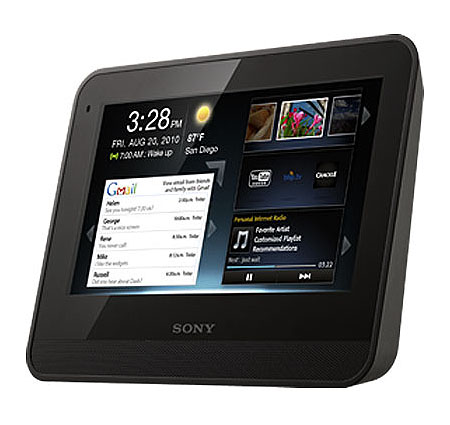
Sony Dash
Image used with permission by copyright holder

Now Sony is upping the ante on those built-in widgets, announcing today that the dash will feature a dedicated application for Netflix, enabling Netflix subscribers to tap into thousands of movies and TV shows that can be streamed to them over their existing home broadband connection. In addition, Sony says Demand Media offerings eHow, Golflink, and Livestrong.com will be available as part of the dash’s content lineup. The Netflix and Demand Media offerings supplement content that will be available via Sony’s Bravia Internet video platform and a content channel from chumby industries.

Recommended Videos

“We’re continuing to develop innovative products that bring online music, news, video, and more into our customers’ homes in real time,” said Sony Electronics senior VP for personal imaging and audio Brennan Mullin, in a statement. “By adding content from Netflix and Demand Media to our dash product, Sony is giving consumers a new, convenient way to enjoy some of the highest quality entertainment and most useful information available on the Internet today.”

Sony says the dash will be available in April for a suggested price of $199. As with other devices capable of tapping into Netflix streaming, a separate Netflix subscription is required.

Geoff Duncan
Former Contributor
Geoff Duncan writes, programs, edits, plays music, and delights in making software misbehave. He's probably the only member…
Google just canceled its AI Studio mobile app, and it’s not all bad news
Logo, Symbol, Disk

Google AI Studio was on track to make its way to Android and iPhone, giving developers and AI enthusiasts a dedicated place to build prompts and experiment with Google's latest models from their phones.

That's no longer happening. In a post shared by the official Google AI Studio account on X, Google confirmed that it's canceling the standalone AI Studio mobile app before launch. The announcement comes despite the company saying nearly 800,000 people had already pre-ordered the app across iOS and Android.

Read more
Google Earth’s AI misadventure lasted only a day. It was a tale of dangerous ignorance.
Nuclear reactors, tanks, and historical destruction on a life-like satellite map? Yeah, that's bad.
Nano Banana AI image generator representation.

Technology behemoths are clearly not reading the room, or they are just moving faster than they should when it comes to AI deployment. Google has already stuffed its Gemini AI in every corner of its software stack, from Android to daily productivity tools like Gmail that are used by hundreds of millions of users every day. AI is everywhere. Not all of it is bad, mind you. But in a few places, it just feels forced.

In its latest AI-fication experiment, the company targeted Google Earth. The idea was to let the audience use its Nano Banana 2 AI image generator and make images that can be placed on the map view. On paper, it's a cool idea. What would the Colosseum of Rome look like in your urban neighborhood? Yeah, fun stuff like that.

Read more
Google’s new AI gives robots better balance, smarter hands, and teamwork capabilities
Google just made robots a lot less clumsy and a lot more helpful.
Gemini robotics 2.0

Google DeepMind just brought sci-fi robots closer to reality, and it is very exciting. Building on its original Gemini Robotics model, the company has introduced Gemini Robotics 2, an AI system designed to help robots think, move, and even work together. Unlike most robots today, which rely on pre-programmed routines or someone controlling them remotely, this new system lets robots figure things out on their own when situations get unpredictable.

Can robots finally handle whole-body tasks?

Read more