
If you’re looking to buy a slim, light, and premium laptop, you might want to consider the 2019 Huawei MateBook 13 or the 2018 Apple MacBook Air. While there are newer models of each, these older configurations aren’t outdated Stone Age laptops just yet. They’re still relevant and cheaper than their fresh-off-the-press 2020 siblings.
Here we take a look at these two older models to see which is the better buy. Be it the differences in the operating system, processor, display, or performance, there is a lot to think about when considering both. Yet only one laptop can walk away as the victor.
If you’re curious about the latest models, check out our review of the MacBook Air released in early 2020.
Design
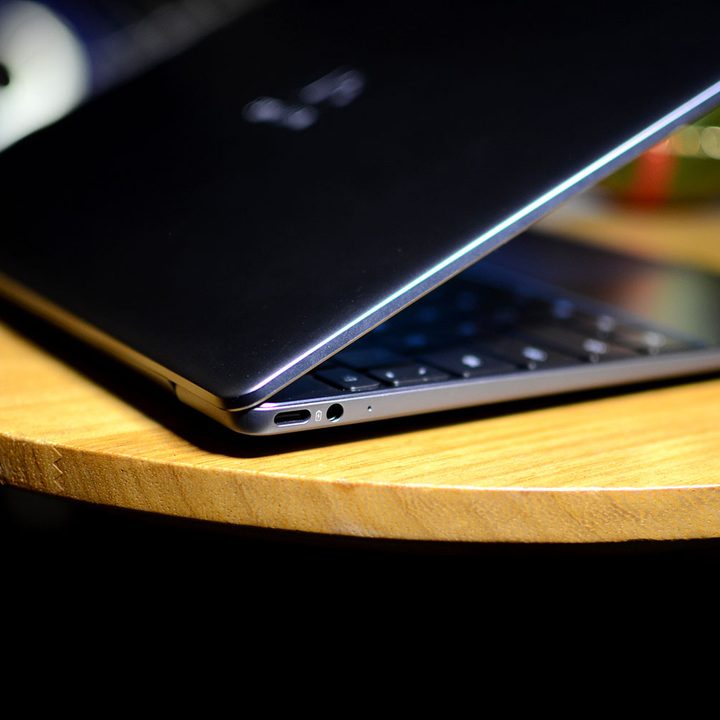
The 2019 Huawei MateBook 13 and the 2018 MacBook Air are similar, but with subtle differences. Both devices sport aluminum finishes that are thin and light, but Apple’s MacBook Air comes in Space Gray, Gold, and Silver. The MateBook 13 only comes in Mystic Silver (with integrated graphics) and Space Gray (with dedicated graphics).
Huawei’s MateBook 13 has a width of 11.26 inches and a thickness of 0.59 inches. That is just slightly thinner and smaller than the MacBook Air with its width of 11.97 inches and its thickness of 0.61 inches. Apple put that extra thickness to good use, however, as the MacBook Air feels more rigid than its rival. The MateBook 13 has some flex in the lid and the center of the hinge.
More laptop comparisons
- MacBook Air vs. MacBook Pro
- MateBook 13 vs. XPS 13
- MacBook Air vs. MacBook
- MateBook X Pro vs. Dell XPS 13
The keyboards are different between the two devices. Apple’s MacBook Air sports the third-generation butterfly keyboard from the 2018 MacBook Pro. Huawei’s MateBook 13 features an edge-to-edge keyboard with a total key travel of 1.2mm, which some may like for its better travel space between keys. We found the MacBook Air keys to be a bit too shallow when typing.
Finally, both the MacBook Air and the MateBook 13 sport fingerprint readers on the power button. On the MacBook Air, it’s in the top right corner parked next to the F12 key within the keyboard. On the MateBook 13, it’s located in the top right corner outside the keyboard area. Both make for quick and accurate logins, without the need to fiddle with passwords, but Apple’s is the more reliable and responsive overall.
Performance
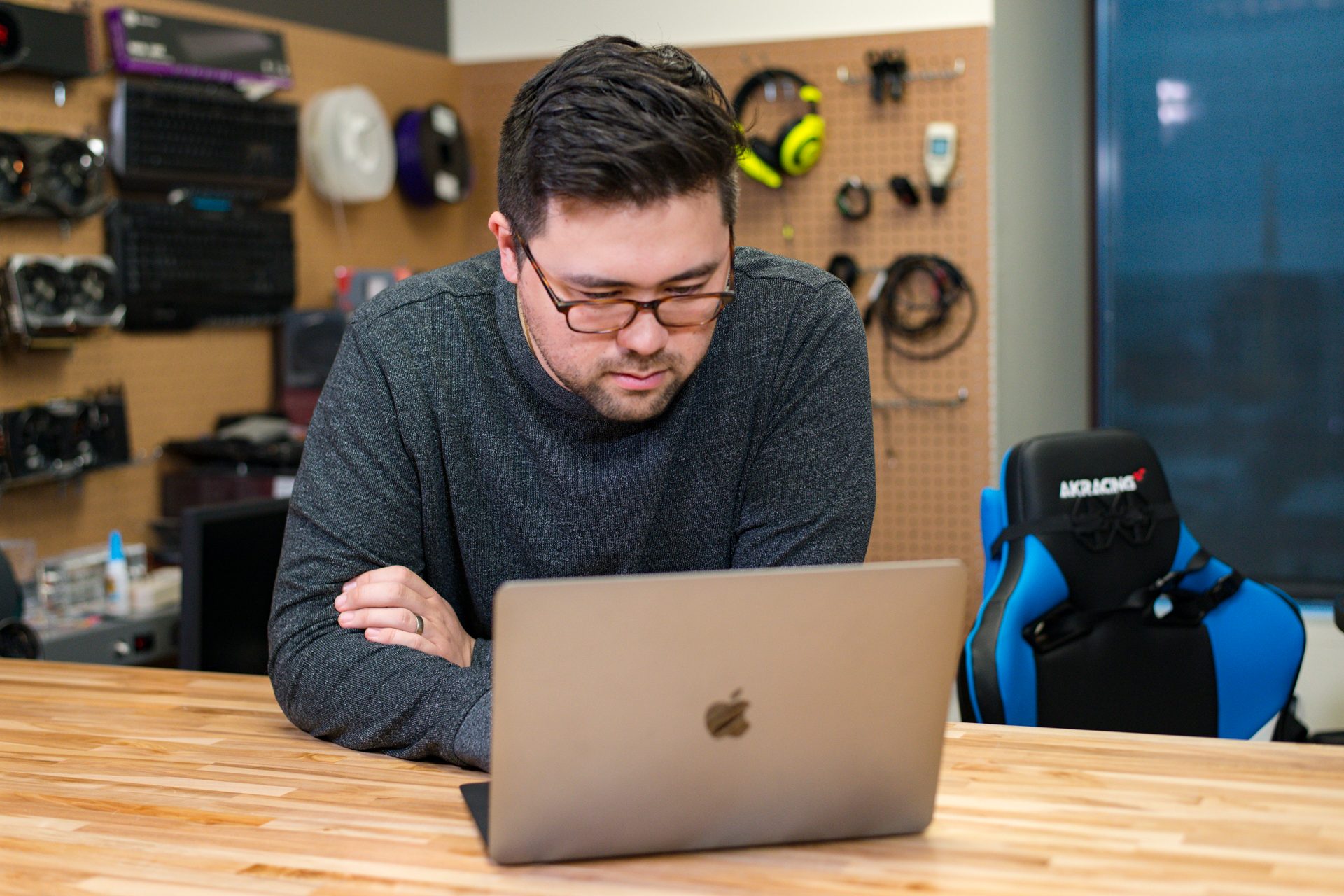
Aside from the fact that the MacBook Air runs on MacOS, and the MateBook 13 uses Windows 10, there are other important differences between the two.
Though all variants come with 8GB RAM, Huawei has two models of the 2019 Matebook 13. The first is a Mystic Silver option with the 8th generation Intel Core i5-8265U processor, and a 256GB NVMe PCIe SSD. The other Space Gray model comes with the 8th generation Intel Core i7-8565U processor and Nvidia GeForce MX 150 graphics. These processors are quad-core “Whiskey Lake” CPUs optimized for better performance.
The base model of the 2018 MacBook Air comes with the 8th generation 1.6GHz dual-core Intel Core i5 Y-series processor. This doesn’t pack as much power as the chip in the MateBook 13, and we found that it was a bit sluggish for more demanding tasks like watching videos on a secondary 4K monitor. Also, Apple’s MacBook Air doesn’t come with an option for dedicated graphics like the MateBook 13.
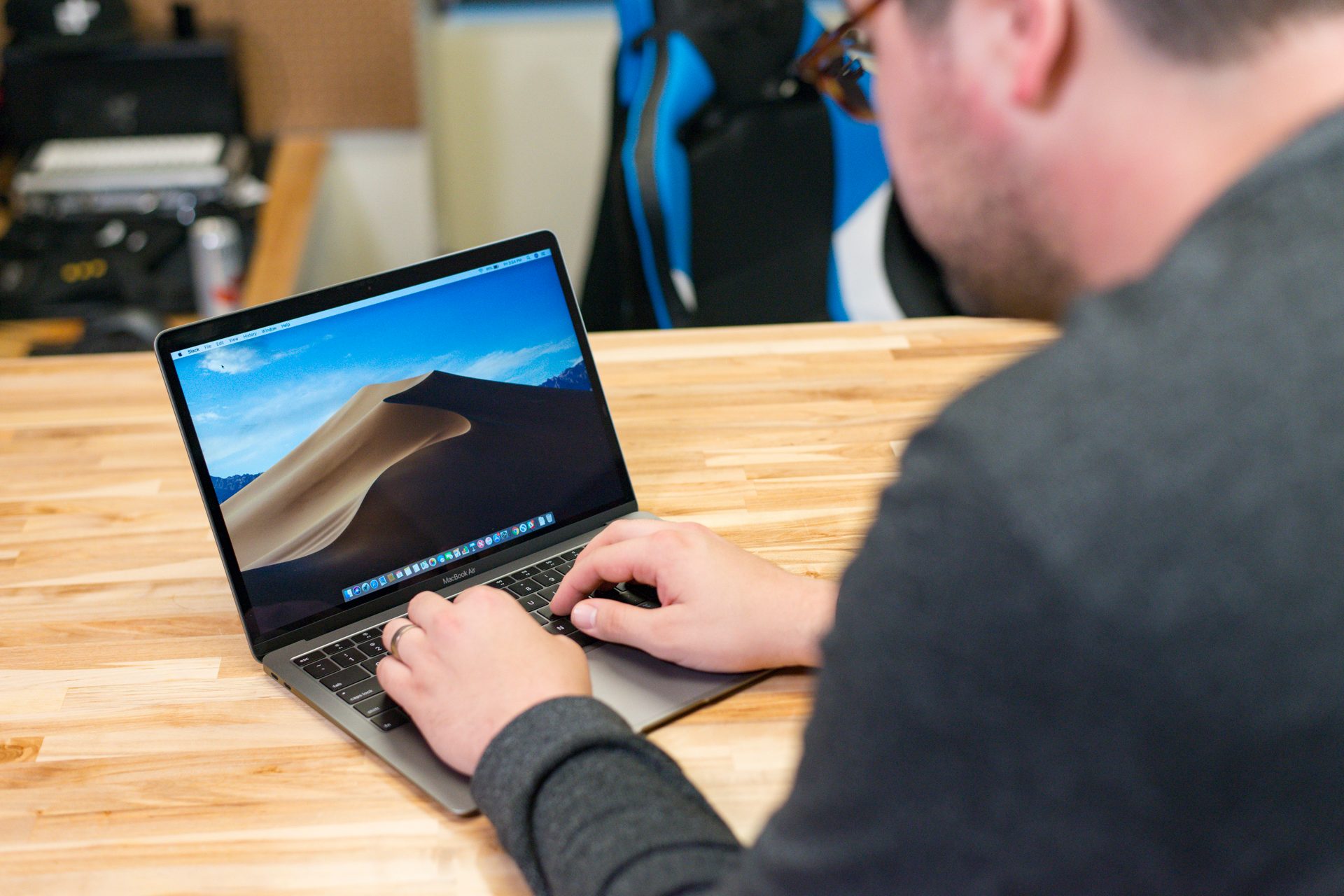
When comparing their performance, the MateBook 13’s more powerful CPU and optional discrete GPU are major difference-makers. In our benchmarks, the Huawei was significantly faster in every test we threw at each machine.
Both devices pack impressive displays, though the MateBook 13 edges out Apple in the overall screen to body ratio and its support for touch. Huawei’s Matebook 13 touchscreen packs a resolution of 2160 x 1440 or 200 pixels per inch while the MacBook Air packs a resolution of 2560 × 1600 for 227 pixels per inch.
Obviously, the MacBook Air has more pixels, but the Matebook 13’s screen has a 3:2 aspect ratio that’s great for productivity work. That gives it an 88 percent screen to body ratio (vs 82 percent and 16:10 on the MacBook Air) and more room for you to multitask.
According to our colorimeter, the MateBook’s screen was slightly less bright at 234 nits than the MacBook Air’s tested 291 nits. And while the MacBook Air had a wider color gamut and more accurate colors, it exhibited less than half the contrast of the MateBook 13.
Portability
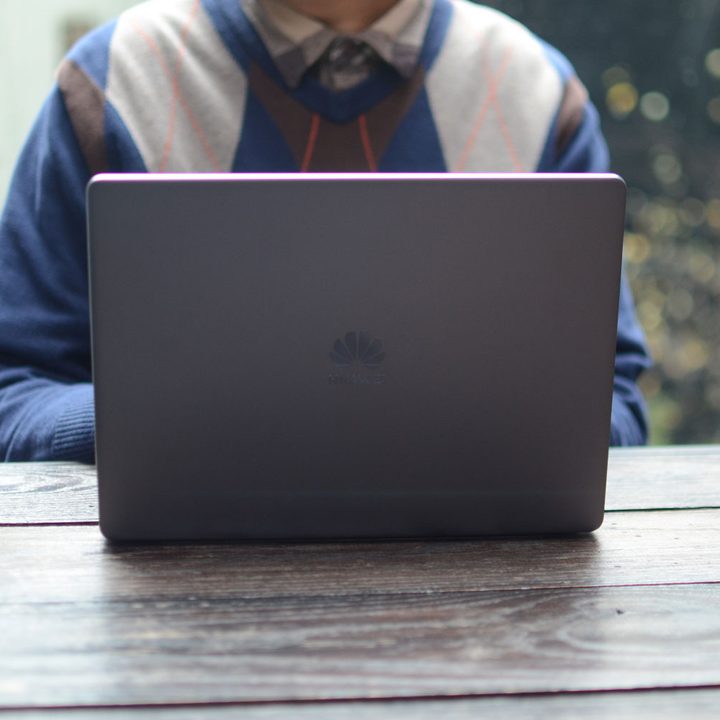
Coming down to portability, there is a small difference between the two. As mentioned earlier, both are thin and light, but the MateBook 13 is a bit heavier. It comes in at 2.82 pounds on the unit with integrated graphics, and 2.86 pounds on the unit with the discrete GPU. That’s a bit more than the MacBook Air, which comes in at 2.75 pounds.
Elsewhere, with ports and connectivity, the two laptops are on a similar footing. You’ll find the MacBook Air comes with two USB-C ports with Thunderbolt 3 while the MateBook 13 has two USB-C ports without Thunderbolt. Dongles will be needed in both cases, but unlike Apple, Huawei includes a dongle in the box, expanding connectivity to VGA, HDMI, and traditional USB-A.
The MacBook Air also manages significantly better battery life than Huawei’s laptop. In our testing, we got to around eight hours in web browsing and 10 hours in video playback on the MacBook Air. The MateBook 13, though, at least with the MX150 installed, only managed about six hours of web browsing and 6.5 hours of video watching. Chances are that you’ll get better results if you skip the discrete GPU, though the MacBook Air is still the more portable of the two.
The 2018 MacBook Air takes the win by a hair
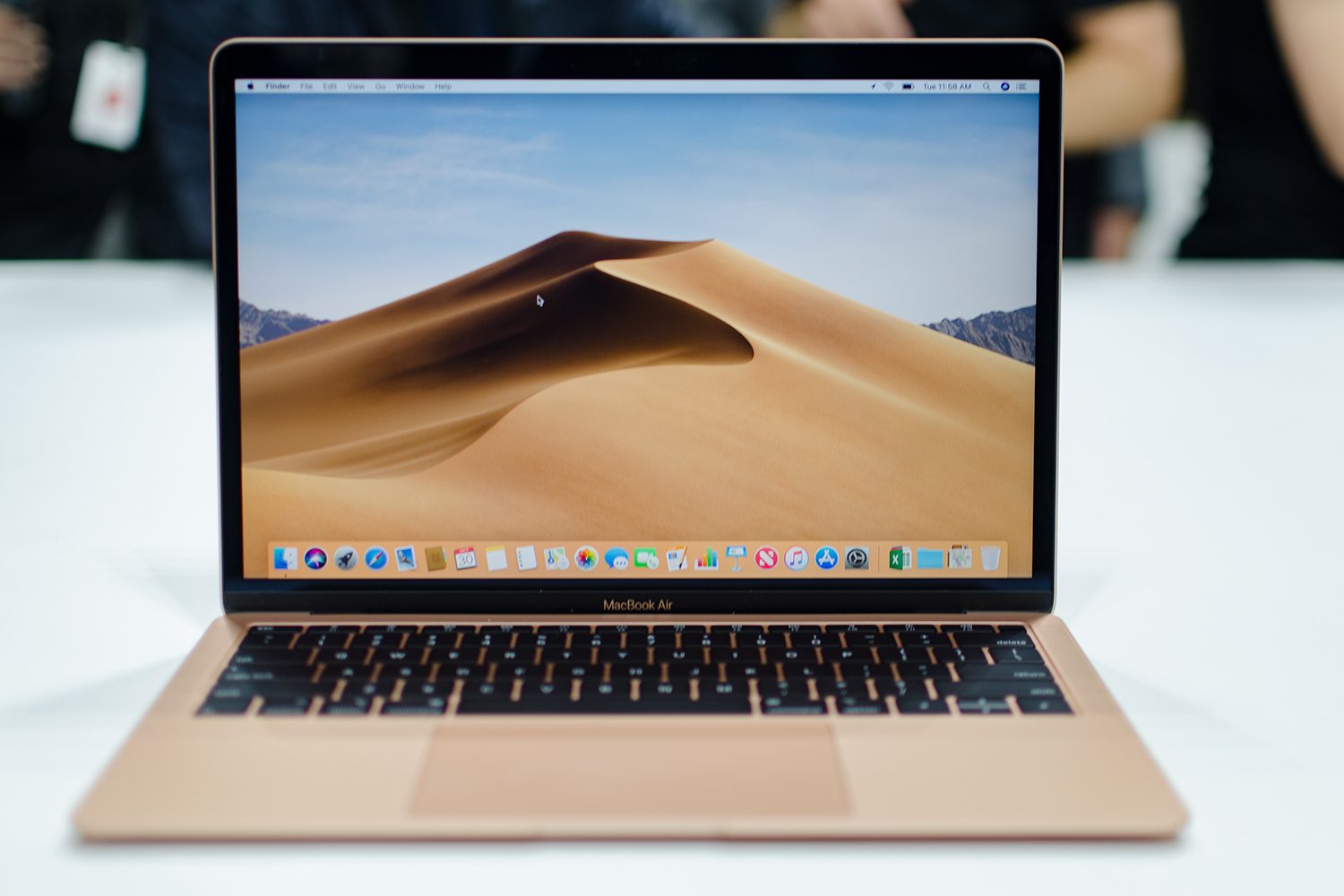
This one’s close. On one hand, the MateBook 13 is a more powerful device with its own sense of appeal. On the other hand, we find the MacBook Air to be better across the board, considering its battery life, support for Thunderbolt 3, and ideal touchpad. Its durable build is also nice for transportation.
However, if you live in North America, you can’t buy a MateBook due to restrictions imposed on Huawei by the U.S. Department of Commerce. Sure, you can find a few used MateBook 13 Signature Edition models on Amazon, but all other models must be purchased outside the U.S. and imported. The expense associated with shipping will mean a MateBook is more expensive than buying the 2018 MacBook Air from retailers or directly from the manufacturer.
Overall, the comparison between these two older laptops is close. If you’re a long-time Windows user and are willing to overcome the MacOS learning curve, we guarantee you’ll be happier with the MacBook Air. The MateBook 13 is a quality laptop, but until it becomes readily available in the United States, it’s going to lose this comparison.


