1. Home
  2. Computing
  3. News

Google is giving its G Suite web apps new touches of visual improvements

Add as a preferred source on Google
Image used with permission by copyright holder

Material Design, Google’s user interface approach with rounded corners, crisp edges, fonts, and shadows, is spreading to more of its online applications. As was announced on January 15, several of the Google G Suite web apps are getting updated with visual improvements inspired by the design guidelines.

Though no new features will be added as part of the improvements, end consumers should notice a different look and feel in G Suite. Google Docs, Sheets, Slides, and Sites on the web will all now have new interface typography with Google’s new custom-designed typefaces, as well new buttons, dialogs, and sidebars that are rounded and consistent with the experiences across Google’s other services.  The changes might be a bit subtle compared to the massive Material Design overhaul introduced in the Chrome web browser, but Google says that it is “legible and crisp, with a fresh feel.”

Recommended Videos

The rollout for the changes is set for both the “Rapid Release” domain and the “Scheduled Release” domains on G Suite, and free users can also expect to see it soon. Those who are on “Rapid Release” should expect a gradual rollout with the new improvements starting on January 15, 2019, with a rollout of up to 15 days for full visibility. Everyone else on “Scheduled Release” should see a full rollout starting on February 11, with a full rollout of up to 1-3 days for visibility. The changes are coming to G Suite Basic, G Suite Business, G Suite Enterprise, G Suite for Education, G Suite Enterprise for Education, and G Suite for Nonprofits.

Google is also planning to roll out additional improvements at a later point. “This style change is part of a new, consistent design approach from Google. You can expect to see similar changes across other G Suite applications in the future,” explains Google.

Previously, Google Calendar on the web also picked up elements of Google’s Material design. Several of its apps on Android and iOS have also gotten updates with the new design language in the past month, but there has been some controversy. Back in December, Google disabled the ability of its Chrome web browser to go back to a design that pre-dates the Material Design language, and consumers were furious.

Arif Bacchus
Arif Bacchus is a native New Yorker and a fan of all things technology. Arif works as a freelance writer at Digital Trends…
I let Radial menu take over my Mac, and I’m never going back
One mouse jiggle, endless shortcuts. My Mac has never felt this fast.
Radial app running on Mac

I have been testing Radial for the past week, and it's quickly become one of those apps I didn’t know how I could live without. It's a radial menu for macOS that puts your shortcuts, scripts, and automations right where your cursor is, so you never have to go hunting through menus to find what you need.

The app just received its 5.0 update, adding AI actions powered by Claude, window layouts, variables, a redesigned settings interface, a new Atmosphere background effect, and a squircle menu shape. I got to try most of these, and here's what I found.

Read more
Android desktop mode made me miss my laptop in record time
I tried writing and publishing from Google’s phone-to-monitor setup, and the future of mobile computing immediately started sweating.
Computer, Electronics, Laptop

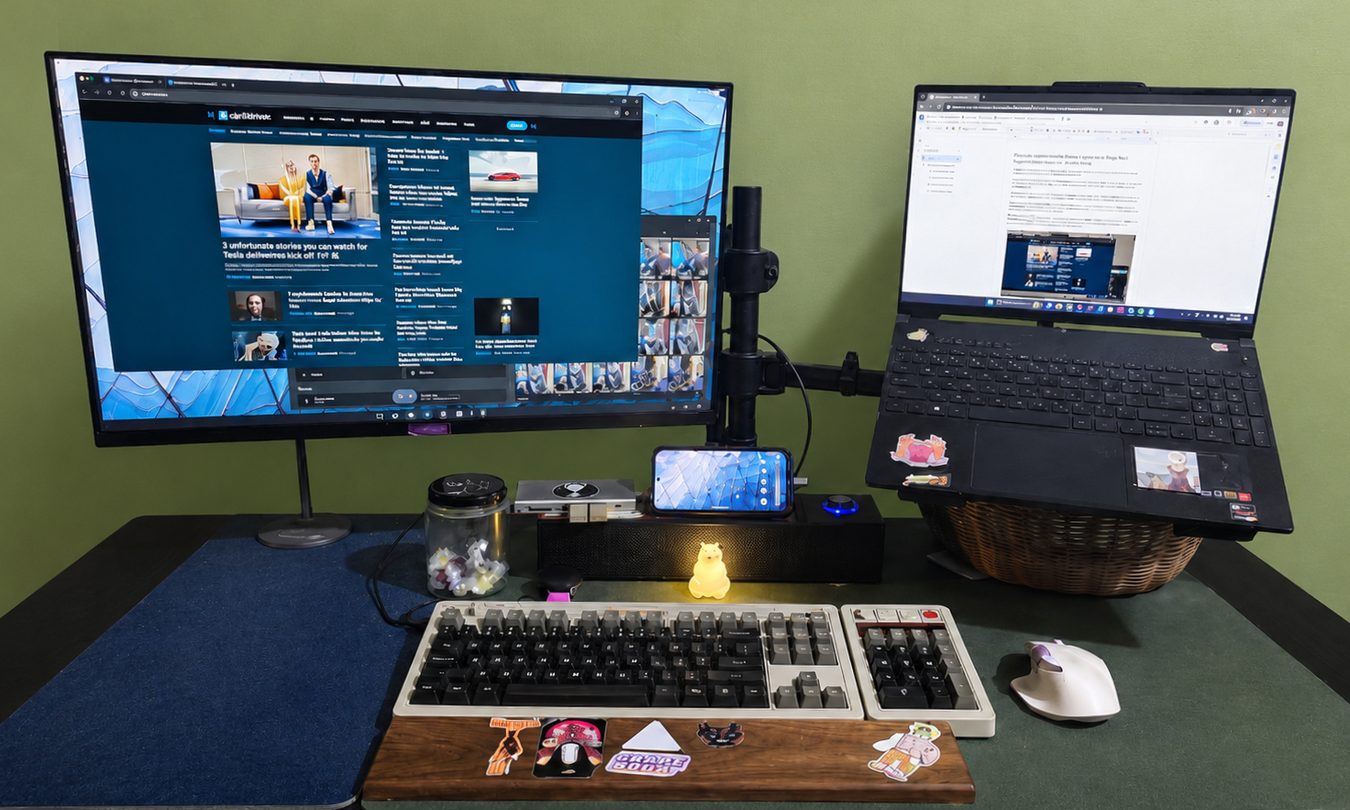
Android 17 desktop mode has a very simple pitch. Plug your phone into a monitor, add a keyboard and mouse, and watch the slab in your pocket pretend to be a computer. I wanted to give that pitch a fair shot, so I tried using it for an actual workday instead of a cute demo.

The goal was boring on purpose: write an article, edit it, build the page in WordPress, upload whatever needed uploading, and publish the thing without running back to my laptop like a coward.

Read more
As AI turbocharges digital abuse, UK agencies urge parents to limit who sees kids’ photos online
The National Crime Agency and Internet Watch Foundation are asking parents to tighten privacy settings as AI-generated abuse material rises.
Social Media

Parents who post pictures of their kids online are being told to rethink the habit. The UK's National Crime Agency and the Internet Watch Foundation have issued new guidance urging families to lock down their social media accounts, warning that publicly shared photos are increasingly being pulled and altered by AI tools to create child sexual abuse material.

The two organizations say most parents have no idea this is happening. Criminals no longer need to contact a child directly to generate such material. They can scrape an ordinary photo and run it through widely available nudify apps.

Read more