
  1. Home
  2. Emerging Tech
  3. News

See 265,000 galaxies in the epic Hubble Legacy Field mosaic

Add as a preferred source on Google

A mosaic of the distant Universe, called the Hubble Legacy Field, that documents 16 years of observations from the NASA/ESA Hubble Space Telescope. NASA, ESA, G. Illingworth and D. Magee (University of California, Santa Cruz), K. Whitaker (University of Connecticut), R. Bouwens (Leiden University), P. Oesch (University of Geneva), and the Hubble Legacy Field team.

This stunning image shows an incredible 265,000 galaxies, stretching back in time to the early universe 500 million years after the Big Bang.

Recommended Videos

The image is a mosaic of different images captured by the Hubble Space Telescope as part of its deep-field surveys, arranged into a giant overview called the Hubble Legacy Field. The first of these surveys was the 1995 Hubble Deep Field survey, followed by the 2004 Hubble Ultra Deep Field and the 2012 Hubble eXtreme Deep Field. In total, 7,500 separate exposures went into creating this first Hubble Legacy Field image.

“Now that we have gone wider than in previous surveys, we are harvesting many more distant galaxies in the largest such dataset ever produced,” Garth Illingworth of the University of California, Santa Cruz, leader of the team that assembled the image, said in a statement. “No image will surpass this one until future space telescopes like James Webb are launched.”

Zooming in on the Hubble Legacy Field

The wavelengths shown in the image range from ultraviolet to near-infrared, which allows astronomers to visualize the many different features of the galaxy through time. Some of the galaxies shown are incredibly faint because they are so far away, giving off light that is just one ten-billionth of the brightness visible to the human eye.

“One exciting aspect of these new images is the large number of sensitive color channels now available to view distant galaxies, especially in the ultraviolet part of the spectrum,” explained team member Rychard Bouwens of Leiden University in the Netherlands. “With images at so many frequencies, we can dissect the light from galaxies into the contributions from old and young stars, as well as active galactic nuclei.”

The Legacy Field image and other deep-field images show the expansion of the universe, giving astronomers clues to the state of the early universe and the way that it evolved over millions of years. New telescopes like the upcoming James Webb Telescope will allow astronomers to look even deeper into space, learning more about the development of galaxies through time.

Georgina Torbet
Georgina has been the space writer at Digital Trends space writer for six years, covering human space exploration, planetary…
You can now buy a computer mouse controlled entirely by your tongue
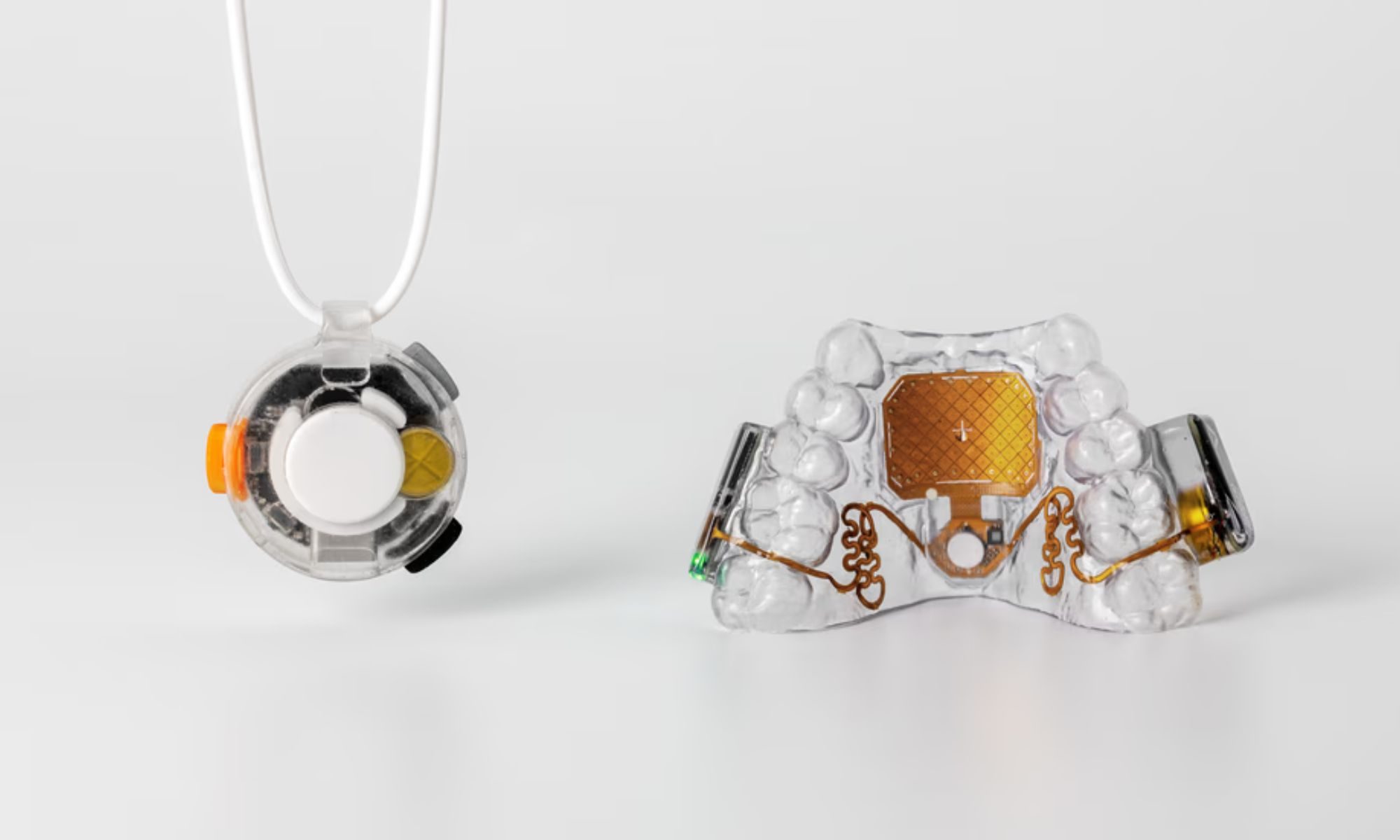
Augmental has opened public sales of the MouthPad, and introduced a new wearable that lets you type hands-free.
Augmental MouthPad and Vox featured

Augmental first showed off its tongue-controlled MouthPad as a CES curiosity in 2024. Today, the device is a real product you can buy, with the company opening public US sales alongside a beta release of Vox, a companion wearable built to handle the typing half of Augmental's hands-free computing promise.

A retainer that doubles as a mouse

Read more
Yet another study says AI is bad for elections, and the rabbit hole gets worse
AI may be an election bomb waiting for someone to light the fuse
Voters cast their ballots on Election Day

Another election, another study has concluded that asking an AI chatbot for political guidance is a spectacularly bad idea. Research conducted during Hungary’s 2026 parliamentary election found that ChatGPT and Google Gemini offered not just inaccurate but also inconsistent and unreliable voting advice. The chatbots misclassified voter profiles, overlooked relevant parties, recommended parties absent from the ballot, and sometimes produced materially different answers when given the same information repeatedly.

AI keeps failing the voter test

Read more
Samsung’s humanoid robot ambitions are real, but factories come first
Samsung’s new robotics division has humanoids in its sights, although its immediate business is far more practical factory automation
Robot Touch Human Finger

Samsung wants a place in the humanoid race, but its new robotics push begins with machines built for factories rather than homes.

The CEO-led RX robotics division will initially focus on manufacturing robots. Samsung has separately identified humanoids as a priority, although it hasn’t announced a commercial model or explained where one fits into the division’s immediate plans.

Read more