  1. Home
  2. Emerging Tech
  3. News

James Webb telescope undergoes vacuum testing, finally moving toward launch

Add as a preferred source on Google

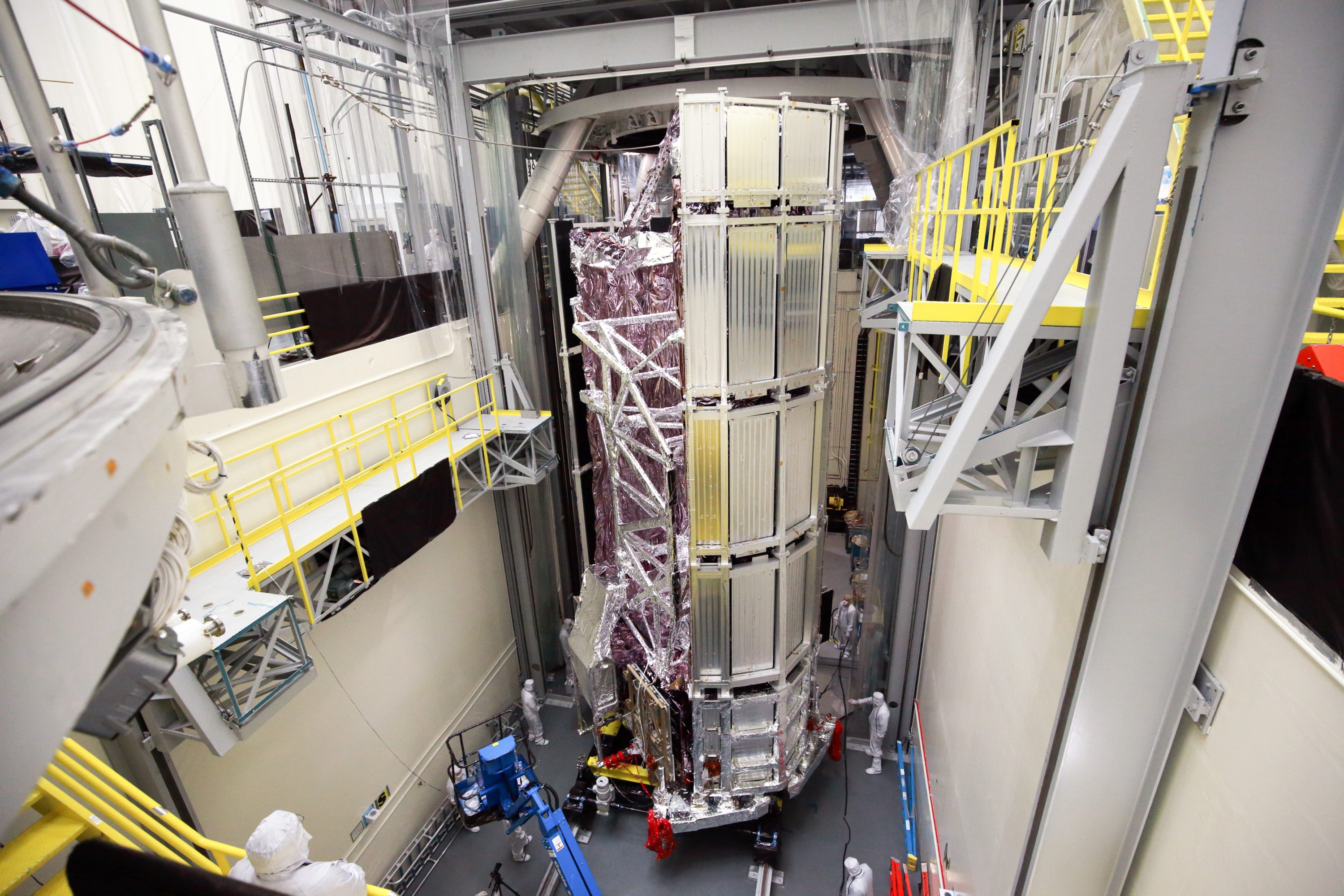
Technicians and engineers needed to take special precautions when preparing and transporting Webb’s spacecraft element for entry into Northrop Grumman’s environmental testing chambers. Northrop Grumman

The long-delayed James Webb telescope is finally moving toward completion. The telescope recently passed a key round of testing ahead of its planned launch in 2021.

Recommended Videos

The vehicle that will launch the telescope into space went through vacuum testing, in which the craft is exposed to a simulation of the space environment. This involves the use of a thermal vacuum chamber into which the spacecraft is placed. Engineers can then test its resilience to the extreme temperatures of launch and space, ranging from minus 235 degrees Fahrenheit (minus 148 degrees Celsius) to 215 degrees Fahrenheit (102 degrees Celsius)

The telescope itself went through vacuum testing last year at NASA’s Johnson Space Center. But now the other half of the project, the spacecraft element, has passed its testing at Northrop Grumman as well.

“The teams from Northrop Grumman and NASA Goddard Space Flight Center are to be commended for a successful spacecraft thermal vacuum test, dedicating long hours to get where we are now,” Jeanne Davis, program manager for the James Webb Space Telescope Program, said in a statement. “This incredible accomplishment paves the way for the next major milestone, which is to integrate the telescope and the spacecraft elements.”

The spacecraft element consists of a “bus,” which is the part that flies the telescope into place, and the unique sunshield that will protect the telescope’s delicate circuitry from the heat of the Sun. The sunshield is made up of five layers and spans the size of a tennis court, and is designed to ensure the telescope instruments are kept at the low temperatures required for successful operation.

Now that both parts of the craft have gone through vacuum testing, the next challenge is for the engineers to join the two together. Then a final round of testing can begin, making sure that every part is ready for its big launch. When it launches, it will be the world’s most powerful telescope and will be the successor to the beloved Hubble telescope. It should be able to collect images at a higher resolution and sensitivity, observing some of the most distant objects in the universe.

Georgina Torbet
Georgina has been the space writer at Digital Trends space writer for six years, covering human space exploration, planetary…
A new AI model wants self-driving cars to think before they swerve
Forget guessing games, this self-driving AI actually shows its work.
Self driving car

Self-driving cars have gotten pretty good at driving. The harder problem is teaching them to drive safely in situations nobody planned for. We have heard horror stories of self-driving cars, behaving erratically in emergency situations, often times delaying first responders from reaching the scene.

A team at Seoul National University, led by professor Jun Won Choi from the Department of Electrical and Computer Engineering, thinks they have cracked part of that puzzle with a new AI model called SafeDrive. The research was recently selected as a highlight paper at CVPR 2026, a distinction that goes only to roughly 3% of all submissions.

Read more
An AirPods-sized mini lab could help catch disease markers in minutes
Meet VPodDuo, an AirPods-sized molecular testing gadget
VPodDuo Mini Medical Device

Home testing could eventually become a lot more convenient. Researchs at the at the University of Illinois Urbana-Champaign has developed the VPodDuo, a pocket-sized fluorescence reader designed to measure sensitive molecular tests outside a conventional laboratory.

Its housing is roughly comparable in size and shape to an AirPods charging case, while Bluetooth connectivity sends results directly to a smartphone. Meaning, you might not have to wait in line anymore.

Read more
Your future AR glasses might finally stop making the real world look weird
Researchers have developed a new display technique that keeps virtual objects realistic without dimming the real world.
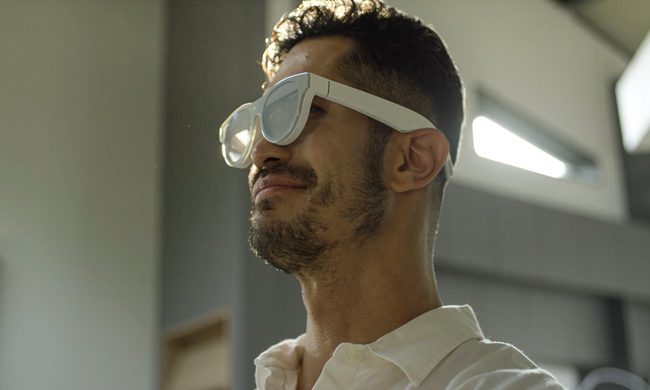
Samsung AR Glasses

One of the biggest promises of augmented reality is blending digital objects seamlessly into the real world. Ironically, today's AR glasses often make the real world harder to see. Researchers at the Shibaura Institute of Technology (SIT) in Japan, led by Assistant Professor Xiaodan Hu in collaboration with Dr. Yan Zhang and Professor Xubo Yang from Shanghai Jiao Tong University in China, and Professor Kiyoshi Kiyokawa from Japan's Nara Institute of Science and Technology, have developed a new AR display technique that aims to make virtual objects look realistic without reducing visibility of the real world. The study was published in IEEE Transactions on Visualization and Computer Graphics.

The biggest AR problem isn't virtual objects; it's everything around them

Read more