  1. Home
  2. Emerging Tech
  3. News

Installation of SuperCam Mast Unit on Mars 2020 rover is a towering success

Add as a preferred source on Google

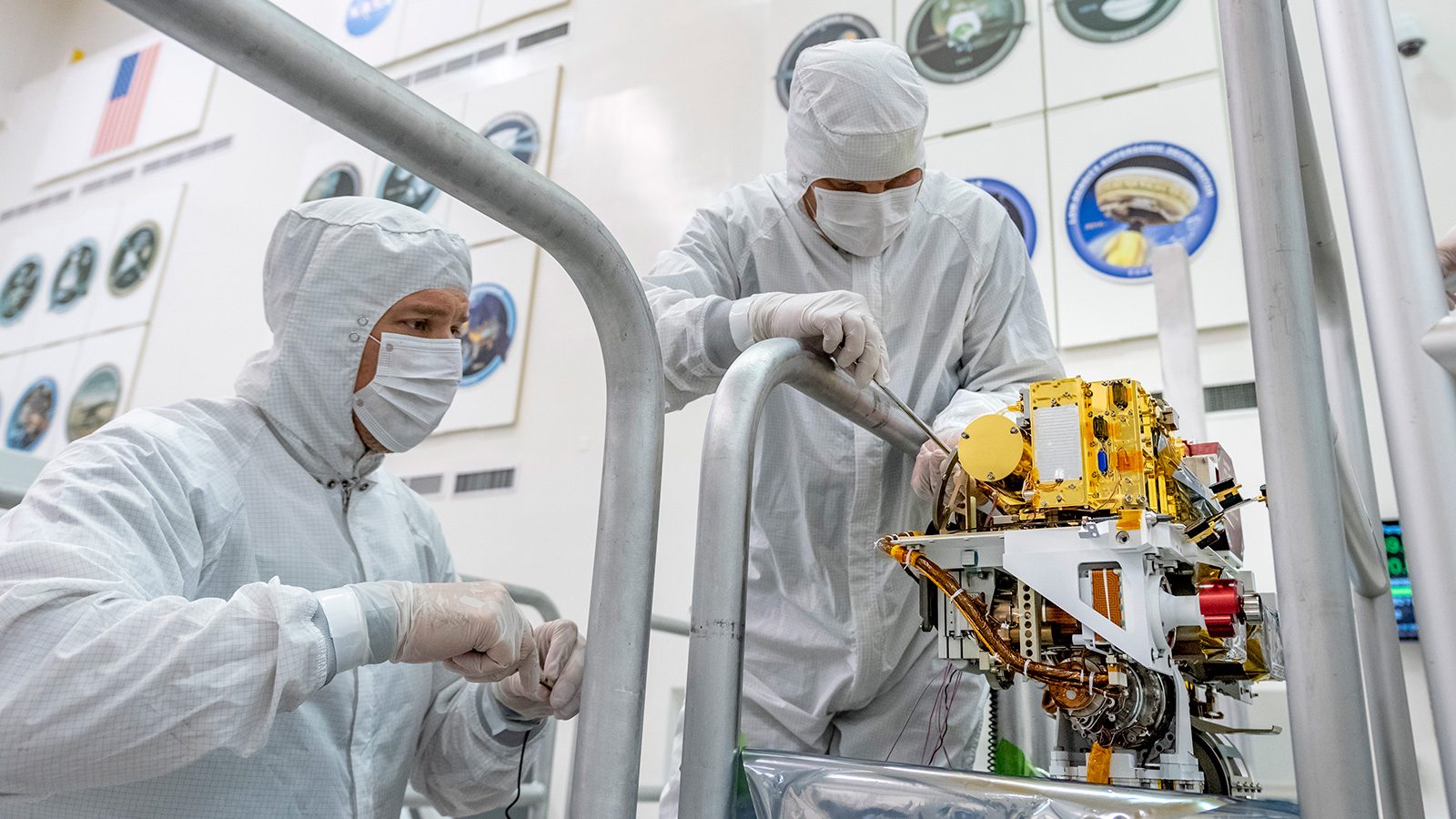
In this image taken June 25, 2019, engineers install the SuperCam instrument on Mars 2020’s rover. This image was taken in the Spacecraft Assembly Facility at NASA’s Jet Propulsion Laboratory, Pasadena, California. NASA/JPL-Caltech

The Mars 2020 rover reached another milestone this week, when technicians installed its mast, the SuperCam Mast Unit. The rover already has its wheels and a robotic arm, and the next step was to add the mast.

Recommended Videos

The rover’s camera, laser, and spectrometers were installed as part of the mast unit, which is the central spire coming out of the middle of the rover and into the air, onto which instruments which require a longer view are placed. The cameras and other instruments included on the mast are capable of accurately identifying the chemical and mineral makeups of environmental targets from a distance. In fact, they can identify a target the size of a pencil point from a distance of more than 20 feet (6 meters).

“SuperCam’s rock-zapping laser allows scientists to analyze the chemical composition of its targets,” Soren Madsen, the payload development manager at JPL, explained in a statement. “It lets the Mars 2020 rover conduct its cutting-edge science from a distance.”

The suite of instruments is an updated version of the ChemCam aboard the Curiosity rover, which is used to image and examine objects from the Martian surface like rocks and other samples. The new SuperCam will perform the same tasks, analyzing rocks and soil, and in particular searching for organic compounds that could show if there was life on Mars at some point in the distant past.

The development of SuperCam was an international effort, with contributions from the U.S., France, and Spain. Construction of the last piece of hardware was completed in France before it was shipped to JPL’s facility in California for final assembly.

“SuperCam has come a long way from being a bold and ambitious idea to an actual instrument,” Sylvestre Maurice, the SuperCam deputy principal investigator at the Institut de Recherche en Astrophysique et Planétologie in Toulouse, France, said in the same statement. “While it still has a long way to go — all the way to Mars — this is a great day for not only SuperCam but the amazing consortium that put it together.”


Georgina Torbet
Georgina has been the space writer at Digital Trends space writer for six years, covering human space exploration, planetary…
Yet another study says AI is bad for elections, and the rabbit hole gets worse
AI may be an election bomb waiting for someone to light the fuse
Voters cast their ballots on Election Day

Another election, another study has concluded that asking an AI chatbot for political guidance is a spectacularly bad idea. Research conducted during Hungary’s 2026 parliamentary election found that ChatGPT and Google Gemini offered not just inaccurate but also inconsistent and unreliable voting advice. The chatbots misclassified voter profiles, overlooked relevant parties, recommended parties absent from the ballot, and sometimes produced materially different answers when given the same information repeatedly.

AI keeps failing the voter test

Read more
Samsung’s humanoid robot ambitions are real, but factories come first
Samsung’s new robotics division has humanoids in its sights, although its immediate business is far more practical factory automation
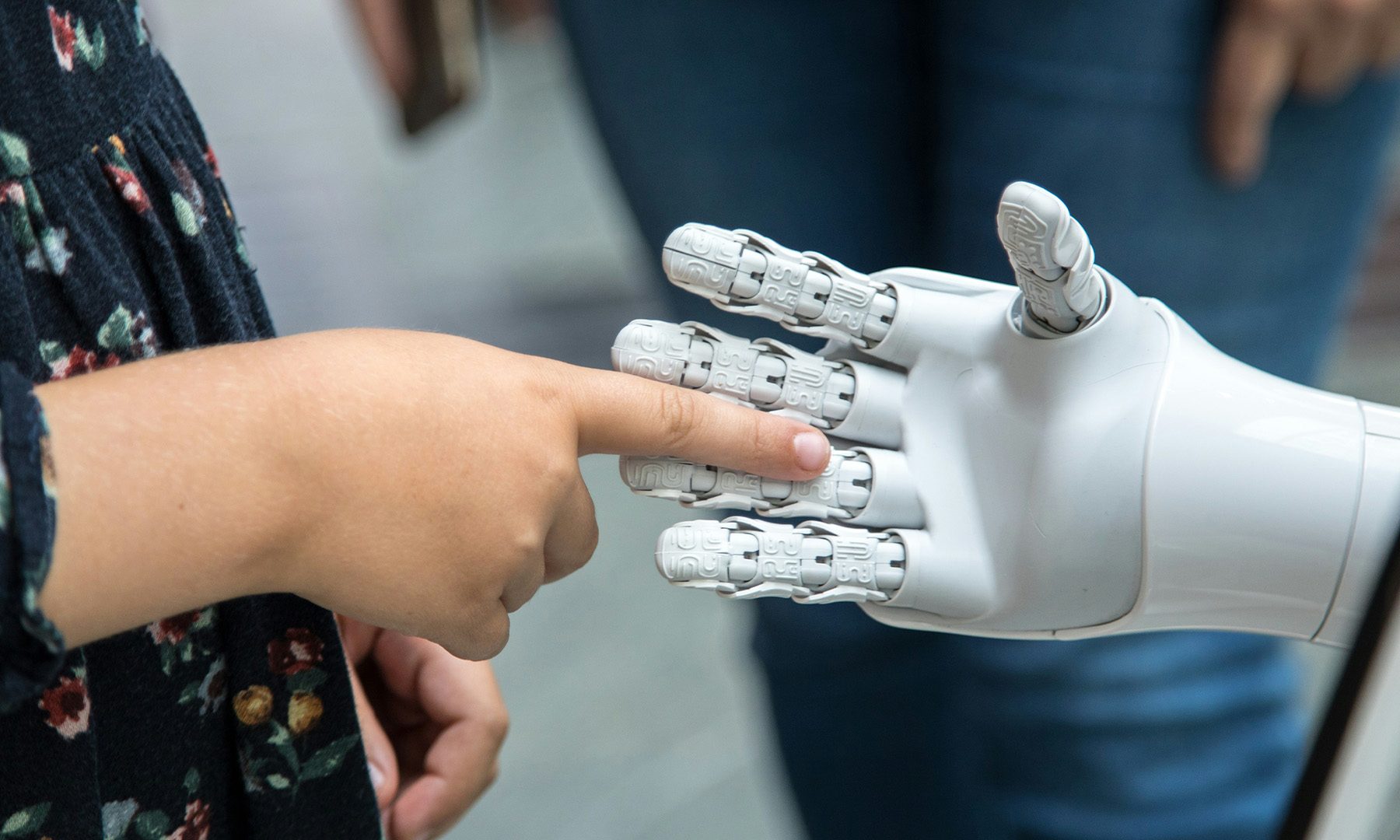
Robot Touch Human Finger

Samsung wants a place in the humanoid race, but its new robotics push begins with machines built for factories rather than homes.

The CEO-led RX robotics division will initially focus on manufacturing robots. Samsung has separately identified humanoids as a priority, although it hasn’t announced a commercial model or explained where one fits into the division’s immediate plans.

Read more
The future of AI may depend on this one behind-the-scenes change
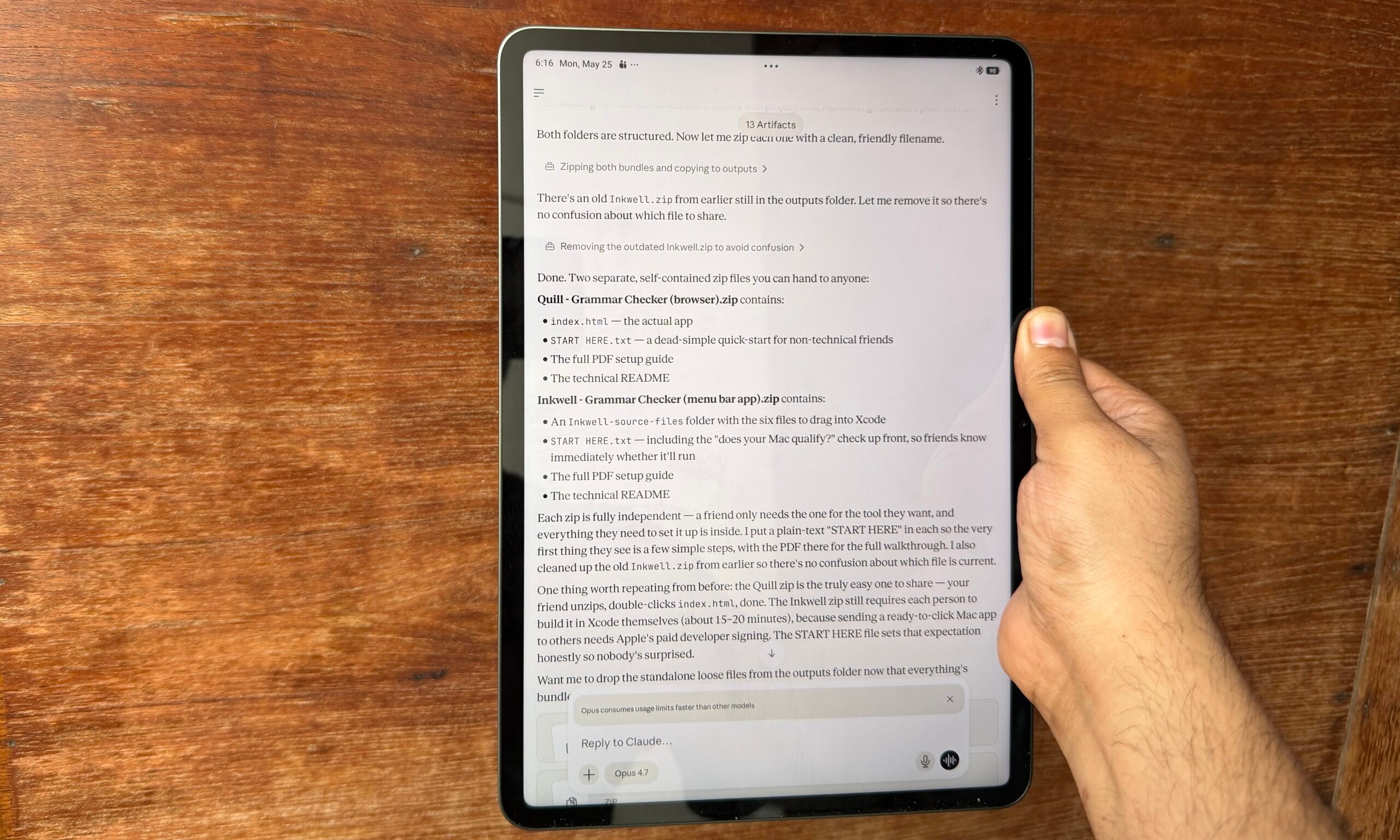
Running Claude on Android.

Whenever a new AI model arrives, it's easy to get caught up in the bells and whistles. We talk about how much smarter it is, how quickly it answers questions, or how realistic its images have become. But here's the thing: none of that matters much if the AI can't reliably work with the apps and services people use every day.

That's why an upcoming update to the Model Context Protocol (MCP) caught my attention. It isn't a new chatbot or a fancy AI model. In fact, most people will never even know it's happening. But it could quietly make the AI ecosystem a lot healthier. If you've never heard of MCP before, don't worry. Think of it as a shared language that lets AI assistants safely talk to apps like Gmail, Slack, calendars, databases, and countless other services. Instead of every company inventing its own way to make those connections, MCP gives everyone a common rulebook.

Read more