  1. Home
  2. Phones
  3. Mobile
  4. News

Justice Department could approve T-Mobile-Sprint merger this week, report says

Add as a preferred source on Google

After months of delays, it looks like the T-Mobile-Sprint merger could be moving closer toward completion. According to a new report from the Wall Street Journal, the Justice Department plans on approving the merger of the two carriers, thanks largely to settlements involving the sale of spectrum, wholesale access, and even a prepaid wireless business with 9 million subscribers to Dish.

Of course, approval from the Justice Department is only one more step in getting the merger to actually happen. Thanks to a lawsuit filed by 13 states, T-Mobile and Sprint will have to defend the merger in court. The new, altered merger plan means that a trial set for October 7 will likely be delayed.

Recommended Videos

“The companies have spent weeks negotiating with antitrust enforcers and each other over the sale of assets to Dish to satisfy concerns that the more than $26 billion merger of the No. 3 and No. 4 wireless carriers by subscribers would hurt competition,” said the report from the Wall Street Journal.

Dish itself is poised to have a lot to offer if it ever launches its own wireless network. The company is the second-largest satellite TV provider, and has been buying up spectrum for some years now, despite the fact that it still hasn’t launched a wireless network for itself. Given the recent sales from T-Mobile and Sprint to Dish, it seems like Dish could be preparing to finally launch a network of its own. Dish reportedly is set to pay $5 billion for the assets from T-Mobile and Sprint.

According to the report, the proposed settlement would also require T-Mobile and Dish to both support eSIM technology, which makes it easier for customers to quickly switch carriers if they want to.

So what now? Well, the merger could be announced as soon as this week, but timing still remains uncertain according to the report. If T-Mobile and Sprint were to merge, it would create a third major wireless carrier in the U.S., and could pose some competition to the likes of Verizon and AT&T. Currently, Verizon and AT&T are both much larger than T-Mobile and Sprint. Safe to say, it may be some time before the merger actually goes through and the two carriers can go to work on joining forces.

Christian de Looper
Christian de Looper is a long-time freelance writer who has covered every facet of the consumer tech and electric vehicle…
Apple starts testing cheaper Chinese RAM inside iPhones, but your pocket won’t feel the ease
Fourth-largest DRAM producer in the world, on the Pentagon's watchlist, and now quietly inside Apple's test labs.
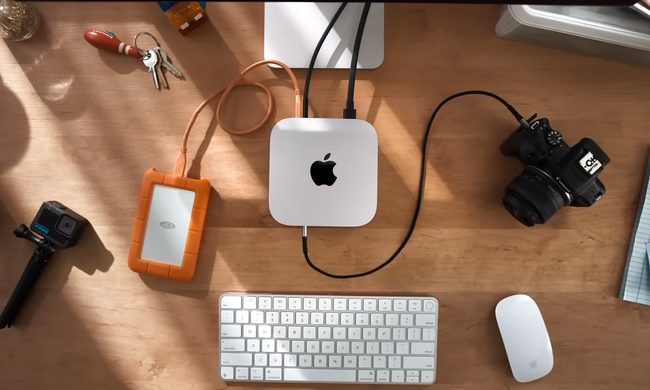
The M4 Mac mini on a desk.

Apple has quietly been testing a new memory supplier for some of its devices sold in China, and the name behind those chips is one that Washington has been keeping a close eye on.

It’s the one that I talked about a few days ago in another story, when rumors about Apple considering a Chinese memory supplier started surfacing after the company announced an ugly price hike for most of its devices (except iPhone and Apple Watch). 

Read more
Android 17’s new video standard fixes one of HDR’s biggest problems
Your HDR videos are about to look right, no matter what screen you use.
Electronics, Mobile Phone, Phone

Android 17 is packed with new features, but one small addition might end up mattering more than the flashy ones. It's called Eclipsa Video, and its whole purpose boils down to this: your HDR videos should finally look the way they're supposed to, regardless of which screen you're staring at.

Why does HDR look different on every screen?

Read more
Your free mobile VPN is a privacy disaster. Go figure
Android's free VPNs are somehow worse than you expected
VPN

The free VPN app you downloaded for your Android phone might be doing more harm than good. A recent large-scale audit of free Android VPN apps has shared some worrisome findings that justify some healthy suspicion. Researchers found these apps leaking traffic, sending identifying information to third parties, and basically the opposite of what a VPN is supposed to do.

The study comes from researchers at the University of Michigan, the University of New Mexico and IIT Delhi. Their findings were presented at the Network and Distributed System Security Symposium 2026 alongside MVPNalyzer, a framework designed to audit mobile VPN apps automatically and at scale.

Read more