  1. Home
  2. Emerging Tech
  3. News

Mars 2020 rover now has a rotating array of drill bits for sampling Martian rock

Add as a preferred source on Google

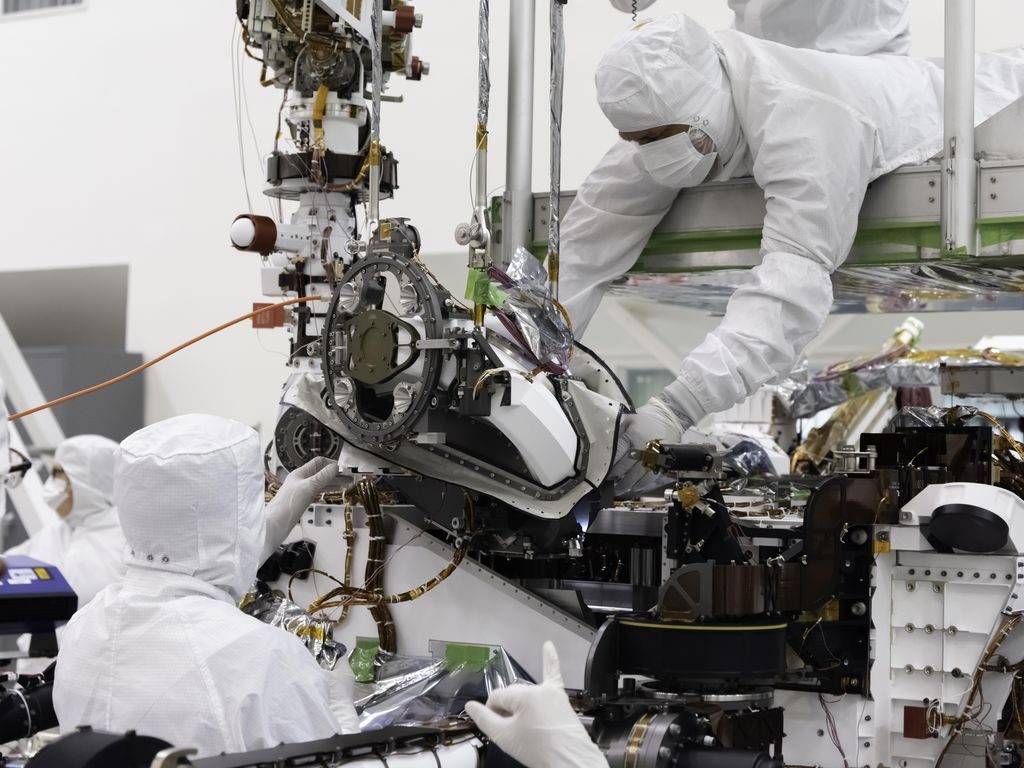
In this August 5, 2019 image, the bit carousel — the heart of sampling and caching subsystem of NASA’s Mars 2020 mission — is attached to the front end of the rover. NASA/JPL-Caltech

The Mars 2020 is in its final year of engineering before it will be deployed to the red planet in July next year. With its power source, wheels, and robotic arm ready to go, the next phase of construction was to install the bit carousel.

Recommended Videos

The bit carousel is an important mechanism for the gathering and sorting of samples from the Martian surface. It looks “somewhat like an extraterrestrial version of a 1960s slide projector,” according to NASA, and it houses nine drill bits for digging into the surface rocks on Mars and collecting samples to send home to Earth.

Nine drill bits are required as two are used for abrading (scraping away at the rock), one for regolith (the name for the loose soil and small rocks on the surface), and six for extracting core samples from rocks. Once the abrader bit has been used to scrape the top layer of rock away, the regolith and core bits are used to collect a sample and place it into a clean test tube.

“The bit carousel is at the heart of the sampling and caching subsystem,” Keith Rosette, Mars 2020 sample handling delivery manager at NASA’s Jet Propulsion Laboratory, explained in a statement. “It contains all of the tools the coring drill uses to sample the Martian surface and is the gateway for the samples to move into the rover for assessment and processing.”

The carousel will dispense the necessary drill bits when sampling needs to be performed, placing the drill bit into position so it can be moved by the rover’s robotic arm. Now the carousel has been installed, the sampling system of the rover is mostly complete.

“The bit carousel was the last piece of the Mars 2020 rover’s Sample Caching System to be installed,” John McNamee, project manager of Mars 2020, said in the same statement. “And while the rover interior is essentially complete — a battery and a camera used during landing are planned in coming weeks — the assembly and test team will not be resting on their laurels. Months of evaluation and fine-tuning lie ahead to make absolutely certain this rover is on the launch pad and ready to go on July 17, 2020.”


Georgina Torbet
Georgina has been the space writer at Digital Trends space writer for six years, covering human space exploration, planetary…
Yet another study says AI is bad for elections, and the rabbit hole gets worse
AI may be an election bomb waiting for someone to light the fuse
Voters cast their ballots on Election Day

Another election, another study has concluded that asking an AI chatbot for political guidance is a spectacularly bad idea. Research conducted during Hungary’s 2026 parliamentary election found that ChatGPT and Google Gemini offered not just inaccurate but also inconsistent and unreliable voting advice. The chatbots misclassified voter profiles, overlooked relevant parties, recommended parties absent from the ballot, and sometimes produced materially different answers when given the same information repeatedly.

AI keeps failing the voter test

Read more
Samsung’s humanoid robot ambitions are real, but factories come first
Samsung’s new robotics division has humanoids in its sights, although its immediate business is far more practical factory automation
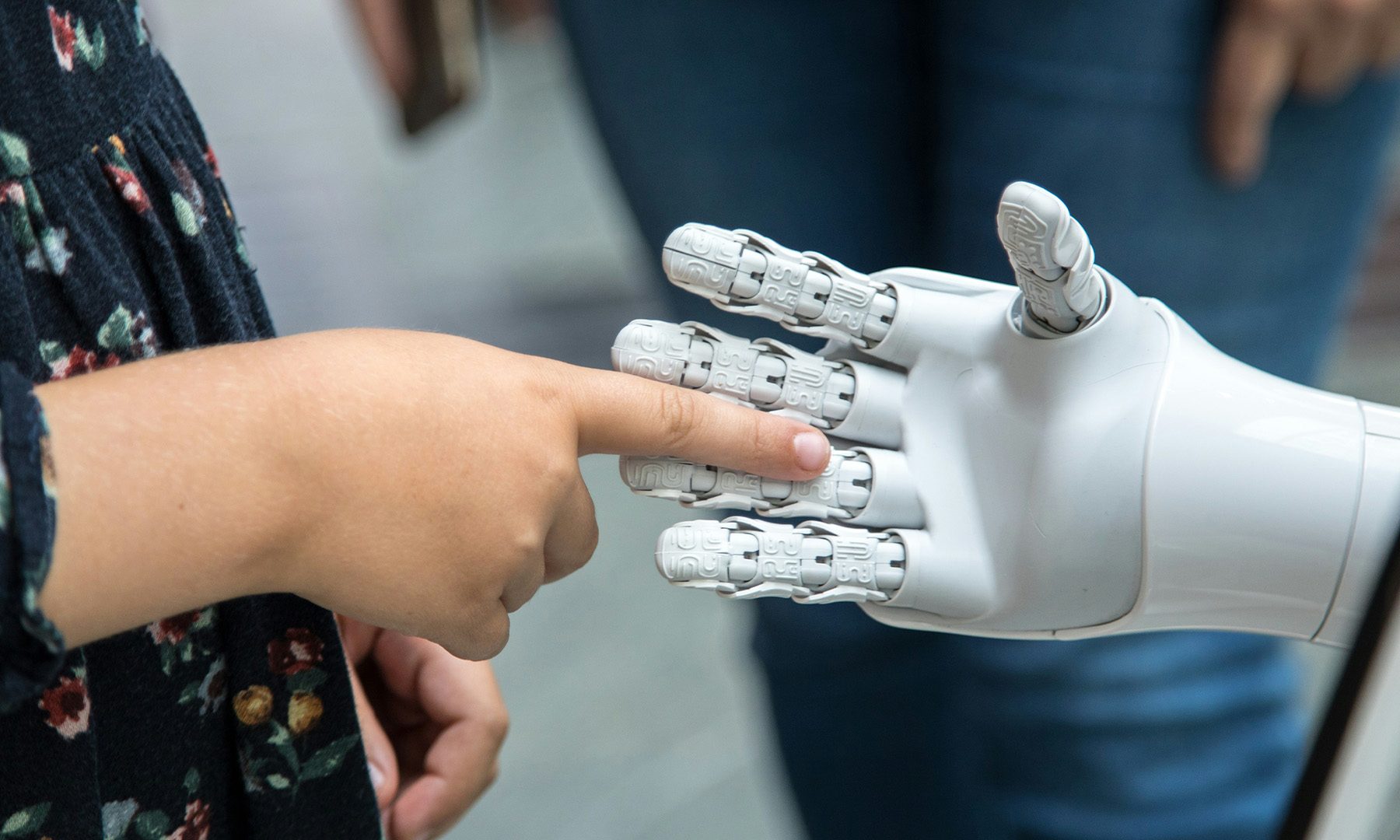
Robot Touch Human Finger

Samsung wants a place in the humanoid race, but its new robotics push begins with machines built for factories rather than homes.

The CEO-led RX robotics division will initially focus on manufacturing robots. Samsung has separately identified humanoids as a priority, although it hasn’t announced a commercial model or explained where one fits into the division’s immediate plans.

Read more
The future of AI may depend on this one behind-the-scenes change
Running Claude on Android.

Whenever a new AI model arrives, it's easy to get caught up in the bells and whistles. We talk about how much smarter it is, how quickly it answers questions, or how realistic its images have become. But here's the thing: none of that matters much if the AI can't reliably work with the apps and services people use every day.

That's why an upcoming update to the Model Context Protocol (MCP) caught my attention. It isn't a new chatbot or a fancy AI model. In fact, most people will never even know it's happening. But it could quietly make the AI ecosystem a lot healthier. If you've never heard of MCP before, don't worry. Think of it as a shared language that lets AI assistants safely talk to apps like Gmail, Slack, calendars, databases, and countless other services. Instead of every company inventing its own way to make those connections, MCP gives everyone a common rulebook.

Read more