  1. Home
  2. Emerging Tech
  3. News

NASA is considering whether to send an orbiter to Pluto

Add as a preferred source on Google

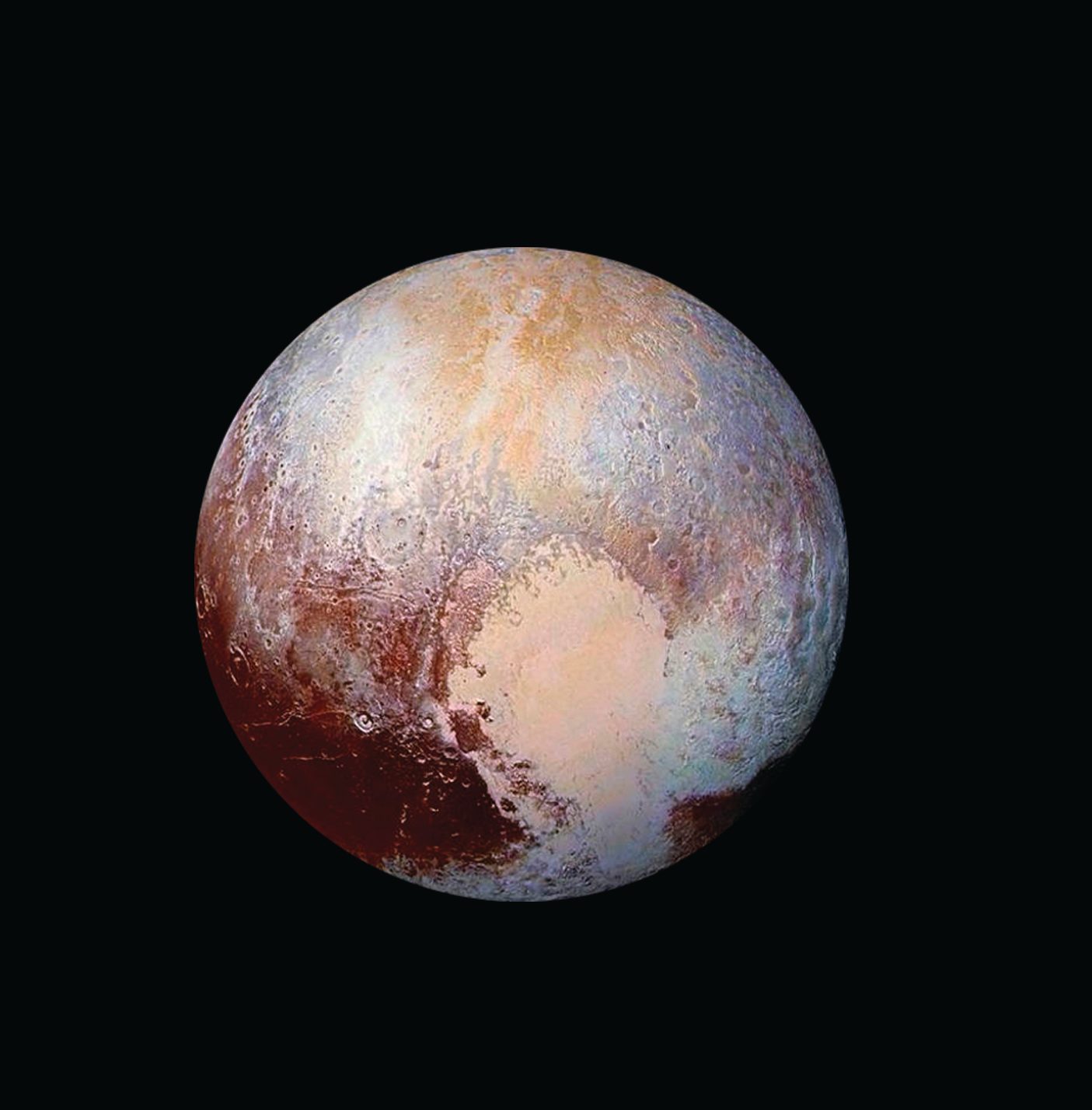
To follow up on NASA’s New Horizons mission that revealed Pluto’s “heart,” SwRI is studying a new Pluto orbiter mission for NASA. SwRI has shown it is possible to orbit Pluto and then escape orbit to tour additional dwarf planets and Kuiper Belt Objects. Courtesy of NASA/JHUAPL/SwRI

NASA is considering a return trip to the most hotly-contested body in our solar system and has awarded funding to the Southwest Research Institute (SwRI) to study the cost and feasibility of an orbiter mission to Pluto.

Recommended Videos

Following the success of the New Horizons mission which visited Pluto in 2015 and then traveled on to visit Kuiper Belt Objects (KBOs) including the most distant object ever explored, Ultima Thule, scientists want to go back to the dwarf planet to learn more about it. New Horizons had a limited payload so it could only perform a cursory analysis of Pluto and its moons. The new mission would involve sending a craft into orbit around the dwarf planet to gather data and hopefully answer some of the questions raised by the earlier mission.

NASA is funding the study as part of the Planetary Science Decadal Survey, a document that explores key questions in planetary science and is published every 10 to 15 years. The study will form part of the next survey, which is set to begin in 2020.

“We’re excited to have this opportunity to inform the decadal survey deliberations with this study,” SwRI’s Dr. Carly Howett, leader of the team proposing the mission, said in a statement. “Our mission concept is to send a single spacecraft to orbit Pluto for two Earth years before breaking away to visit at least one KBO and one other KBO dwarf planet.”

With the path to Pluto already trodden by New Horizons, scientists have an idea of the methods they could use to explore the distant world. That should make it more feasible for a follow-up mission to happen in the future.

“In a SwRI-funded study that preceded this new NASA-funded study, we developed a Pluto system orbital tour, showing the mission was possible with planned capability launch vehicles and existing electric propulsion systems,” SwRI’s Dr. Alan Stern, principal investigator of the New Horizons mission, said in the same statement. “We also showed it is possible to use gravity assists from Pluto’s largest moon, Charon, to escape Pluto’s orbit and to go back into the Kuiper Belt for the exploration of more KBOs like MU69 and at least once more dwarf planet for comparison to Pluto.”

Georgina Torbet
Georgina has been the space writer at Digital Trends space writer for six years, covering human space exploration, planetary…
Google Flow Music Spaces is becoming an all-in-one AI music studio
The latest update brings song editing, stem splitting, image generation, lyrics, and video creation into a single workspace.
Google Flow Music Featured

The company has announced a major update for Flow Music Spaces, bringing a suite of new AI-powered creative tools directly into collaborative workspaces. Instead of jumping between different apps or sessions, users can now generate and edit songs, split audio stems, create images, write lyrics, and even generate videos without leaving a Space.

What's new in Flow Music Spaces?

Read more
A Florida pastor asked ChatGPT if he was okay. It nearly got him killed.
When "just relax and recover" turns out to be the worst medical advice you could get.
ChatGPT on iPhone

Scott Winters, a pastor from Florida, is suing OpenAI after ChatGPT allegedly gave him what his lawsuit calls "extremely dangerous" medical advice, advice that nearly cost him his life.

What happened to the pastor?

Read more
Scientists made robots curious like toddlers, and it helped them learn language twice as fast
Give a robot curiosity, and it starts learning language (and misbehaving) just like a toddler.
robots and kids photo

Scientists have been trying to figure out how kids pick up language so fast for decades, and a new study out of the Okinawa Institute of Science and Technology (OIST) might have cracked part of the puzzle: curiosity.

Researchers built a virtual robot with a brain-inspired neural network and set it loose in a simulated 3D world full of shapes, colors, and simple commands like "push left magenta dumbbell." 

Read more