  1. Home
  2. Emerging Tech
  3. News

Mars has auroras of its own, which could explain why the planet lost its water

Add as a preferred source on Google

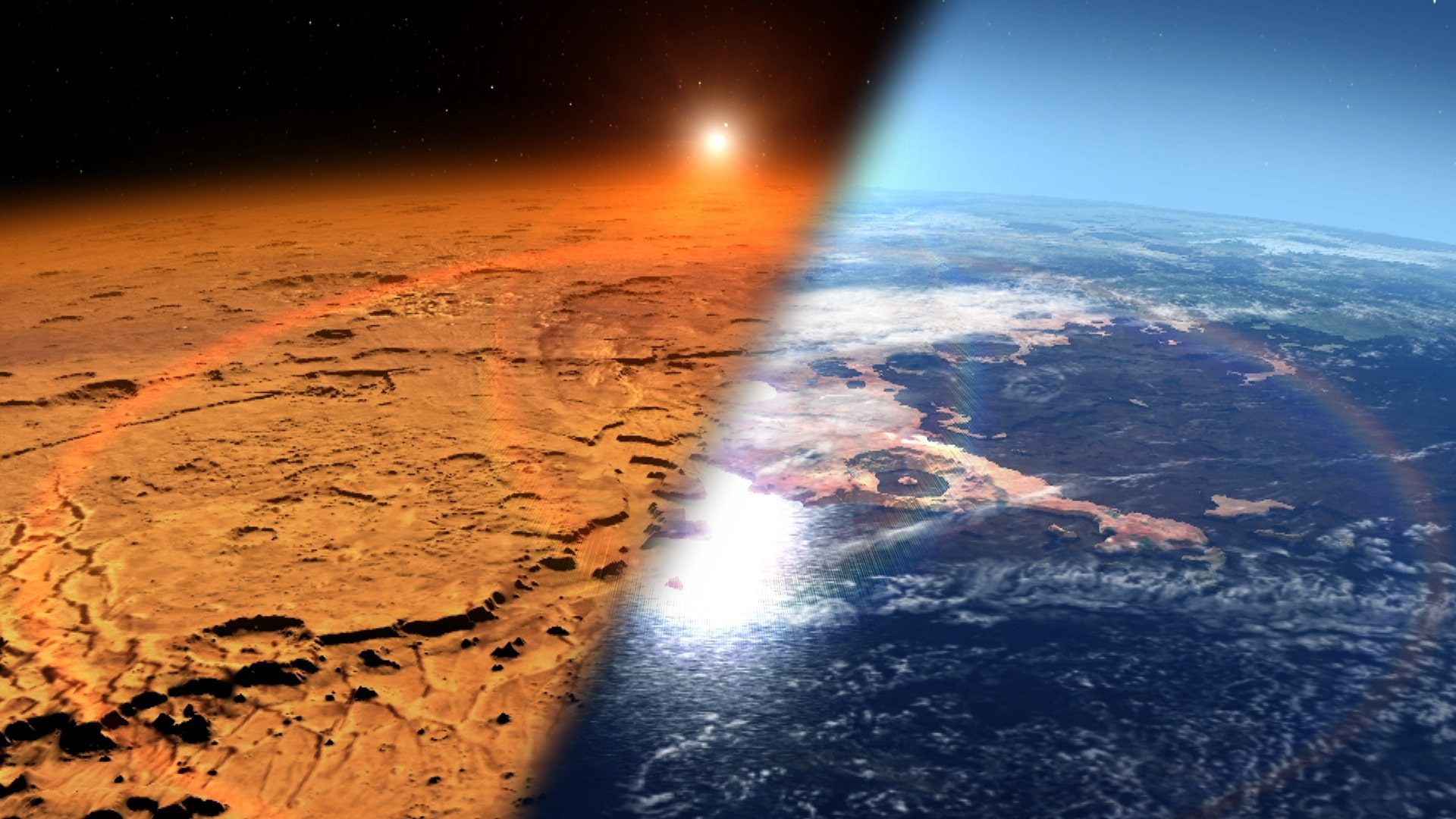
An artist'c concept showing Mars today on the left and Mars as it could have been, covered in water, on the right.
This artist’s concept depicts the early Martian environment (right) – believed to contain liquid water and a thicker atmosphere – versus the cold, dry environment seen at Mars today (left). NASA’s Goddard Space Flight Center

Here on Earth, you can see the aurora of the Northern Lights, when solar winds interact with the planet’s magnetosphere. It turns out that Mars has its own auroras too, called proton auroras, but they give off ultraviolet light which makes them invisible to the naked eye.

Recommended Videos

NASA’s MAVEN (Mars Atmosphere and Volatile EvolutioN) spacecraft, however, currently in orbit around Mars, is able to detect these auroras using its Imaging UltraViolet Spectrograph (IUVS) instrument. Using data from this instrument, scientists have been investigating the relationship between the proton auroras and the fact that Mars lost its water over time. The Martian aurora is indirectly created by hydrogen in the atmosphere, which comes from water being lost into space.

The animation below shows how the proton aurora is formed. First, solar winds send protons toward Mars, where they interact with a cloud of hydrogen surrounding the planet. The protons take electrons from the hydrogen atoms to become neutrons. These neutral particles can then pass through a region of the planet’s magnetosphere called the bow shock. When the hydrogen atoms enter the atmosphere and collide with gas particles, they give off the ultraviolet light that we call an aurora.

An animation showing a proton aurora at Mars.
This animation shows a proton aurora at Mars.  Credits: NASA/MAVEN/Goddard Space Flight Center/Dan Gallagher
Scientists used to think that these proton auroras were rare. But the new research shows that they are actually common, especially during southern summer days. This is the time at which this area of the planet is closest to the sun, which supports the relationship with water loss. As the sun heats water vapor in the atmosphere, it rises higher and is split into hydrogen and oxygen before being lost into space.

“In this new study using MAVEN/IUVS data from multiple Mars years, the team has found that periods of increased atmospheric escape correspond with increases in proton aurora occurrence and intensity,” lead author Andréa Hughes of Embry-Riddle Aeronautical University in Daytona Beach, Florida, said in a statement.

“Perhaps one day, when interplanetary travel becomes commonplace, travelers arriving at Mars during southern summer will have front-row seats to observe Martian proton aurora majestically dancing across the dayside of the planet (while wearing ultraviolet-sensitive goggles, of course). These travelers will witness firsthand the final stages of Mars losing the remainder of its water to space.”

The research is published in the Journal of Geophysical Research: Space Physics.

Georgina Torbet
Georgina has been the space writer at Digital Trends space writer for six years, covering human space exploration, planetary…
Yet another study says AI is bad for elections, and the rabbit hole gets worse
AI may be an election bomb waiting for someone to light the fuse
Voters cast their ballots on Election Day

Another election, another study has concluded that asking an AI chatbot for political guidance is a spectacularly bad idea. Research conducted during Hungary’s 2026 parliamentary election found that ChatGPT and Google Gemini offered not just inaccurate but also inconsistent and unreliable voting advice. The chatbots misclassified voter profiles, overlooked relevant parties, recommended parties absent from the ballot, and sometimes produced materially different answers when given the same information repeatedly.

AI keeps failing the voter test

Read more
Samsung’s humanoid robot ambitions are real, but factories come first
Samsung’s new robotics division has humanoids in its sights, although its immediate business is far more practical factory automation
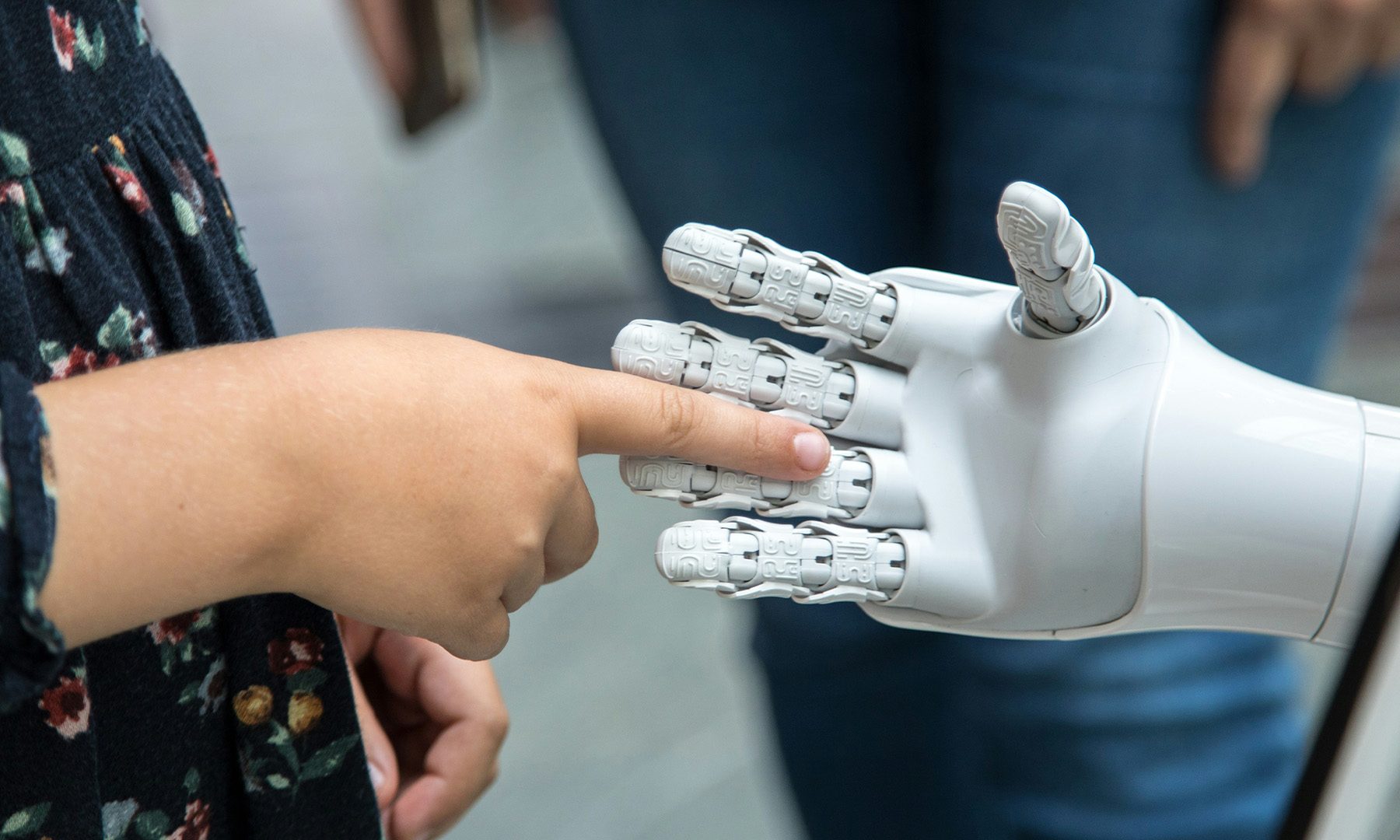
Robot Touch Human Finger

Samsung wants a place in the humanoid race, but its new robotics push begins with machines built for factories rather than homes.

The CEO-led RX robotics division will initially focus on manufacturing robots. Samsung has separately identified humanoids as a priority, although it hasn’t announced a commercial model or explained where one fits into the division’s immediate plans.

Read more
The future of AI may depend on this one behind-the-scenes change
Running Claude on Android.

Whenever a new AI model arrives, it's easy to get caught up in the bells and whistles. We talk about how much smarter it is, how quickly it answers questions, or how realistic its images have become. But here's the thing: none of that matters much if the AI can't reliably work with the apps and services people use every day.

That's why an upcoming update to the Model Context Protocol (MCP) caught my attention. It isn't a new chatbot or a fancy AI model. In fact, most people will never even know it's happening. But it could quietly make the AI ecosystem a lot healthier. If you've never heard of MCP before, don't worry. Think of it as a shared language that lets AI assistants safely talk to apps like Gmail, Slack, calendars, databases, and countless other services. Instead of every company inventing its own way to make those connections, MCP gives everyone a common rulebook.

Read more