1. Home
  2. Emerging Tech
  3. News

Stellar fight to the death illuminates unusual star life cycle

Add as a preferred source on Google

Dramatic events are afoot in the constellation of Centaurus: A stellar fight to the death. Although the HD101584 star system appears in our sky as one bright light, it actually consists of two stars which are so close together they form a binary system — and one is cannibalizing the other.

Most stars follow a well-known life cycle: After forming and starting hydrogen fusion as a main sequence star, like our sun, they then change color and become red giants when their fuel runs out. Eventually, a red giant will either shed its outer layers to leave behind a core called a white dwarf, or, if it is large enough, it can explode as a supernova and leave behind a neutron star or a black hole.

Recommended Videos

But HD101584 is different. There, one of the stars had grown so large in its red giant phase that it engulfed the other, swallowing it whole. The smaller star began spiraling toward the larger one, coming close to its core without actually colliding. And this process triggered an outburst from the larger star, in which it threw off its outer layers.
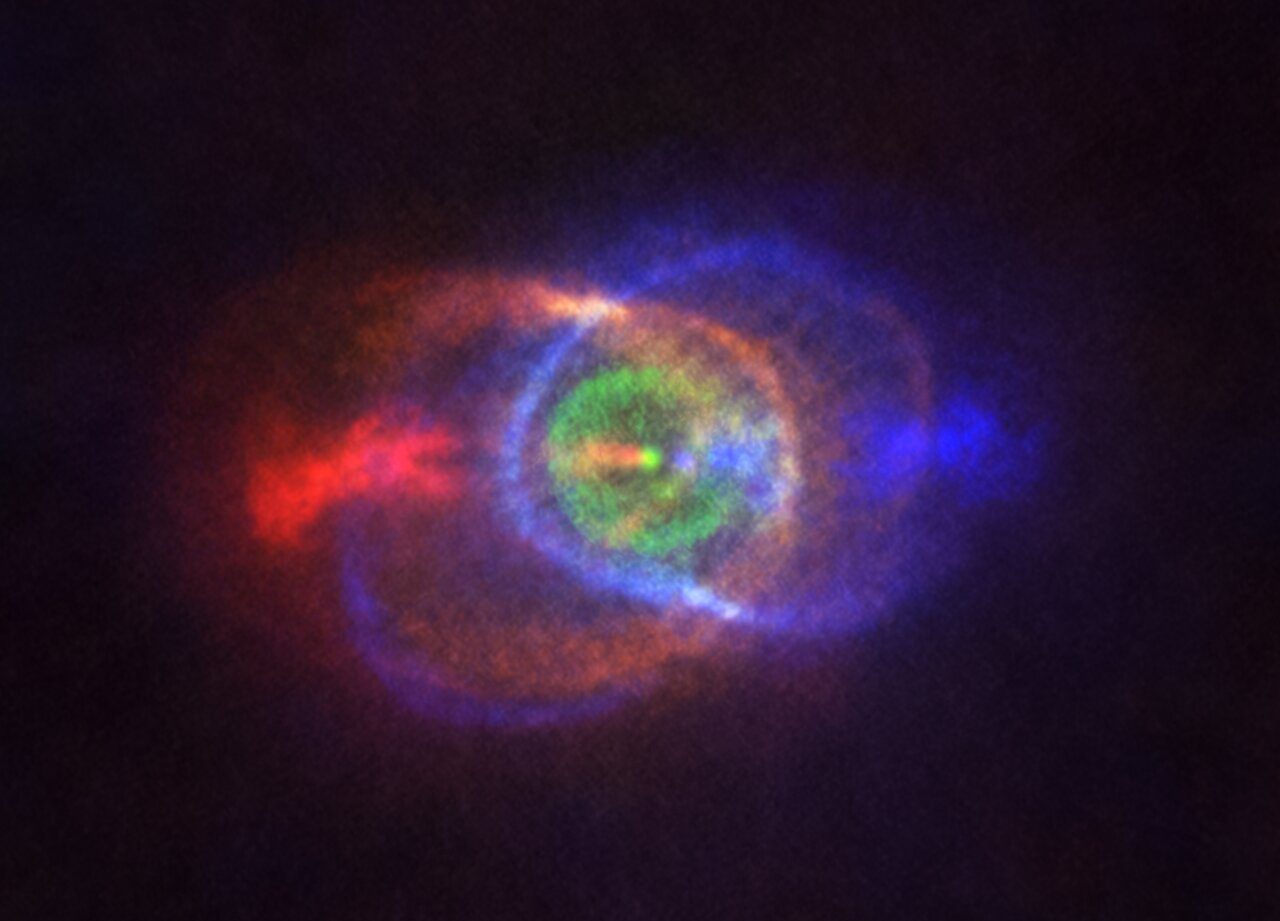
The new ALMA image of the binary HD101584
This new ALMA image shows the outcome of a stellar fight: A complex and stunning gas environment surrounding the binary HD101584. The colors represent speed, going from blue — gas moving the fastest towards us — to red — gas moving the fastest away from us. Jets, almost along the line of sight, propel the material in blue and red. The stars in the binary are located at the single bright dot at the center of the ring-like structure shown in green, which is moving with the same velocity as the system as a whole along the line of sight. Astronomers believe this ring has its origin in the material ejected as the lower mass star in the binary spiraled towards its red-giant partner. ALMA (ESO/NAOJ/NRAO), Olofsson et al. Acknowledgement: Robert Cumming

This unusual occurrence has impacted the life cycles of the larger star. “The star system HD101584 is special in the sense that this ‘death process’ was terminated prematurely and dramatically as a nearby low-mass companion star was engulfed by the giant,” lead author Hans Olofsson of the Chalmers University of Technology in Gothenburg, Sweden, explained in a statement.

This fight has left its mark on the system too, with layers of gas spread across the region and the core of the larger star now left exposed. Jets of gas created by the interactions of the two stars spewed outward, which can be seen in the rings of gas traveling out from the nebula.
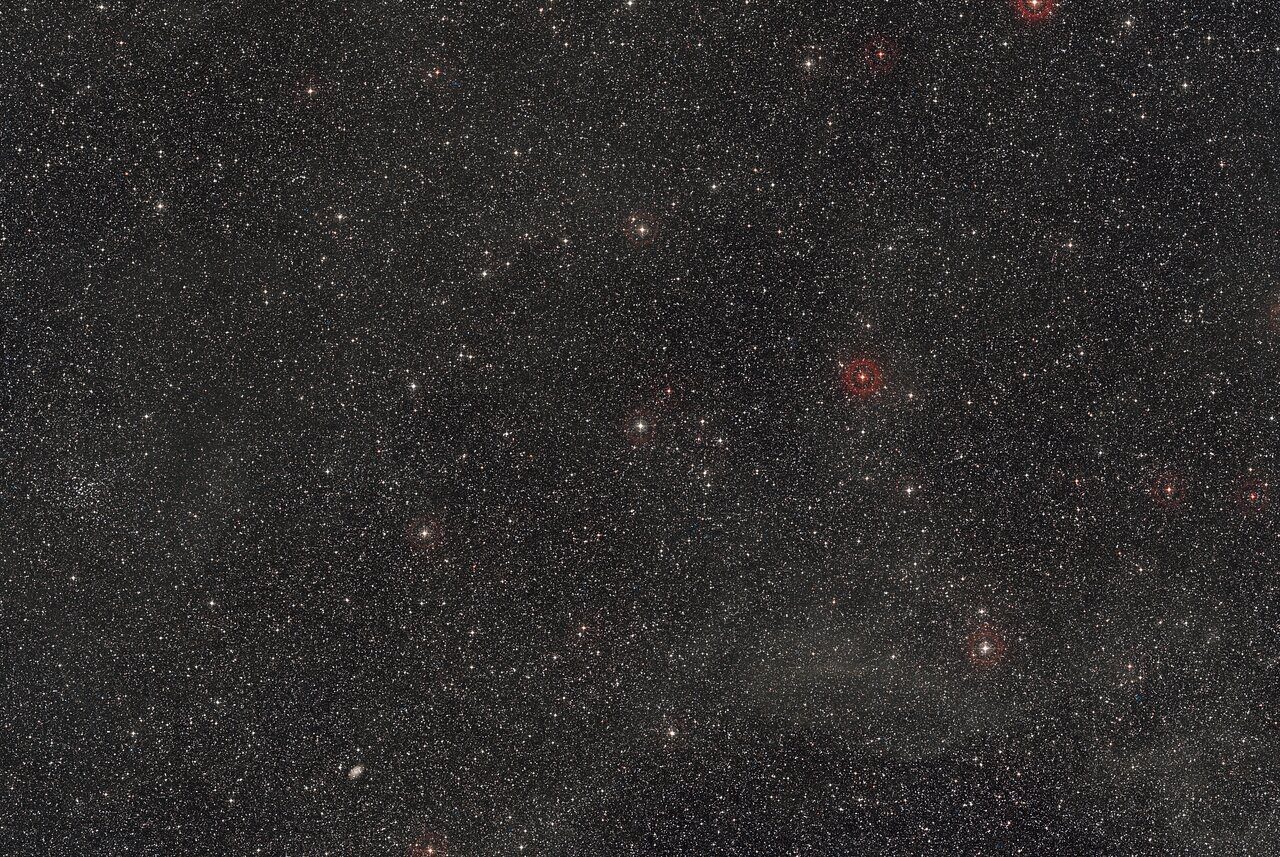
A wide-field view showing the region of the sky where HD101584 is located.
This wide-field view shows the region of the sky, in the constellation of Centaurus, where HD101584, a gas cloud surrounding a binary star recently studied with ALMA and APEX, is located. This view was created from images forming part of the Digitized Sky Survey 2. ESO/Digitized Sky Survey 2. Acknowledgement: Davide De Martin

Studying this particular system with the Atacama Large Millimeter/submillimeter Array (ALMA) and the Atacama Pathfinder Experiment (APEX) is giving astronomers new insights into how stars die.

“Currently, we can describe the death processes common to many sun-like stars, but we cannot explain why or exactly how they happen,” co-author Sofia Ramstedt from Uppsala University in Uppsala, Sweden, said in the same statement.

“HD101584 gives us important clues to solve this puzzle since it is currently in a short transitional phase between better studied evolutionary stages. With detailed images of the environment of HD101584 we can make the connection between the giant star it was before, and the stellar remnant it will soon become.”

The findings are published in the journal Astronomy & Astrophysics.

Georgina Torbet
Georgina has been the space writer at Digital Trends space writer for six years, covering human space exploration, planetary…
You can now buy a computer mouse controlled entirely by your tongue
Augmental has opened public sales of the MouthPad, and introduced a new wearable that lets you type hands-free.
Augmental MouthPad and Vox featured

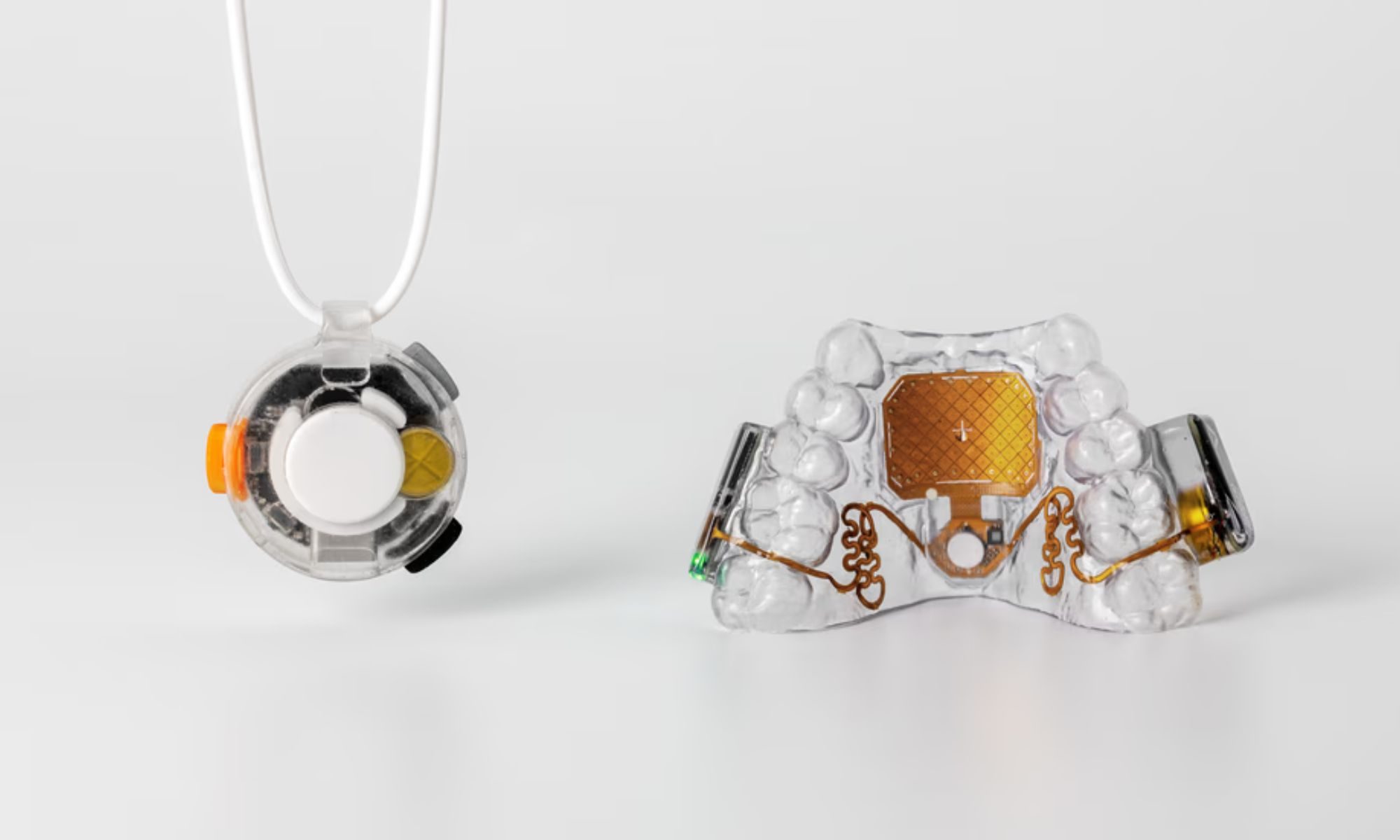
Augmental first showed off its tongue-controlled MouthPad as a CES curiosity in 2024. Today, the device is a real product you can buy, with the company opening public US sales alongside a beta release of Vox, a companion wearable built to handle the typing half of Augmental's hands-free computing promise.

A retainer that doubles as a mouse

Read more
Yet another study says AI is bad for elections, and the rabbit hole gets worse
AI may be an election bomb waiting for someone to light the fuse
Voters cast their ballots on Election Day

Another election, another study has concluded that asking an AI chatbot for political guidance is a spectacularly bad idea. Research conducted during Hungary’s 2026 parliamentary election found that ChatGPT and Google Gemini offered not just inaccurate but also inconsistent and unreliable voting advice. The chatbots misclassified voter profiles, overlooked relevant parties, recommended parties absent from the ballot, and sometimes produced materially different answers when given the same information repeatedly.

AI keeps failing the voter test

Read more
Samsung’s humanoid robot ambitions are real, but factories come first
Samsung’s new robotics division has humanoids in its sights, although its immediate business is far more practical factory automation
Robot Touch Human Finger

Samsung wants a place in the humanoid race, but its new robotics push begins with machines built for factories rather than homes.

The CEO-led RX robotics division will initially focus on manufacturing robots. Samsung has separately identified humanoids as a priority, although it hasn’t announced a commercial model or explained where one fits into the division’s immediate plans.

Read more