  1. Home
  2. Emerging Tech
  3. News

Amateur astronomer identifies rare double nucleus in the Cocoon Galaxy

Add as a preferred source on Google

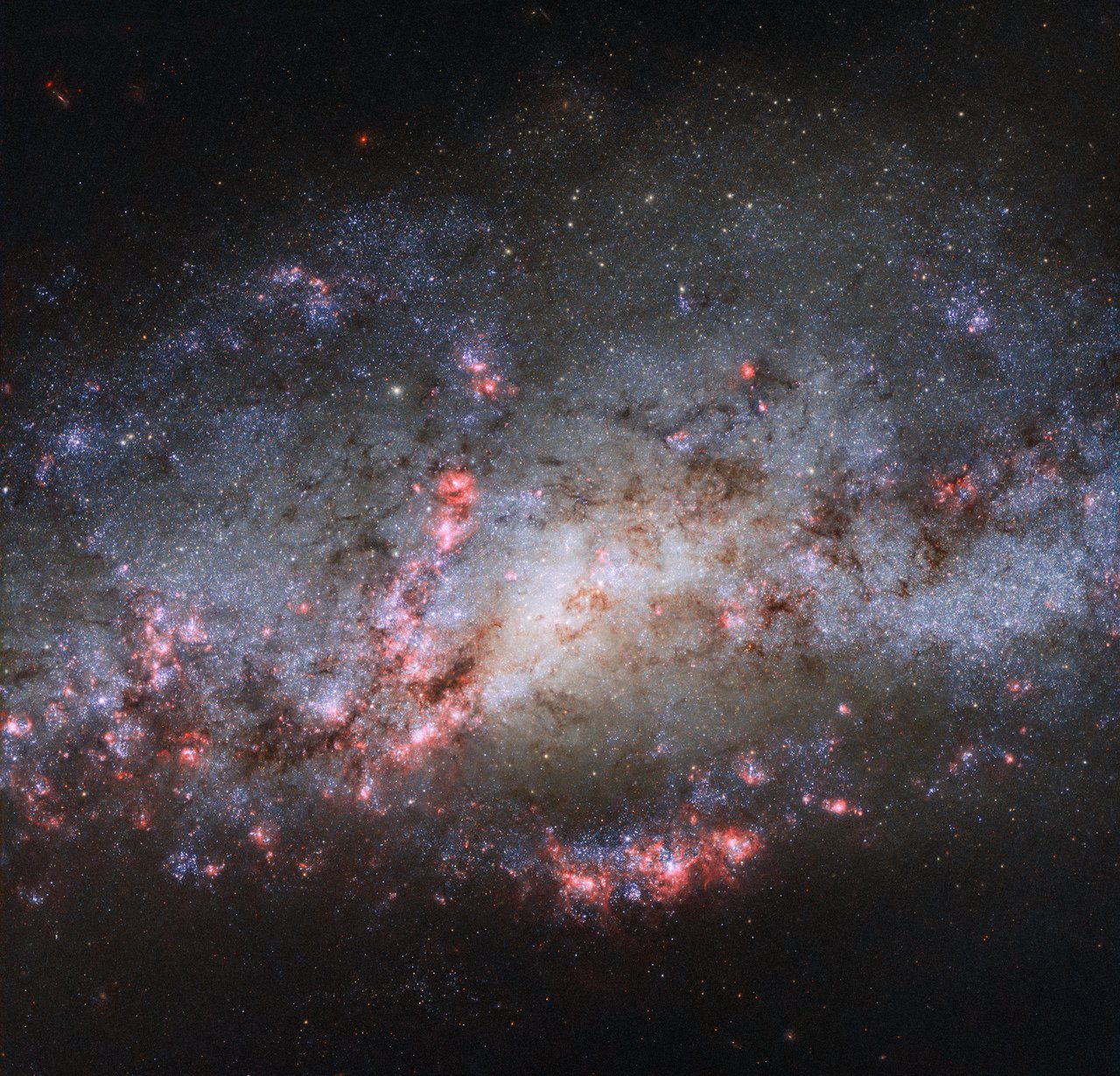
This Hubble image shows the galaxy NGC 4490.
This Hubble image shows the galaxy NGC 4490. NASA / ESA / Hubble / D. Calzetti, UMass / LEGUS Team / J. Maund, University of Sheffield / R. Chandar, University of Toledo.

Many of us dream of retiring and devoting ourselves to a beloved hobby. But Allen Lawrence, a 77-year-old retired electrical engineer, has taken his astronomy hobby to a new level by discovering a very rare double nucleus in a distant galaxy. Lawrence, who studied for a master’s degree after retiring from his first career, is now the first author of a paper describing this unusual finding.

Recommended Videos

The galaxy NGC 4490 in the constellation of Canes Venatici is one of a pair of galaxies, and is nicknamed the Cocoon Galaxy. At around one-fifth the size of the Milky Way, it is located about 30 million light-years from Earth.

When astronomers have looked at the Cocoon Galaxy in the past, they have generally seen a single nucleus. However, it seems that astronomers using optical telescopes actually saw one nucleus, while those using infrared telescopes saw another. Lawrence identified that there were, in fact, two nuclei in this particular galaxy, a finding which has since been confirmed by astronomers at Iowa State University.

“I saw the double nucleus in NGC 4490 about seven years ago,” Lawrence explained in a statement. “It had never been observed — or nobody had ever done anything with it before. Some astronomers may have seen one nucleus with their optical telescopes. And others may have seen the other with their radio telescopes. But the two groups never compared notes to observe and describe the double nucleus.”

The two nuclei identified are similar in mass and luminosity to each other, explaining why astronomers using different wavelength instruments thought they were looking at the same thing, and they are also similar to other pairs of galactic nuclei which have previously been identified.

The double nucleus may also be responsible for a notable feature of the galaxy — the huge plume of hydrogen which surrounds it. Astronomers think that the two nuclei came from two different galaxies colliding long ago, in a merger which also created the hydrogen plume and drove up the rate of star formation.

The study has been accepted for publication in the Astrophysical Journal and is available to view on prepublication archive arXiv.org.

Georgina Torbet
Georgina has been the space writer at Digital Trends space writer for six years, covering human space exploration, planetary…
The Apple Car may be dead, but it became the foundation of Apple Intelligence
A decade of work on a canceled car project reportedly laid the groundwork for Apple Intelligence.
Apple Intelligence in Apple Car

The Apple Car may have never left the garage, but it apparently gave birth to Apple's AI ambitions. According to Bloomberg's Mark Gurman, Apple's canceled autonomous vehicle project, one that consumed more than a decade of work and over $10 billion before being scrapped in 2024, ended up laying the technological foundation for Apple Intelligence. In a rather ironic twist, one of Apple's most expensive failures may also become one of its most important long-term investments.

The Apple Car forced Apple to think like an AI company

Read more
Researchers hid a prompt injection inside a PNG, and AI fell for it
Hacker

AI coding assistants like Claude are becoming every developer's favorite coworker. They can review code, explain confusing functions, and even write entire features with a single prompt. But new research suggests that this growing trust could also become their biggest weakness.

A team of security researchers (professor Sudipta Chattopadhyay and researcher Murali Ediga) has demonstrated an unusual attack that doesn't target the AI model directly. Instead, it targets what the AI doesn't pay enough attention to during code reviews. Rather than hiding malicious instructions in lines of code, the researchers tucked them inside an image file. Since many AI review tools treat images as decorative assets rather than as something worth inspecting, the pull request can appear perfectly harmless and sail through the review.

Read more
AI has already fallen into the wrong hands and they’re using it to make bombs
Logo, Text

Artificial intelligence has quickly become the go-to tool for everything from writing emails and summarizing meetings to helping students study or developers debug code. But the same technology that saves people time can also be misused, and a new report suggests that terrorist organizations are finding ways to do exactly that.

According to a research paper shared with The New York Times ahead of its publication, researchers found evidence that members of Boko Haram have been using popular AI chatbots to support both day-to-day activities and combat-related tasks. Interviews with 27 former members conducted in Nigeria over the past two years suggest that tools such as ChatGPT, Gemini, Claude, Grok, Meta AI, and DeepSeek were used to gather technical information, troubleshoot weapons, and even assist with planning attacks.

Read more