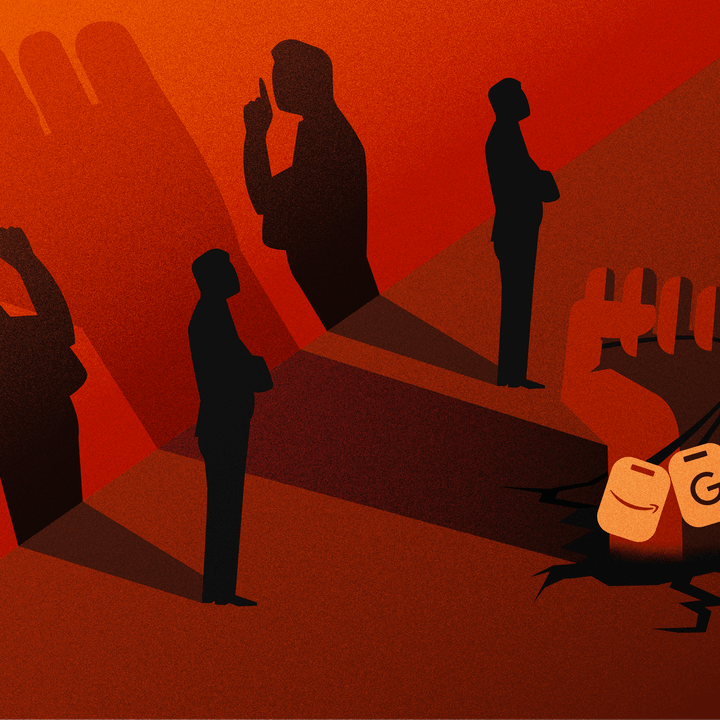
“Supervillain-bad.”
That’s what Sam Kern, a user experience engineer at Google, thought of Amazon executives’ leaked meeting notes from earlier this month.
On March 30, the company had fired New York City warehouse worker Chris Smalls after he organized a walkout to protest Amazon’s allegedly lax coronavirus safety measures.
Amazon said Smalls was fired for violating safety guidelines, but in a leaked email recap of a meeting with executives, an Amazon lawyer reportedly discussed pinning the labor movement on Smalls, saying he was “not smart or articulate.”
Not long after, the company fired two more workers — this time two designers who had publicly criticized the company’s response to the pandemic and attempted to organize a place for workers to share their grievances.
Kern said the firings hit her hard.
“You want to stick up for them, and you want to figure out what you can do to help — especially if it’s unfair.” the Google employee told Digital Trends. “That’s someone’s co-worker. That’s someone’s friend.”
Across different tech companies, cities, and countries, a community of tech workers has leaped into action.
The chain of events launched a spontaneous flurry of messages in the patchwork network of messaging groups within the tech community that has helped unite workers not just within the major tech giants, but across the industry, like never before.
Inside the group chats
Controversial industry news tends to make its way through informal group chats of tech workers.
These employees, often from different companies, use the message chains to talk about the latest goings-on within tech, from commiserating over promotion cycles to companies’ retaliation against employees.
In cities like Seattle, where Google, Amazon, and Microsoft workers are constantly rubbing shoulders, these networks tend to grow organically.
“You want to stick up for them, and you want to figure out what you can do to help — especially if it’s unfair.”
Workers who spoke to Digital Trends asked that their chosen messaging platform remain secret for fear of company surveillance and retaliation.
Climate activism initially brought many of the workers together.
Matt Smith, a contracted cargo handler for Amazon, found his way into the existing network of tech workers after moving to Seattle in summer 2019. He says he especially saw full-time and contract employees come together last year around Seattle’s city council elections.
“We started thinking… How can we connect these [groups] together and really bring people in the tech industry more widely together to fight for our common interest?” said Smith. “That was when I started talking with Amazon tech workers and Google tech workers about bridging this gap between our two different worlds.”
The urgency surrounding the pandemic sped up that goal — bringing together full-time tech workers like software engineers and contract employees like warehouse workers — as activist groups from some of the industry’s largest companies reoriented their efforts to help shine a spotlight on labor rights.
Organizing together
Tech workers say the community is stronger now because it has to be. In the age of COVID-19, there’s simply more to fight for — and the pandemic has raised the stakes considerably.
Workers have criticized Amazon specifically for its alleged failure to protect workers from the deadly disease. Warehouse workers have accused the company of failing to provide enough protective equipment and not adequately compensating frontline workers enough for putting themselves in danger.
Amazon announced last month that it would provide up to two weeks of sick leave for workers diagnosed with the coronavirus, but workers argued that testing is so limited that those who fear they may be ill can’t get a confirmation from doctors.
“We started seeing all of the things that were lacking at our workplace, in terms of health supplies, in terms of paid sick leave, in terms of just basic communication from the company to employees and to contractors,” Smith told Digital Trends.
In a statement to Digital Trends, Amazon spokesman Timothy Carter wrote: “While we respect people’s right to express themselves, we object to the irresponsible actions of labor groups in spreading misinformation and making false claims about Amazon.”
He added that Amazon expects to spend more than $800 million in the first half of 2020 on COVID-19 safety measures such as purchasing masks, hand sanitizer, and thermal cameras; procuring COVID testing supplies; and bringing in more janitorial teams to clean facilities.
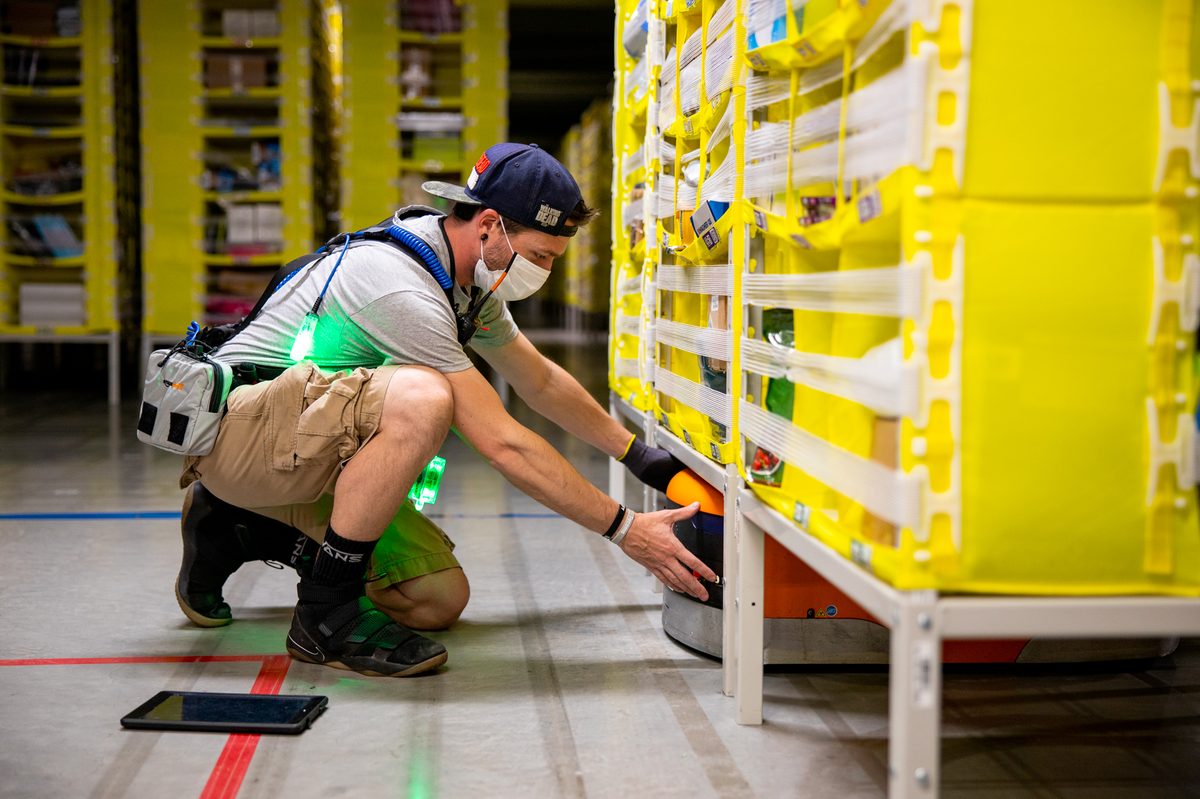
“Working globally with our teams and third parties, we have gone to extreme measures to understand and address this pandemic, with more than 150 process changes to date,” Carter said. “We spend every day focused on what else Amazon can do to keep our people and communities safe and healthy.”
Workers at Google have their own concerns about the fate and safety of contract employees like those who maintain their offices, but they are especially focused on conditions for workers at Amazon, Kern said.
The core group involved in spurring this labor action represented a range of industry roles, from cargo handlers to technical writers to engineers. Their goal was simple: Give tech workers, regardless of company or job title, a unified platform to come together and voice their criticisms of Amazon’s policies.
Kern recalled asking employees at many tech companies in multiple countries to weigh in on the plan — and there was camaraderie in late-night document editing.
“I was in a shared Google Doc with one of the guys yesterday, and we had that moment in the Google Doc where we’re just typing messages at each other, like ‘I’m so tired…,’ ‘I need to go to bed so bad,’ ‘We’re almost done,’” said Kern. “We throw the word solidarity around so much, but that really is what that looks like.”
Their goal was simple: Give tech workers, regardless of company or job title, a unified platform to come together and voice their criticisms of Amazon’s policies.
After a staggering amount of coordination and feedback over a two- to three-week period, their brainstorming birthed #TechSolidarity, a social media campaign encouraging tech workers to speak out by pairing a photo of themselves with a message of support for Amazon workers.
Workers from Google, Microsoft, Amazon, Kickstarter, and others weighed in with photos and public statements, along with the NYC Tech Workers Coalition, Berlin Tech Workers Coalition, the California Labor Federation, and more.
“It’s advantageous to large corporations to have us feel that we’re isolated, that we are not a community,” says Kern. “That makes it all the more beautiful that we’re seeing some of the greatest displays of communities taking care of each other at this time, when everybody is feeling very detached.”
The idea of uniting may help to embolden tech employees. Amazon workers organized a sick-out in late April, when hundreds of employees called in sick in solidarity with colleagues who’d lost their jobs and warehouse and delivery workers.
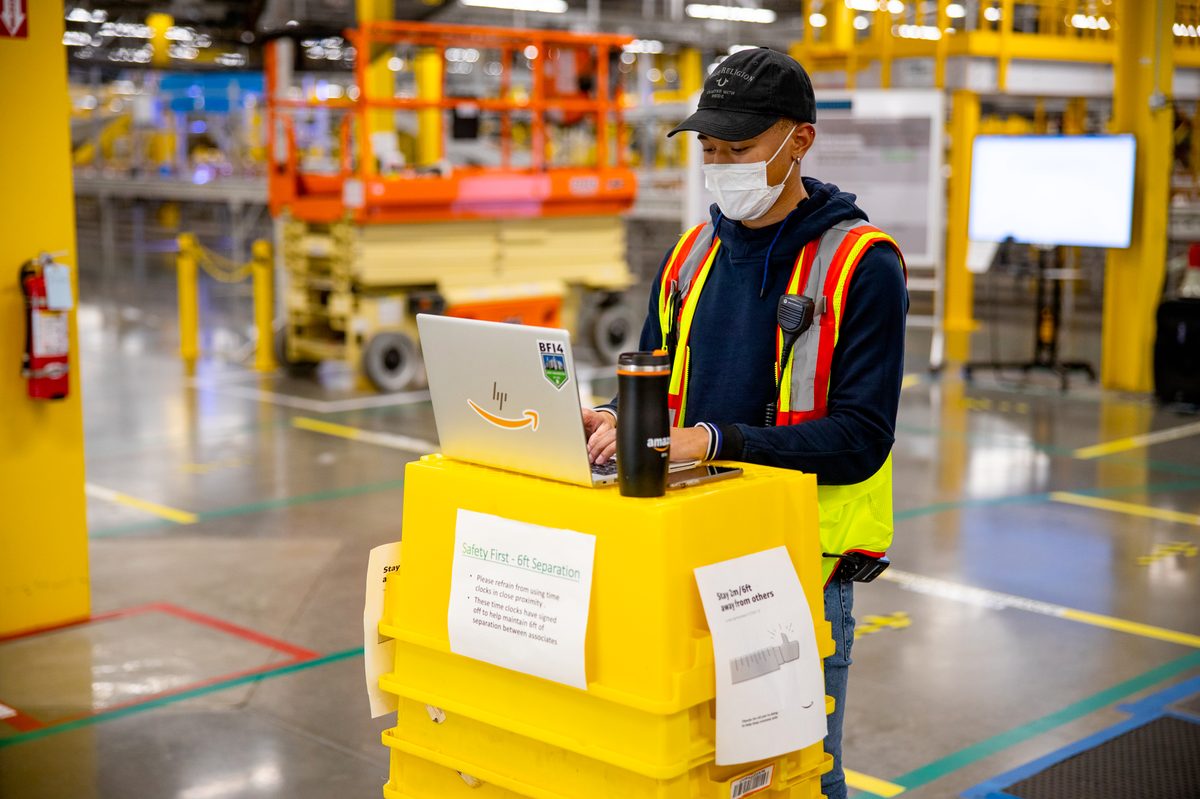
Another strike is scheduled for today, Friday, May 1, at Amazon, Whole Foods, Target, Walmart, and Instacart.
The tech community has also championed an online fundraiser for warehouse workers, which has raised upwards of $27,000.
“That’s exactly what our companies are afraid of, but they can’t really do anything about it — the ship has sailed,” says Kern. “If they wanted to quash this kind of blue-collar [and] white-collar worker cooperation, they missed their chance.”
Changing times
Industry giants have the power and funds to instill effective anti-union policies, and many workers are vulnerable to replacement. But labor experts say the coronavirus pandemic may present an opportunity for workers to seize new labor rights.
Kate Bronfenbrenner, director of labor education research at Cornell University’s School of Industrial and Labor Relations, said the choice to organize is no longer solely a “matter of economic security.”
“The choice is a matter of life and death,” she told Digital Trends.
In throwing the touchstones of everyday life out the window, the coronavirus pandemic has also charted a new course for solidarity — and the courage to speak up — across the tech industry.
“We have this sort of broken understanding of what it means to do right by your company, which basically means to be extremely uncontroversial and especially to not do anything that could conceivably affect the bottom line — even if, stepping outside the framework of a corporation, that is unequivocally the right thing to do,” Kern said.
“I don’t think any of us really want to live in a world where it is expected that workers who see something unethical don’t speak up about it,” she added.