With the news of Microsoft permanently closing its retail stores, maybe the writing was on the wall. COVID-19 has rocked retail. Just think of the names either in trouble or going out of business that we’ve seen as the pandemic unfolded: Pier 1 Imports, J. Crew, even Neiman Marcus. But honestly, the last retailer I had expected to see give up was Microsoft.
After all, Microsoft’s retail plans just made sense. Like Apple Stores, these were ambassadors for the brand — both helping to define the perception of the company itself on Microsoft’s terms and give customers direct access to in-person support. The Apple Store has a Genius Bar, Microsoft Stores has (or more accurately now, had) the Answer Desk.
And it was no secret whom the Redmond, Washington, company was targeting. Nearly every one of Microsoft’s 85 stores was within one mile of an Apple Store, with three-quarters of them within just a quarter-mile, many of those in the same shopping center. This allowed consumers to shop at both — and allowing Microsoft to steal some business.
Both followed a similar concept in presenting their hardware, focused on acting more like a showroom than traditional layouts, and encouraging customers to try out the hardware on display. It’s an experience more than anything.
Microsoft Stores weren’t struggling
There’s no reason to believe that Microsoft’s stores weren’t successful in doing so. Their stores weren’t empty by any means. While we don’t have specific data, even with a quarter of the stores, Microsoft seemed to be doing quite well. The London location just opened less than a year ago as one of the company’s flagship stores.
Just closing the stores themselves is a $450 million hit, according to the company. But merely looking at the value of Microsoft Stores from a revenue perspective is incredibly myopic.
As an Apple user, I’ve come to appreciate the service aspect of the Apple Store ecosystem. Going into an Apple Store, I’m confident that the people behind the desk know the product. There’s that sense of security that you’re not getting BS’d.
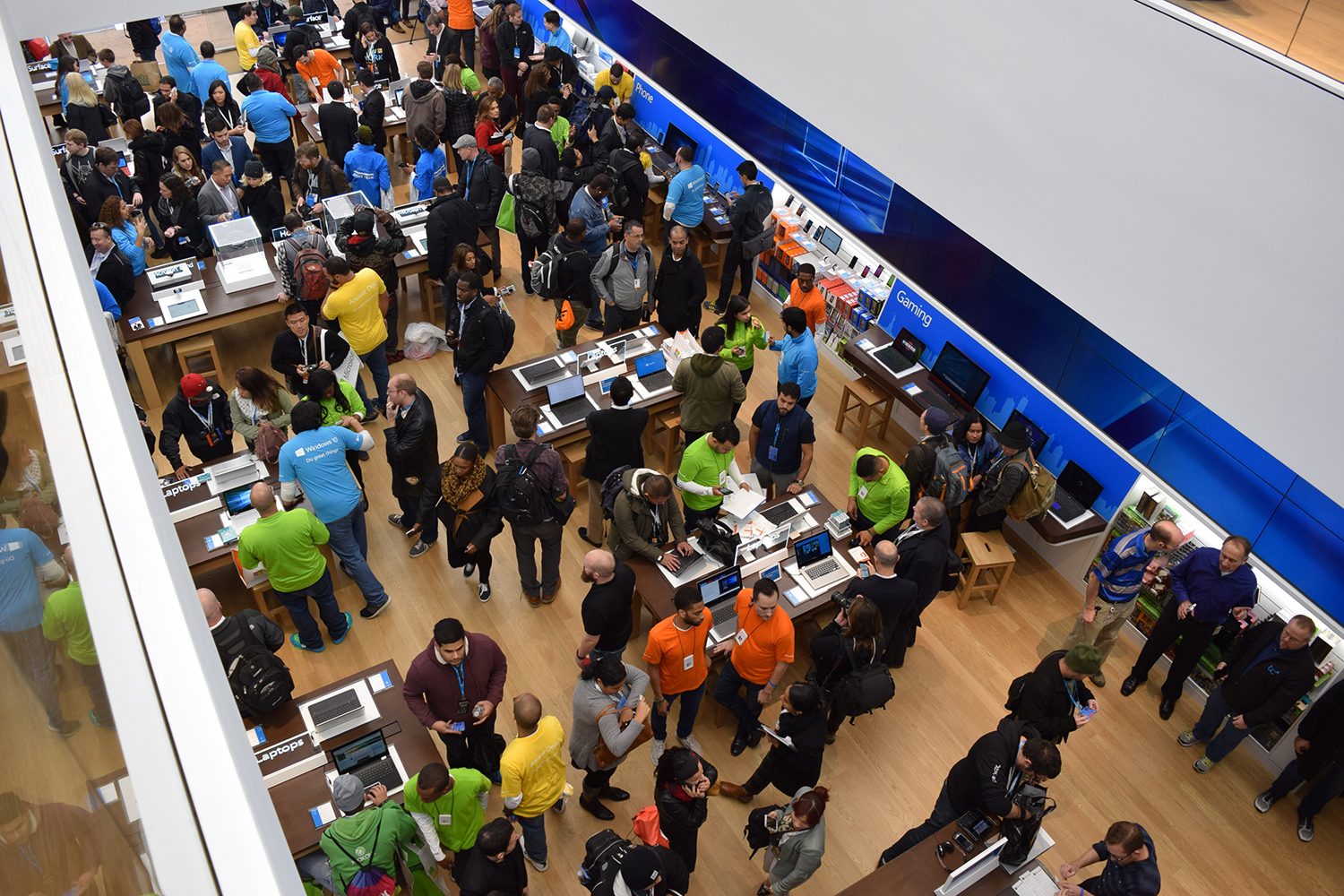
There’s also the fact I can go into the store and see the products. Yes, shopping online is convenient, but seeing the product in person is such as better experience, and leads to a more informed purchase. I feel other Apple consumers feel the same way — and other retailers are moving to a showroom model to stay viable in an increasingly challenging retail environment, well before COVID-19.
It was wise for Microsoft to mimic Apple here.
Microsoft’s customers deserve better
While Microsoft plans to transition its store employees to online roles (a claim that feels more like window dressing to obvious layoffs of a significant number of retail staff regardless of its claims to the contrary), Microsoft customers now are losing that human touch. The company also goes back to depending on partners to tell its story, which are not as invested.
The company has had its share of bruises over the past decade or two, whether it be the failures of Zune and Windows Phone, and spending much of the 2010s undoing the damage from Windows Vista. But Microsoft’s had some big successes, too: Its Xbox gaming system is as good, if not better than the PlayStation, and even the most hardened Apple fan will admit the Surface line is a legitimate contender with the iPad and MacBook lines.
Microsoft themselves best serves these customers — especially the company’s growing base of Surface users — and no web chat or phone call is as good as an actual person in front of you. Sure, COVID-19 has changed how we interact, but it’s not always going to be like this.
It’s a disappointment that Microsoft didn’t see the actual value in its efforts, and chose to abandon retail in a meaningful way. I can’t help but sit here and think this is an overreaction, and more likely a mistake.
But it’s too late now, and yet another retailer is gone — this one before its time.