1. Home
  2. Space
  3. News

NASA’s Juno spacecraft maps the northern pole of moon Ganymede for first time

Add as a preferred source on Google

NASA’s Juno spacecraft has imaged Ganymede, Jupiter’s largest moon, and has captured images showing how its unusual magnetic field affects the ice at its poles.

Juno passed by Ganymede on December 26, 2019, and its path took it over the top of the never-before-mapped northern pole of the moon. The Juno team knew this would be a rare opportunity to observe the moon up close and personal, so they prepared by turning the craft so its instruments faced the surface of the moon.

Recommended Videos

Juno came within just 62,000 miles of Ganymede and used its Jovian Infrared Auroral Mapper (JIRAM) instrument to collect 300 infrared images of the moon’s surface, which were used to create the infrared map of the northern part of the moon.
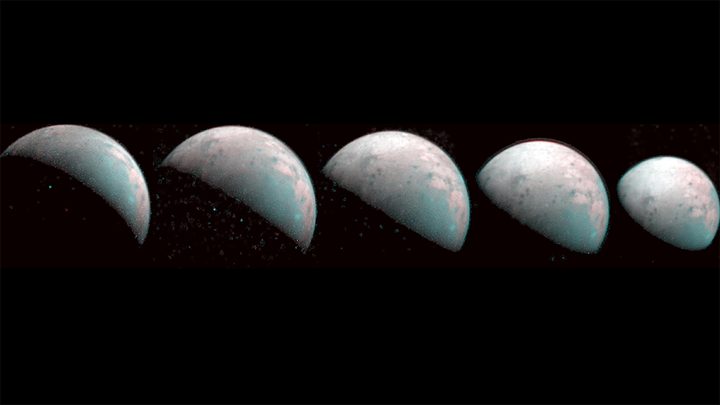
the first infrared mapping of Ganymede's northern frontier
These images the JIRAM instrument aboard NASA’s Juno spacecraft took on Dec. 26, 2019, provide the first infrared mapping of Ganymede’s northern frontier. Frozen water molecules detected at both poles have no appreciable order to their arrangement and a different infrared signature than ice at the equator. NASA/JPL-Caltech/SwRI/ASI/INAF/JIRAM

These images reveal activity on Ganymede, which does not have an atmosphere but, like Earth, does have a magnetic field. This magnetic field interacts with energetic particles given off by the sun, called plasma, which is channeled toward the moon’s poles and impacts the ice there.

“The JIRAM data show the ice at and surrounding Ganymede’s north pole has been modified by the precipitation of plasma,” Alessandro Mura, a Juno co-investigator at the National Institute for Astrophysics in Rome, said in a statement. “It is a phenomenon that we have been able to learn about for the first time with Juno because we are able to see the north pole in its entirety.”

The instrument used to capture these images, JIRAM, is capable of using infrared to look through Jupiter’s cloud layer and to see 30 to 45 miles beneath the clouds, but it can also be used for investigating Jupiter’s moons including Io, Europa, and Callisto as well as Ganymede.

“These data are another example of the great science Juno is capable of when observing the moons of Jupiter,” Giuseppe Sindoni, program manager of the JIRAM instrument for the Italian Space Agency, said in the statement.

This works paves the way for the European Space Agency’s JUpiter ICy moons Explorer, or JUICE, mission which is set to visit these moons in 2030 following its launch in 2022.

Georgina Torbet
Georgina has been the space writer at Digital Trends space writer for six years, covering human space exploration, planetary…
Space is becoming Bezos and Musk’s next data center site, and we have every reason to worry
The AI boom is coming for the night sky
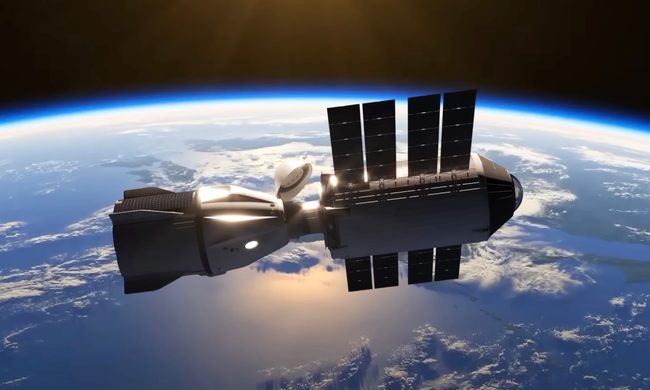
How Vast's space station will look in orbit.

AI data centers already consume vast amounts of electricity and water on Earth, so Silicon Valley has begun looking somewhere considerably more spacious... literally.

Elon Musk's SpaceX and Jeff Bezos' Blue Origin, along with several other companies, have proposed enormous constellations of satellites designed to operate as orbital data centers. However, environmental groups and former space officials are now warning that putting them into orbit at the proposed scale could have severe consequences for Earth's atmosphere and the night sky.

Read more
The first possible exomoon is here, and it makes our Moon look hilariously tiny
Scientists may have found the first exomoon, except this one is the size of Jupiter
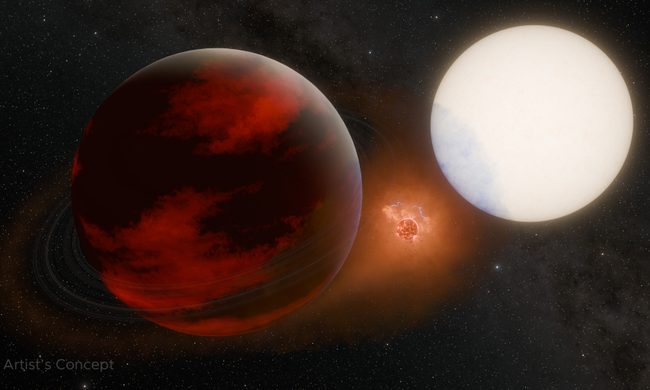
This artist’s concept depicts a potential volcanic moon between the exoplanet WASP-49 b, left, and its parent star. New evidence indicating that a massive sodium cloud observed near WASP-49 b is produced by neither the planet nor the star has prompted researchers to ask if its origin could be an exomoon.

We have already discovered more than 6,000 planets outside of our immediate neighborhood. Yet, finding a moon orbiting one of those distant worlds has proved considerably harder. Astronomers may finally have something close to the real deal, but this particular object stretches the word “moon” almost beyond recognition.

Using the European Southern Observatory’s Very Large Telescope in Chile, researchers detected strong evidence for a moon-like object in the CD-35 2722 system. Further observations are still necessary to confirm the discovery, but it could become the first confidently detected natural satellite outside our solar system. There is still one tiny complication though. This moon is apparently massive.

Read more
China’s answer to SpaceX’s reusable rockets literally catches boosters in a net
SpaceX catches boosters on legs. China just used a net.
Ammunition, Missile, Weapon

SpaceX's playbook for recovering a rocket booster generally involves legs, a precisely controlled vertical landing, and either a concrete pad or a drone ship. 

China just managed to pull off something similar, but in a slightly different way, and on July 10, it tested the method as well.

Read more