1. Home
  2. Space
  3. News

Elon Musk shares cool SpaceX video of perfect fairing catch

Add as a preferred source on Google
 

A SpaceX first-stage booster launched and landed for a record sixth time on Tuesday, August 18. It was also the 100th SpaceX launch since 2006 when its first Falcon 1 rocket soared skyward.

Recommended Videos

This week’s mission also saw a net-equipped ship catch one half of the Falcon 9 rocket’s fairing as it returned to Earth, a feat captured on video and tweeted by SpaceX CEO Elon Musk.

SpaceX’s Falcon 9 rocket departed Cape Canaveral in Florida mid-morning local time, and a short while later deployed 58 internet-giving Starlink satellites into low-Earth orbit, as well with three additional satellites for Earth-imaging company Planet Labs.

SpaceX has made huge strides with its rocket system over the last 14 years, pretty much perfecting the still-amazing launch and landing procedure that enables the team to reuse its first-stage booster.

Catching the two halves of the rocket fairing, which holds the rocket’s payload, has proved a trickier challenge, but this year it’s been having more success with the procedure.

Musk’s video (below) is the clearest view we’ve had of a successful catch. In fact, the video is so pin-sharp that some of his Twitter followers questioned whether it was actually real and not a computer-generated animation. Responding on Twitter, Musk promised the video was genuine.

In it, we can see the rocket fairing, slowed by a parachute, in the final moments before it lands on the giant net of a moving ship — called Ms. Tree — sailing off the coast of Florida.

There’s no word yet on whether the other ship — Ms. Chief — managed to catch the other half of the fairing.

At $6 million a pop, it certainly pays SpaceX to catch the fairing in this way if it wants to use it again. The alternative is to risk impact damage as it hits the sea, while the saltwater could also cause it harm.

In its entirety, the Falcon 9 fairing is around 13 meters (42.6 feet) tall and 5 meters (16.3 feet) wide, tipping the scales at around 1,000 kilograms (2,205 pounds).

As the two sections fall back to Earth, cold nitrogen thrusters provide a steady descent. The system then deploys a GPS-equipped, steerable parafoil (similar to a parachute) about five miles up to slow the sections down enough to give the ships a little more time to get into the right position. Tuesday’s success suggests the SpaceX team is making big improvements in getting the difficult procedure exactly right.

Trevor Mogg
Contributing Editor
Not so many moons ago, Trevor moved from one tea-loving island nation that drives on the left (Britain) to another (Japan)…
Amazon’s Starlink rival just crossed a major milestone, but don’t expect perfect internet just yet
Amazon finally showed up to the space internet party
Amazon Leo satellite layout across all launch vehicles

Amazon has taken a significant step toward launching its long-awaited satellite internet service. Following its latest rocket launch, the company now has 396 Project Kuiper satellites in low-Earth orbit, enough to begin offering continuous service across select regions. The milestone keeps Amazon on track for its previously announced goal of launching commercial service by mid-2026.

https://twitter.com/Weber44Chris/status/2072575499461963938?ref_src=twsrc%5Etfw%7Ctwcamp%5Etweetembed%7Ctwterm%5E2072575499461963938%7Ctwgr%5Ed727a1b853cbf519585e7bf2655943afb2f91bb8%7Ctwcon%5Es1_&ref_url=https%3A%2F%2Fwww.theverge.com%2Fscience%2F960563%2Famazon-leo-service-tipping-point

Read more
Amazon’s Starlink rival is set to launch satellite internet later this year
After launching nearly 400 satellites, Amazon says its Leo broadband service will go live later this year.
Atlas V launches 29 Amazon Leo satellites from Cape Canaveral, Florida

Amazon's long-awaited answer to SpaceX's Starlink is finally nearing liftoff. According to an exclusive report from Reuters, the company plans to begin offering its Leo satellite internet service later this year, after its latest rocket launch pushed the constellation to 394 satellites in orbit.

The pieces are finally falling into place for Project Kuiper

Read more
NASA is investing $590 million in private contractors to build humanity’s first Moon outpost
NASA is counting on private companies to land its Moon Base dream.
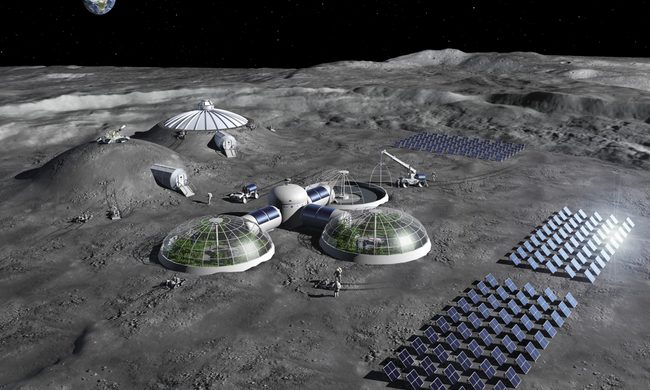
Artist impression of a Moon Base concept, with solar arrays for energy generation, greenhouses for food production, and habitats shielded with regolith.

Building a permanent base on the Moon sounds like science fiction, but NASA is making it feel a lot more real. The agency just handed $590 million in contracts to three private companies for four uncrewed lunar lander missions launching in late 2028.

These missions are part of Phase 1 of NASA's broader $30 billion Moon Base program, which needs to deliver landers, rovers, and scientific cargo up there before astronauts eventually move in. These efforts are closely tied NASA's Artemis program, which sent humans on a lunar flyby in April for the first time since the Apollo era.

Read more