Update September 28: The launch has been scrubbed due to poor weather conditions. No new launch date has been announced yet.
Standing down from launch of Starlink due to weather; will announce a new target launch date once confirmed
— SpaceX (@SpaceX) September 28, 2020
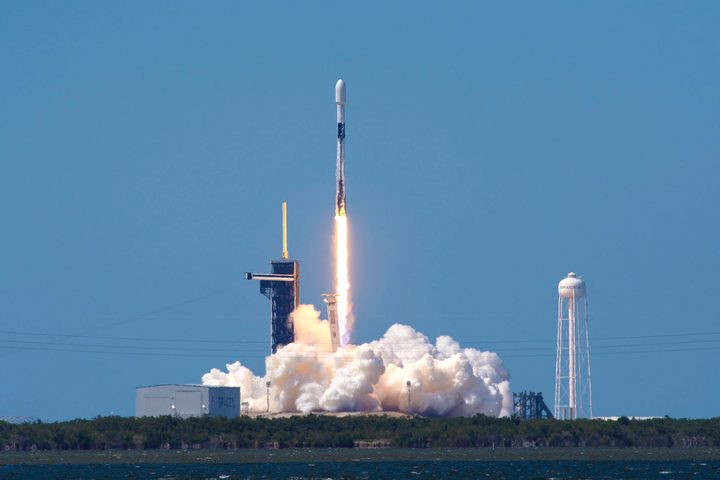
On Monday morning, SpaceX will launch its 13th batch of satellites into orbit as part of its Starlink project to provide global broadband internet access. The company will launch 60 satellites aboard a Falcon 9 rocket and attempt to once again catch the rocket’s first stage booster on the “Of Course I Still Love You” drone ship stationed in the Atlantic Ocean.
This particular Falcon 9 first stage is rather famous, having previously been used in the first crewed test flight of the Crew Dragon capsule, carrying NASA astronauts Bob Behnken and Doug Hurley to the International Space Station. In addition, SpaceX is also reusing part of the fairing, one half of which has been used in two previous Starlink launches.
SpaceX will livestream the launch and the exciting catch of the first stage, and we have the details on how you can watch the event live.
When is the Starlink launch?
The launch is set to go ahead at 10:22 a.m. ET on Monday, September 28 from Launch Complex 39A (LC-39A) at Kennedy Space Center in Florida.
The deployment of the satellites will occur approximately one hour after the launch, at around 11:20 a.m. ET.
Targeting Monday, September 28 at 10:22 a.m. EDT for Falcon 9’s launch of 60 Starlink satellites from Launch Complex 39A in Florida
— SpaceX (@SpaceX) September 27, 2020
How to watch the launch
Coverage of the launch will be available live on SpaceX’s YouTube page or using the video player embedded at the top of this page. The coverage is set to begin around 15 minutes before the launch, so a bit after 10 a.m. ET on Monday morning.
Weather for the launch
As always, weather is a concern for the launch, as clear skies are needed for the mission to go ahead. But things are looking promising for tomorrow morning. In its latest weather forecast, the U.S. Space Force said there was a 60% chance that the launch could go ahead, though there is a potential thick layer of clouds that is the primary concern.
“Extensive mid and high clouds are expected to overspread Central Florida well ahead of the system, and will be in place across the region for the primary launch window,” a Space Force forecast said. “While the highest shower and storm chances will be after the launch window, the mid and high level cloudiness will bring a Thick Cloud Layer concern for the launch window. Scattered developing cumulus clouds will also be a concern if the east coast sea breeze is able to develop earlier.”
Other SpaceX launches this week
The Starlink launch isn’t the only launch SpaceX has planned for this week. There is also a SpaceX launch planned for Tuesday, September 29 at 9:55 p.m. ET. from Launch Complex 40 at Cape Canaveral Air Force Station. This mission for the Space Force will launch a GPS satellite called GPS III SV-04.