1. Home
  2. Computing
  3. Mobile
  4. Web
  5. Evergreens

How to share a Google Calendar

Add as a preferred source on Google

Whether you’re working from home, part of a major corporation, or organizing a distributed team across the globe, keeping everyone in the loop and aware of the work calendar is crucial. If you’ve ever been ready to start your teleconference, only to realize that you never got around to telling everyone the meeting’s date and time, don’t worry, we’ve all been there. Learning how to share your Google Calendar can be a great way to stop it from happening again.

However, all this can be avoided by knowing how to share a Google Calendar with notes, meeting links, and many other features. Learn more about how to share your Google Calendar with others and help avoid embarrassing miscommunications.

Recommended Videos

How to share a Google Calendar

Sharing your Google Calender is a great way to keep friends, family, and colleagues up to date on your personal schedule. It also makes it easier to delegate your calendar to a personal assistant or secretary, or create a calendar that you and members of your family or business can all modify. It is important to note that you should always exercise caution when sharing your Google Calendar. Anyone you grant full permission will be able to create and edit events, share your calendar with others, and respond to any invitations received. The calendar organizer’s G Suite edition and videoconferencing settings may impact participants’ ability to use specific Google Meet features, like meeting recordings, too.

Share an existing Google Calendar

Step 1: Log in to your Google account, select the Google apps button that resembles three rows of dots, and click Calendar (you cannot share calendars through the Google Calendar app).
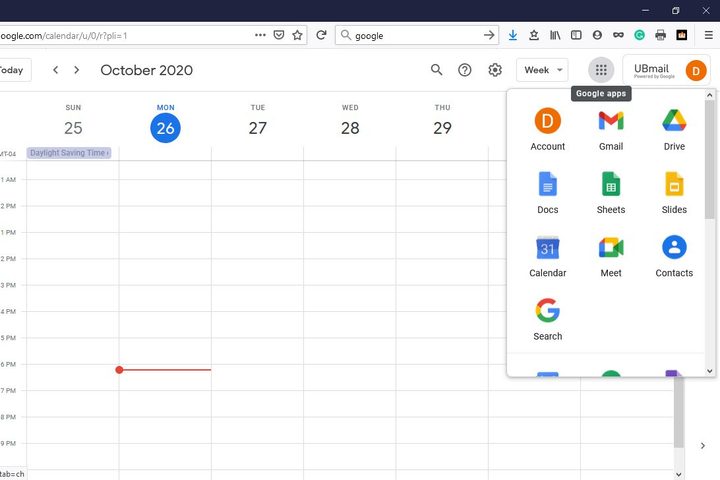
Image of Google Calendar Button
Daniel Martin/Screenshot

Step 2: Locate the My Calendars section on the left and click the “More” button next to the calendar you’d like to share, then select Settings and Sharing.
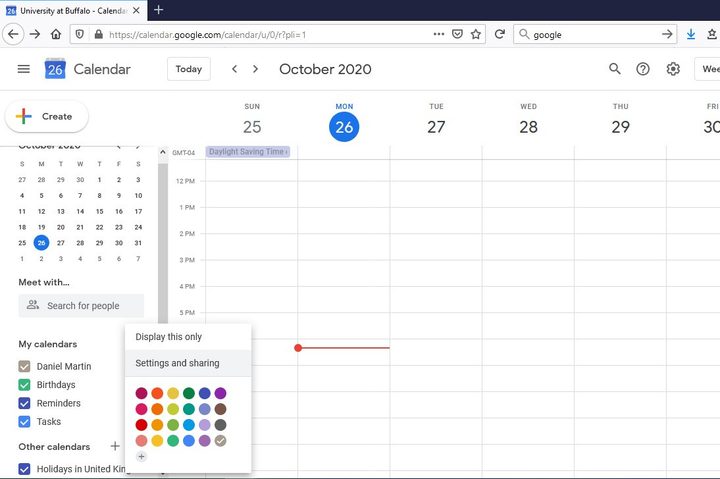
Image My Calendars Settings and Sharing Button
Daniel Martin/Screenshot

Step 3: Share your calendar with the public, your organization, or a large group of people by locating the Access Permissions section and check the appropriate boxes. If you only want to share a calendar with select individuals, go to the Share with Specific People section and enter their email addresses. Both methods will ask you to determine permission settings for other participants, including the ability to add and edit events, find event details (including private details), and restore or permanently delete events, so exercise caution when granting permission.
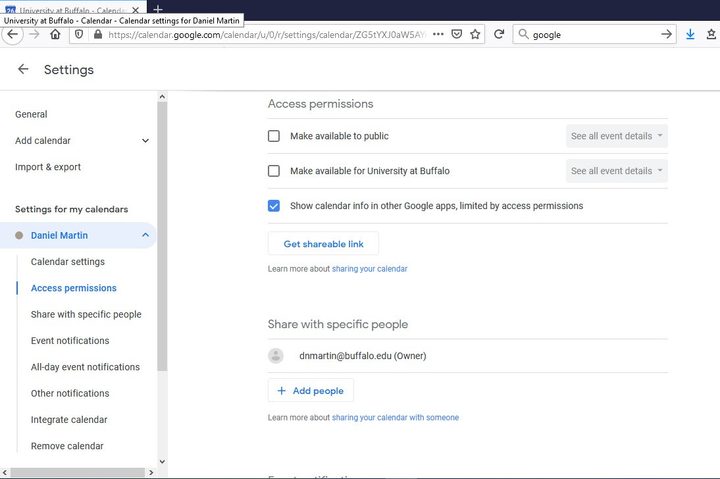
Image of Google Calendar Access Permissions
Daniel Martin/Screenshot

Step 4: Click Send to share the calendar with your intended recipients. Note that anyone you share a calendar with will need to open the emailed link to gain access, and if someone doesn’t have Google Calendar themselves, you will have to make the calendar public for them to view it.
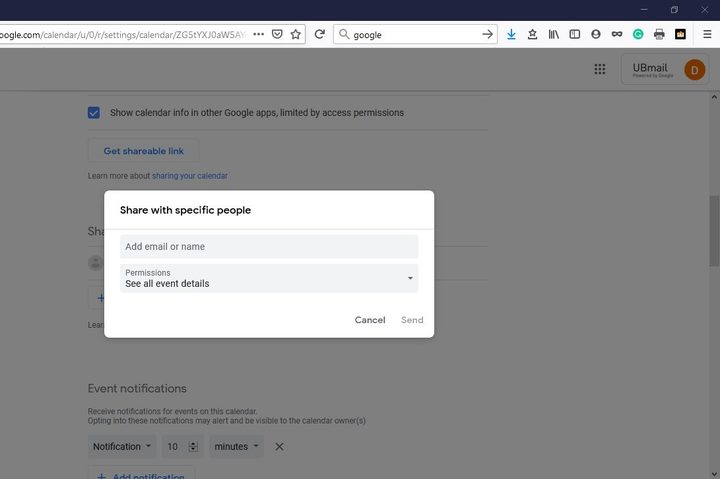
Image of Google Calendar Send Button
Daniel Martin/Screenshot
Daniel Martin
Former Digital Trends Contributor
Daniel Martin is a technology expert, freelance writer, and researcher with more than a decade of experience. After earning a…
ChatGPT is coming for one of Google’s smartest Chrome features
OpenAI brings ChatGPT to Chrome to challenge Google's Gemini Side Panel
OpenAI

OpenAI is expanding ChatGPT beyond its website with the launch of a new Chrome extension that can understand the contents of the webpage you're viewing. The extension allows users to ask questions about a page, summarize articles, explain complex concepts, and even kick off longer AI-powered tasks without leaving their browser.

The move positions ChatGPT as a direct competitor to Google's Gemini in Chrome, which introduced similar context-aware browsing features earlier this year. While both tools aim to bring AI directly into web browsing, they take slightly different approaches to productivity and automation.

Read more
This open-source Mac app finds the junk files your deleted apps leave behind
Uninstally removes apps properly, leftovers and all
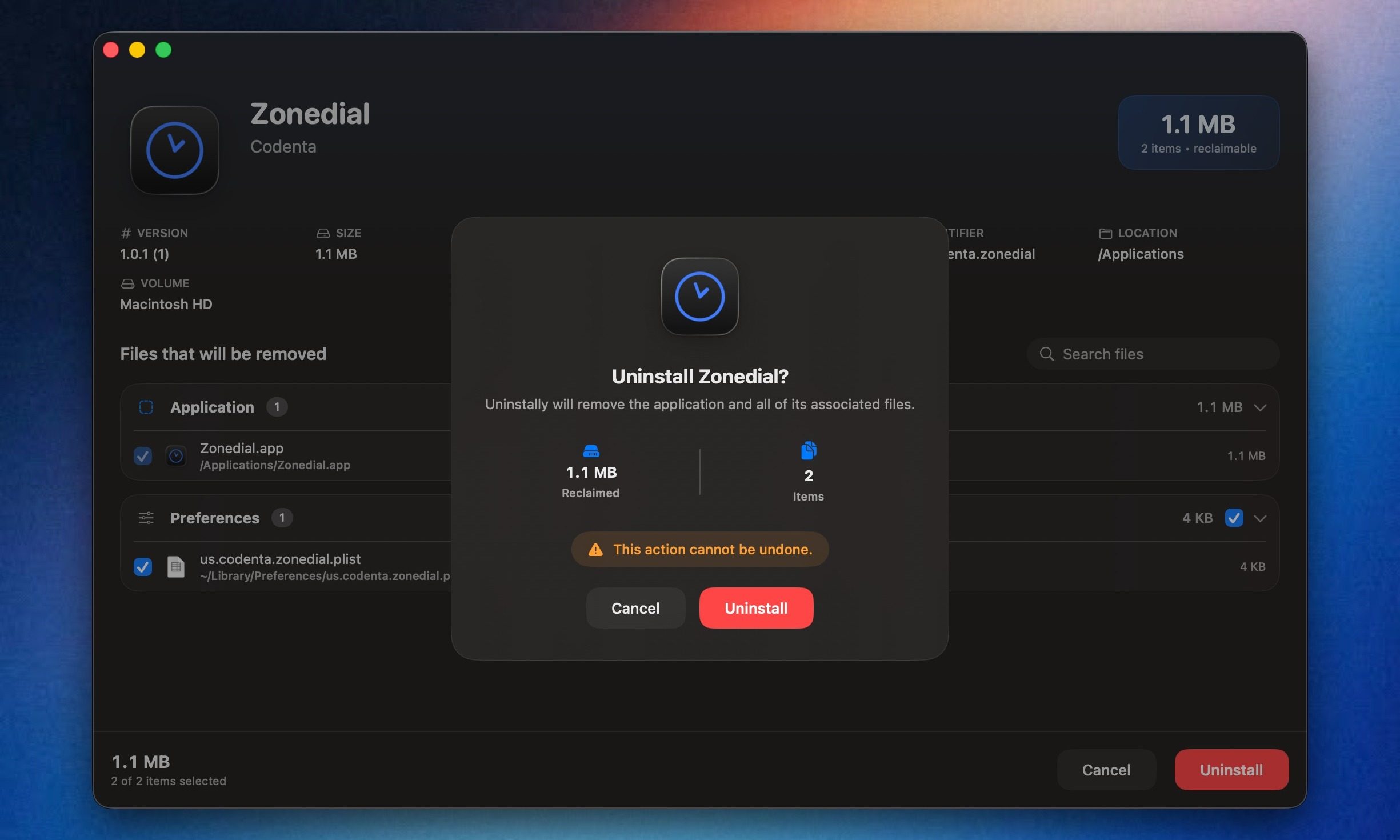
Uninstally macOS app UI

Uninstalling apps on macOS is usually very easy. You drag an app to the Trash, empty it, and move on. The annoying part is that many apps still leave residue behind, including support files, caches, preferences, containers, and logs. I have always found that frustrating, especially when old app data keeps sitting around long after the app itself is gone.

AppCleaner by FreeMacSoft has been the popular go-to option for this for years, and it still does the job well. But I recently came across a new open-source alternative called Uninstally by Codenta, which solves the same basic problem. It removes Mac apps along with the support files, caches, preferences, containers, logs, and other leftovers they usually leave behind.

Read more
AMD just made Ryzen laptop chips even more confusing, but here’s what’s actually new
The refreshed lineup brings more Zen 4 processors to mainstream and budget laptops.
AMD Ryzen 100 and 200 series

AMD has quietly expanded its mobile processor portfolio with 11 new Ryzen laptop processors, adding fresh models under both the Ryzen 200 and Ryzen 100 families. While that sounds straightforward enough, the bigger story isn't the chips themselves -- it's AMD's increasingly confusing naming strategy. The company has introduced seven new Ryzen 200 processors alongside four new Ryzen 100 models, but despite belonging to different series, many of them are actually built on the same Hawk Point silicon featuring Zen 4 CPU cores and RDNA 3 integrated graphics.

The Ryzen 200 series gets seven new CPUs

Read more