  1. Home
  2. Cars
  3. News

Watch BMW test an electric jet pack that lets you fly at 186 mph

Add as a preferred source on Google

BMW’s electric technology will power thousands of sedans and SUVs during the 2020s, but the company’s ambitions are much higher — literally. It’s forward-thinking BMW i division teamed up with Austrian stuntman Peter Salzmann to develop a battery-powered wingsuit capable of propelling the person wearing it through the air at up to 186 mph.

Creating the device that allowed the 33-year-old Salzmann to fly above the Austrian Alps took about three years. While the wingsuit isn’t a new invention, the drive unit that powers it was developed from scratch. It needed to be relatively compact, reasonably light, power dense, and, of course, reliable — no one wants to run out of juice at 9,000 feet. BMW leveraged its expertise in electric powertrains (it released the i3 in 2013, before EVs were cool) to make it work.

Recommended Videos

Powered by a 50-volt lithium battery, the drive unit is built around a pair of carbon fiber propellers that spin at up to 25,000 rpm to develop 15 kilowatts, which represents approximately 20 horsepower. BMW built the casing out of aluminum and carbon fiber — two materials found across its portfolio — to keep weight down to about 26 pounds. It then tested the device in the same wind tunnel it uses to make its cars as aerodynamic as possible.

The Electrified Wingsuit. Episode 2. | #NEXTGen 2020.

As development engineers made progress on the drive unit, Salzmann fine-tuned the actual suit. It’s like a racing suit, or an astronaut’s suit, but pieces of fabric reminiscent of a flying squirrel’s skin membranes allow the person wearing it to glide through the air. With the pieces ready to be assembled, the team began planning how to test the suit in real-world conditions for the first time. With fingers and toes crossed, the Austrian Alps were chosen.

Salzmann jumped out of a helicopter hovering at nearly 10,000 feet and let himself glide before switching on the drive unit. He flew over the mountains, Superman-style, and landed safely by deploying his parachute.

Everything went according to plan, but that doesn’t mean BMW will add the wingsuit to its range of vehicles. Digital Trends learned from a company representative that there are no plans to mass-produce the device in the near future. Salzmann pledged to continue developing the electrified wingsuit, so if BMW doesn’t build it, someone else might.

Ronan Glon
Ronan Glon is an American automotive and tech journalist based in southern France. As a long-time contributor to Digital…
Tesla launches the six-seat Model Y Long Wheelbase in the US
The stretched electric SUV brings more space, more comfort, and up to 325 miles of range.
Tesla Model Y Long Wheelbase Featured

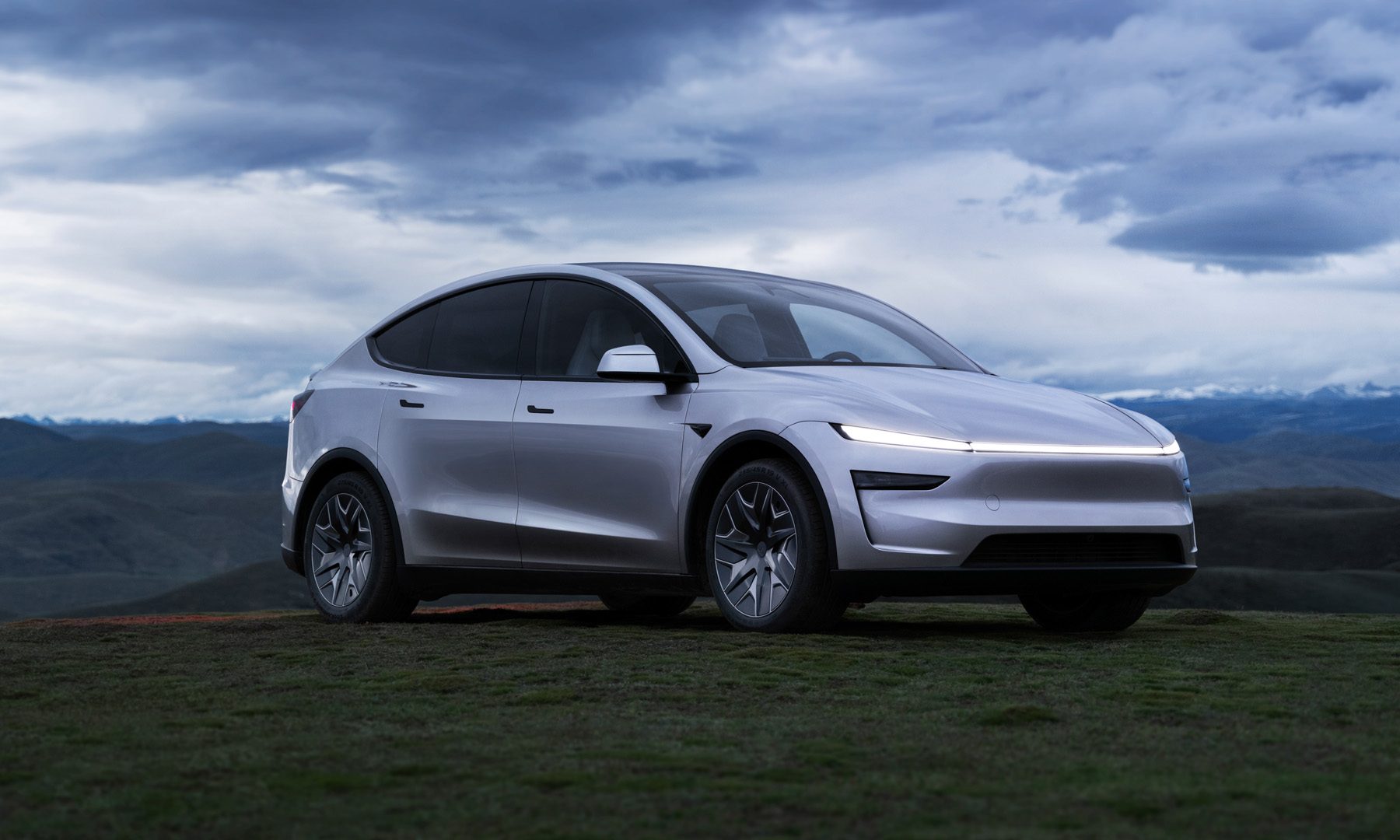
Tesla is giving the Model Y a little more breathing room. The company has officially launched the Model Y Long Wheelbase in the United States and Puerto Rico, introducing a stretched version of its best-selling electric SUV with a three-row, six-seat layout that's designed to make family road trips a lot more comfortable.

A bigger Model Y with a focus on comfort

Read more
A stolen Kia reveals the hidden limits of connected car technology
Kia can see where your stolen car is. GDPR means it won't share that in real time. That is the entire problem.
Kia EV3 design

If you’re buying a car with connected car technology, thinking it would help you to recover it in the event of theft, you might want to recalibrate your expectations. 

A recent incident in the UK, in which a car owner had three tracking devices installed in his car and still couldn’t recover it, led the carmaker to state that connected-car technology isn’t a “certified security vehicle tracker” (via the BBC).

Read more
Cambrige experts find utterly simple fix for longer lasting EV batteries. Just put some pressure on it.
Scientists found a way to make EV batteries last longer without reinventing the battery
EV Charging

EV battery breakthroughs typically involve new chemistry, exotic materials, or faster charging/higher capacity. But a new study reveals that you can skip all the fancy stuff and go with a very simple solution, Researchers from the University of Cambridge found that putting the battery under the right amount of pressure actually helps.

The study was about how physical pressure affects lithium-ion battery life, which found that keeping cells under constant pressure could double their lifespan. The work was published in Nature Energy, and the team says the improvement came without changing the active materials, electrolyte, or basic battery chemistry.

Read more