  1. Home
  2. Trash
  3. News

NASA to roleplay what would happen if an asteroid struck Earth

Add as a preferred source on Google

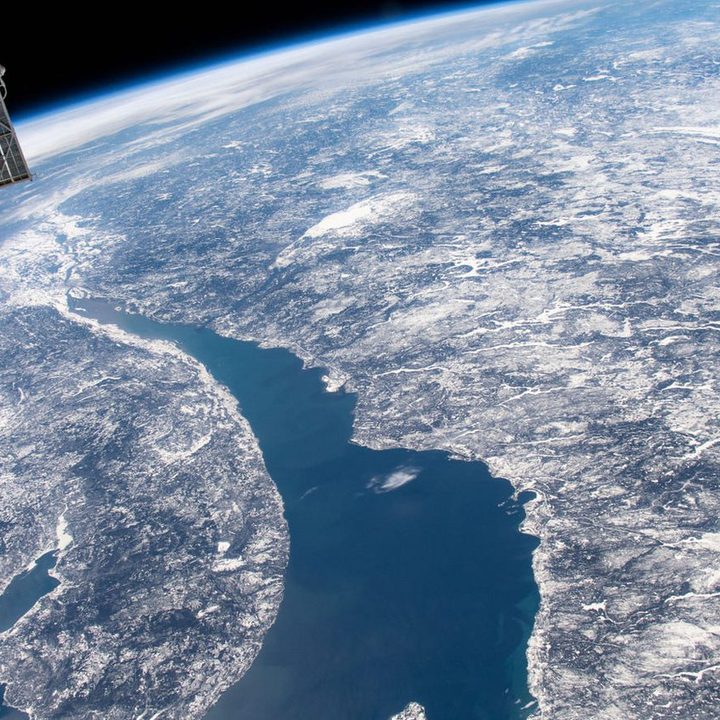
This image was captured by the International Space Station Expedition 59 crew as they orbited 400 kilometers above Quebec, Canada. Right of center, the ring-shaped lake is a modern reservoir within the eroded remnant of an ancient 100 kilometer diameter impact crater, which is over 200 million years old.
This image was captured by the International Space Station Expedition 59 crew as they orbited 400 kilometers above Quebec, Canada. Right of center, the ring-shaped lake is a modern reservoir within the eroded remnant of an ancient 100-kilometer diameter impact crater, which is over 200 million years old. NASA, International Space Station Expedition 59

This week, space agencies from around the world will drop everything to figure out an emergency response to our planet being struck by an enormous asteroid. But you needn’t start stocking up on canned goods or survival supplies, as the asteroid impact is only hypothetical, and the planning is part of a scenario played out at the 7th IAA Planetary Defense Conference.

Members of NASA’s Planetary Defense Coordination Office (PDCO) will join other space scientists in a simulation of how agencies, governments, and regular people might respond if our planet were threatened by an asteroid. Over five days, they will simulate a developing scenario of an impact and will have to tailor their responses to new incoming (albeit fictional) data.

“Each time we participate in an exercise of this nature, we learn more about who the key players are in a disaster event, and who needs to know what information, and when,” said Lindley Johnson, NASA’s Planetary Defense Officer, in a statement. “These exercises ultimately help the planetary defense community communicate with each other and with our governments to ensure we are all coordinated should a potential impact threat be identified in the future.”

We now have an increasingly sophisticated system of telescopes in place which can spot asteroids or comets coming near to Earth, called potentially hazardous objects (PHO). But how should we respond if we do identify such an object on a collision course with the planet? That’s what the exercise aims to consider, as part of a strategy for planetary protection.

“Hypothetical asteroid impact exercises provide opportunities for us to think about how we would respond in the event that a sizeable asteroid is found to have a significant chance of impacting our planet,” said Dr. Paul Chodas, director of NASA’s Jet Propulsion Laboratory’s Center for Near Earth Object Studies (CNEOS). “Details of the scenario — such as the probability of the asteroid impact, where and when the impact might occur — are released to participants in a series of steps over the days of the conference to simulate how a real situation might evolve.”

Georgina Torbet
Georgina has been the space writer at Digital Trends space writer for six years, covering human space exploration, planetary…
The Digital Trends App Bundle is yours to try for a whole week, free
Digital Trends App Bundle

Recently, we've entered an exciting collaboration with Maple Media, creating a bundle of 17 apps worth having on your phone. From relaxed fun to serious productivity boosts, these apps cover all your bases and provide a fun boost to your phone. Normally, the bundle is $9.99 per month (far lower than the cost of using the apps individually), but for your first 7 days you can get access to the bundle for free. View the full Digital Trends App Bundle for a complete list of the apps, or read on for a summarized take.

Start your free trial

Read more
The Galaxy S26 Ultra might not see much of a battery upgrade after all
It looks like it will stay the same as the last five years.
The back of the Samsung Galaxy S25 Ultra.

What's happened? This week, China's Quality Certification Center released information about a battery (EB-BS04898ABY) with a maximum capacity of 4,855mAh. That's the same capacity as was previously seen in the Samsung Galaxy S25 Ultra, and fans have taken this certification to mean the Galaxy S26 Ultra will not see a capacity increase after all.

The Samsung Galaxy Ultra models have had the same battery capacity for the last five years.

Read more
The Galaxy Tab S10 Lite is official, and it’ll be here sooner than you think
Galaxy Tab S10 Lite

What's happened? Samsung has officially announced the Galaxy Tab S10 Lite, a budget-friendly alternative to the Galaxy Tab S10. The device has been rumored for months, but this is the first time Samsung has officially acknowledged its existence.

The Galaxy Tab S10 Lite will have a 10.9-inch display and a peak brightness of 600 nits — a bit on the lower side, versus the iPad Pro's maximum brightness of 1,600 nits.

Read more