  1. Home
  2. Computing
  3. Legacy Archives

Microsoft Loses Second Appeal in Word Patent Case

Add as a preferred source on Google
Image used with permission by copyright holder

Software giant Microsoft has lost a second round of appeals in its patent infringement battle with Canada’s i4i, putting the company that much closer to being on the hook for some $240 million—and that’s after already having been forced to remove technology from its Microsoft Office suites in order to keep selling the software.

A three-judge panel has re-affirmed the original decision against Microsoft, noting there was significant evidence Microsoft knew about i4i’s technology before it turned up in Microsoft’s Office application suite. The patents in question cover s custom XML functionality to create documents that can be automatically interpreted by other software, such as database applications. Although the feature isn’t commonly used by everyday Microsoft Office users, government and enterprise users leverage custom XML capabilities.

Recommended Videos

The second appeal failure isn’t quite Microsoft’s last recourse: in the next six weeks, the case documents will be reviewed by other judges to see if Microsoft’s case merits a wider review. Microsoft can also appeal to the U.S. Supreme Court.

Back in 2009, Canada’s i4i won a $200 million patent infringement case against Microsoft, with a Texas federal jury ruling the Redmond company had infringed on an i4i patent for managing custom XML documents. And the ruling was particularly harsh: in addition to the $200 million, the judge added on another $40 million for willful infringement and tacked on charges for pre-judgement interest. Although Microsoft has worked to get the ruling overturn, the battle has not gone well for the Redmond software giant: in August 2009 Microsoft was ordered to stop selling Microsoft Word 2003 and 2007 (which contained the infringing technology), so Microsoft yanked the tech in order to keep Word on the shelves.

Microsoft has consistently maintained its technology does not infringe on i4i’s patent; it has also claimed i4i’s patent is not valid.

Geoff Duncan
Former Contributor
Geoff Duncan writes, programs, edits, plays music, and delights in making software misbehave. He's probably the only member…
Google Earth’s AI misadventure lasted only a day. It was a tale of dangerous ignorance.
Nuclear reactors, tanks, and historical destruction on a life-like satellite map? Yeah, that's bad.
Nano Banana AI image generator representation.

Technology behemoths are clearly not reading the room, or they are just moving faster than they should when it comes to AI deployment. Google has already stuffed its Gemini AI in every corner of its software stack, from Android to daily productivity tools like Gmail that are used by hundreds of millions of users every day. AI is everywhere. Not all of it is bad, mind you. But in a few places, it just feels forced.

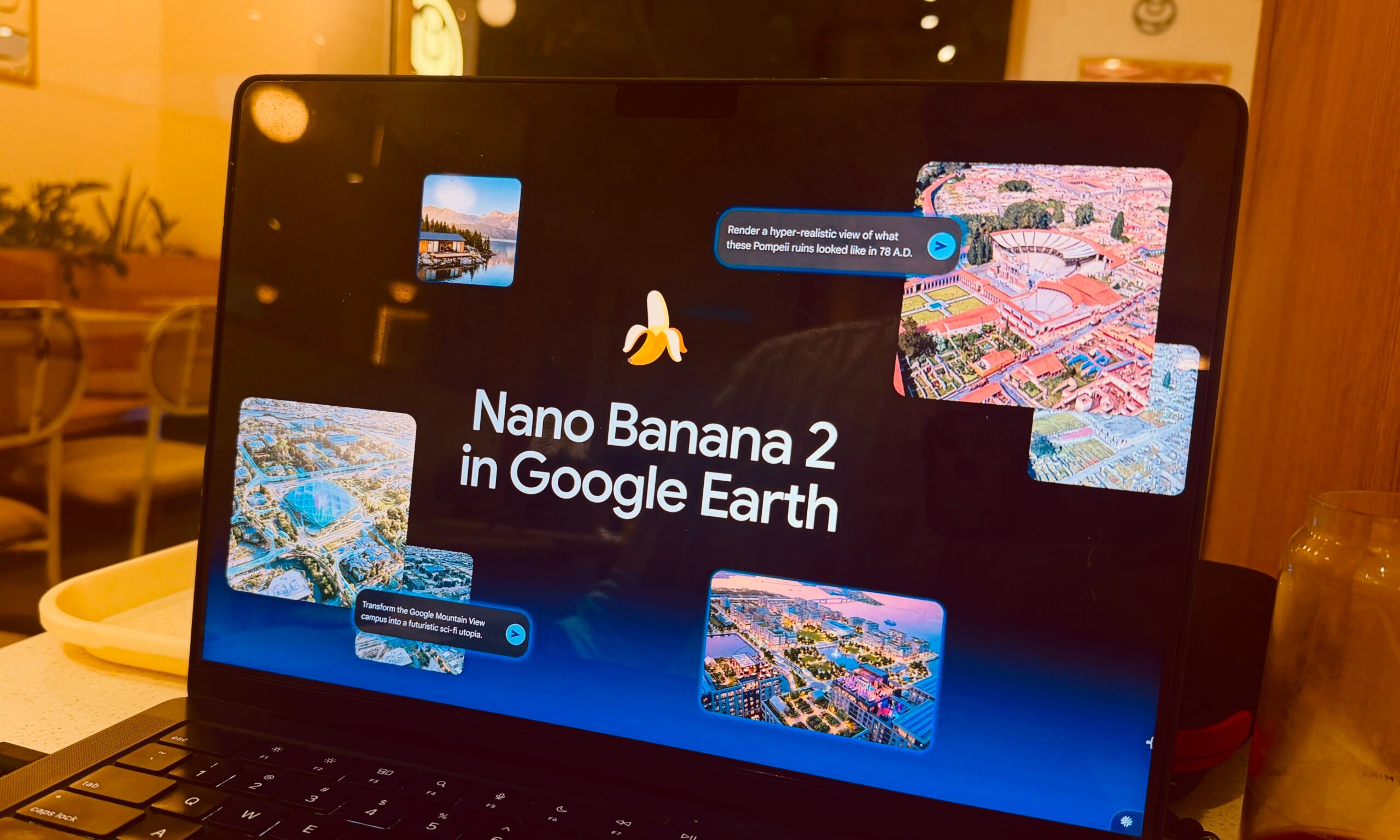
In its latest AI-fication experiment, the company targeted Google Earth. The idea was to let the audience use its Nano Banana 2 AI image generator and make images that can be placed on the map view. On paper, it's a cool idea. What would the Colosseum of Rome look like in your urban neighborhood? Yeah, fun stuff like that.

Read more
AMD is apparently gearing up to raise GPU prices right after Nvidia’s steep hike
AMD has reportedly told AIB partners about a price hike that goes into effect in. August.
AMD RX 7800

AMD is next in line to raise the asking price of its Radeon GPUs, merely days after the news of a similar hike coming for Nvidia graphics cards started making waves. As per ChannelGate on Weibo (h/t VideoCardz), AMD has informed its board partners that the price of GPU and memory bundles will go up by at least 10% in August.

Is a similar price hike coming for standalone graphics cards? I won't be surprised if that happens. The situation is so bad that AMD is planning to bring back graphics cards with 4GB of onboard memory. AMD just introduced the RX 9050 GPU, which costs $279. Notably, it's just $20 less than the RX 9060 XT that offers double the graphics memory.

Read more
Microsoft will make Windows work well with just 8GB RAM. We desperately need it
The dream of a reliable and affordable Windows laptop hinges on the next milestone at Microsoft.
Surface laptop on wooden table

The year 2026 has marked a huge course correction for Microsoft after years of frustrating users with plenty of confusing processes, unoptimized UI elements, and just the generous bloatware that can bring any Windows system to a crawl. Microsoft has finally shifted into a new phase. From fixing the right-click behavior to speeding up the Search system, the company has fixed plenty of papercuts.

The next major milestone is making Windows 11 run smoothly on Windows PCs with just 8GB of RAM. That directly means entry-level and budget laptops will at least get the basics right, even if that means sacrificing the on-device AI bells and whistles. Let's face it. The increasingly AI-first approach to computing on a Windows 11 machine is a little too taxing on the hardware at hand.

Read more